

- Home
-

- Multilogin 6 (legacy)
-
- How to use Multilogin 6
-
- Cookies & session management
-
- How to use cookie import in Multilogin 6
How to use cookie import in Multilogin 6
 Written by
( Updated on March 11th, 2026 )
Written by
( Updated on March 11th, 2026 )
Updated on March 11th, 2026
⚠️ Still using Legacy Multilogin 6? You are missing the good stuff!
The new Multilogin lets you run browser profiles and Android cloud phones in one workspace – manage desktop and mobile accounts without extra tools or devices.
⚡ Want to join the migration queue? Download the latest Multilogin 6 version (scroll to the bottom of the page), open it and click “Migrate”.
- 🖥️ Better workspace: Web interface • Desktop app • Dark mode • 2FA
- 🧑💻 Mobile + browser accounts together: Android cloud phones • Mimic and Stealthfox browsers
- 🌐 Faster setup: Profile and proxy templates • Extension manager
- 💾 Flexible profile storage: Local profiles • Cloud profiles • Storage converter
- ⚡ Productivity tools: Profile folders & tags • Column manager • Running profiles manager • Trash bin • Copy profile ID
- 🤖 Automation ready: API access in all plans • Selenium / Puppeteer / Playwright support • CLI tool • Script runner
👉 Curious what else changed? Read New Multilogin version: how is it different from Multilogin 6.
Who can use this feature?
- 👨💻 Account owner and team members with "Launch, edit, create" role
- 💰 Available on all plans
What cookie import does
Cookies are tiny data files that websites use to remember you – like keeping you logged in or tracking your browsing habits. In Multilogin, importing cookies helps you look like a returning user instead of someone brand new. This is super useful for multi-accounting, testing, or warming up profiles.
With the built-in cookie import tool, you can easily upload cookie data into any profile – no extensions or external tools needed.
How to view cookies in a browser
Check cookies
Here's how you can view cookies in a browser:
- For Mimic, paste
chrome://settings/content/allinto the browser address bar - For Stealthfox, paste
about:preferences#privacyinto the browser address bar, and on the page that opens, select “Cookies” → “Manage data”
Why cookie import is useful
- Skip login steps: instantly access sites without entering credentials
- Build trust: make your profile appear more “aged” to websites
How to import cookies
In Multilogin 6, there's a built-in cookie import feature, that supports JSON and Netscape formats.
JSON
Before importing JSON cookies, you can make sure that the file contents are correct using this JSON validator.
Existing cookies will be overwritten if you import another set of cookies for the same website.
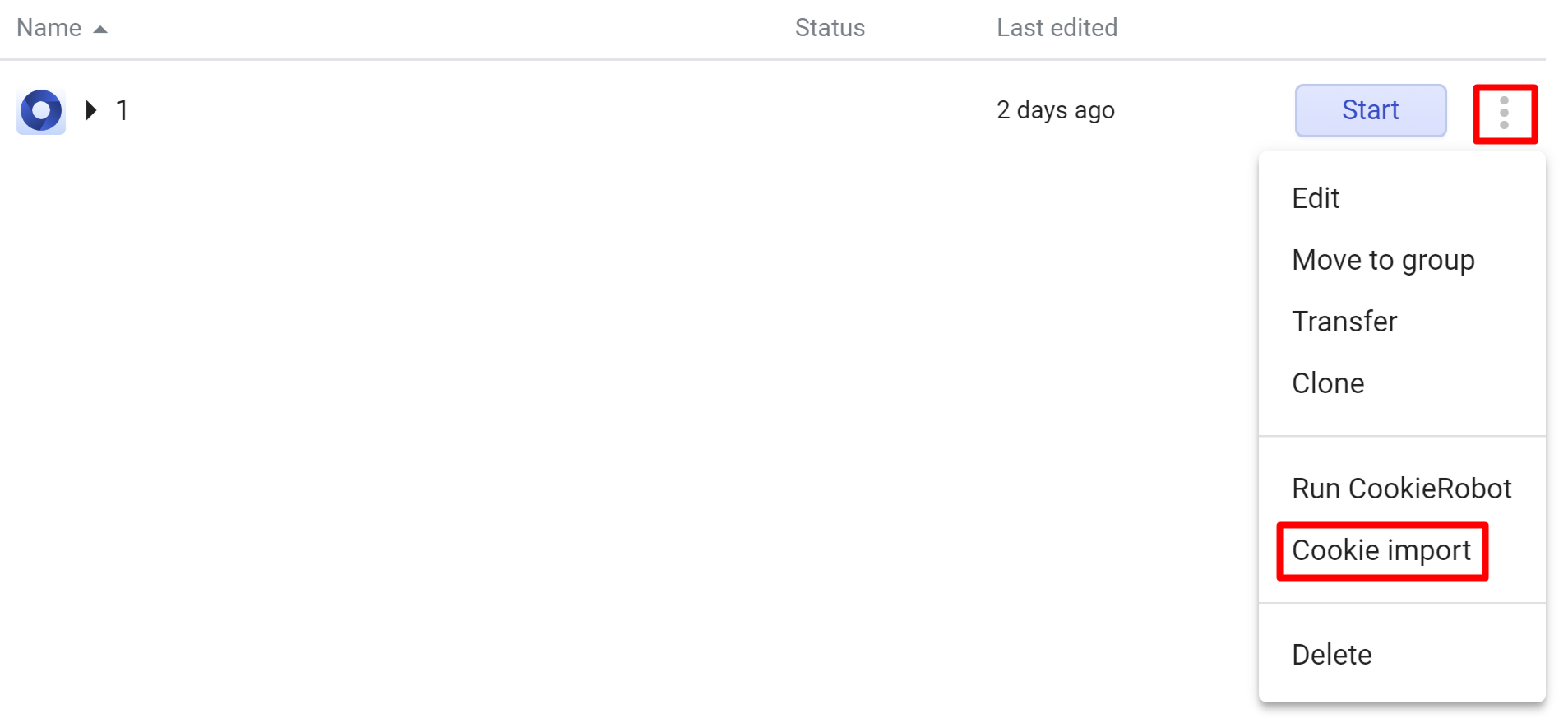
- Click the 3 dots on the right of your profile and choose “Cookie import”
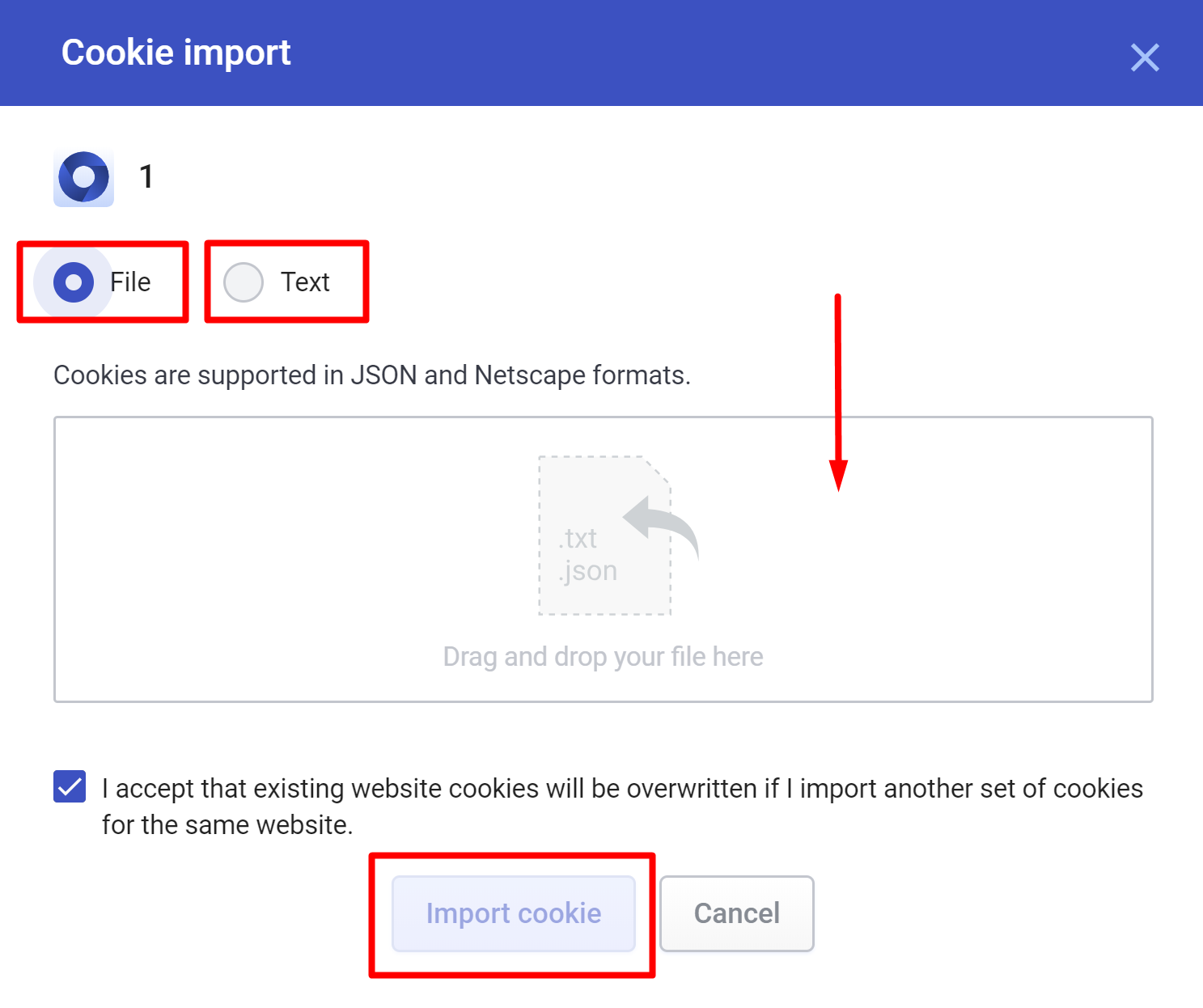
- Use one of the 2 options:
- Select "File" and drag and drop your cookie file
- Select "Text" and paste your cookies in text format
- Click "Import cookie"
Netscape
Before importing Netscape cookies, make sure to delete any lines in the original file that starts with #

