Discover why teams choose Multilogin

Multilogin vs. GoLogin

GoLogin vs Multilogin: Comparison of Two Platforms for Multi-Account Management
Multilogin logo representing the Estonian-origin platform for advanced multi-account management and anonymity.
GoLogin logo shown on the Multilogin comparison page, representing the browser's brand and identity.
Cloud phones in Multilogin Icon

Cloud phones

Multilogin is a cloud Android phone platform for multi-account management. Its cloud phones run native Android apps on real cloud-hosted Android devices. Multilogin currently offers 30+ real Android device types across 12 brands, including Samsung, OPPO, Xiaomi, Google, Motorola and Vivo. App data and login history persist between sessions, and users can install apps from the built-in list or upload APK files. Browser profiles are included for web-based workflows.

GoLogin is an antidetect browser for managing multiple accounts. Its core workflow uses separate browser profiles with built-in proxy, sharing and automation tools. GoLogin also offers Cloud Browser and Cloud Android for remote browser and mobile-app workflows.

Icon of a proxy symbol representing proxy features and integration capabilities in the comparison.

Built-in proxies

Multilogin includes built-in residential proxy traffic in every plan, with monthly allowances ranging from 1 GB to 10 GB depending on the plan. It supports residential, mobile, ISP and third-party proxies, with access to 30M+ IPs across 150+ countries. Unused paid-plan proxy traffic rolls over while the subscription remains active.

GoLogin offers built-in residential, mobile, and datacenter proxies across various countries and supports third-party proxies. Every paid plan includes 2 GB of residential proxy traffic per month, which does not roll over.

Usability and user interface_blue icon

Usability and user interface

Multilogin brings cloud Android phones, browser profiles, proxies and account organization into one dashboard. Users can organize accounts with folders, custom columns, tags, and notes, manage team access, and see active environments. Mobile-app work can use a cloud phone while web-based tasks use browser profiles within the same platform.

GoLogin centers its interface around separate browser profiles. Users can organize profiles with folders, groups and notes, assign proxies, share access and use Cloud Browser or Cloud Android for remote workflows.

Web automation symbol

Web automation

Multilogin supports API, Selenium, Puppeteer, Playwright, Postman and CLI workflows. Paid plans also provide ADB access for supported cloud phones, allowing Android automation and integration with tools such as Appium. Multilogin APIs can create and manage cloud-phone environments programmatically.

GoLogin supports browser automation through REST API, SDKs, Selenium, Puppeteer and Browser MCP. It does not currently document an equivalent ADB/Appium workflow for Cloud Android.

Icon representing browser fingerprinting technology and anti-detection features in the comparison.

Browser fingerprinting customization​

Multilogin provides isolated browser profiles for web-based accounts, each with separate cookies, sessions, IP configuration, and browser environment. Browser profiles support browser-first workflows and sit alongside Multilogin cloud phones for native mobile apps.

GoLogin’s core product is its Orbita-based antidetect browser. Each profile can use separate browser settings, proxy configuration, location and session data.

Browser flexibility icon blue

Browser flexibility

Multilogin is very flexible. It provides both cloud Android phones and browser profiles in one platform. Mobile apps can run in cloud phones, while browser-based tasks use isolated browser profiles.

GoLogin combines browser profiles with Cloud Browser and Cloud Android. Cloud Android is not available on the Forever Free plan, so mobile workflows require a paid subscription.

Browser flexibility icon blue

Teamwork

Multilogin supports structured team collaboration with seats and permissions, profile sharing and transfer, folders, tags, notes, bulk actions, and account handover. Teams can control access to profiles and groups, while Business plans include unlimited team seats.

GoLogin supports profile sharing, folders and workspaces. Team Members start from Business, with one additional seat included by default and extra seats available separately.

Icon symbolizing customer support services, highlighting availability and assistance in the comparison.

Customer support

Multilogin offers 24/7 English support through live chat and email, with additional support in Vietnamese, Russian, Chinese and Portuguese during regional support hours. Users also have access to the Help Center, Academy and API documentation for cloud phones, browser profiles, proxies, automation, setup and troubleshooting.

GoLogin also provides 24/7 support through live chat and other channels and maintains a detailed Help Center. Since both offer round-the-clock support, availability itself is not a strong differentiator.

Perfomance

Multilogin supports both cloud Android phones and browser profiles, with the environment matched to the workload. Cloud phones keep app data and account state in the cloud, while performance can be improved by choosing suitable device models and managing browser resources. A stable internet connection is important for cloud-phone use.

GoLogin is designed for browser-profile workloads and aims to deliver Chrome-like performance. Actual performance can vary with the local device, internet connection, proxy quality, and number of profiles running at once.

Icon representing pricing or cost information, typically symbolized by a dollar sign or price tag.

Pricing

Multilogin offers a Free plan with no time limit and no credit card required, including 5 cloud mobile/browser profiles. Paid plans start from $7.08/month: Pro 10 includes 10 profiles, Pro 20 includes 20, Pro 50 includes 50, and Business starts from 100 profiles. Pro 10 also includes 1 GB of proxy traffic, 60 mobile minutes, 1 team seat and API access. Higher plans increase profile limits, proxy traffic, mobile minutes and team capacity.

GoLogin offers a Free plan with 3 browser profiles and a 7-day trial. Professional starts at $9/month, or $4.50/month on annual billing. All paid plans include 2 GB residential proxy traffic, but team members are not available until Business. Cloud Android also requires a paid plan.

What Multilogin offers that GoLogin doesn't

24/7 support available in five languages

Free plan for Cloud Android

Daily testing on 50+ websites

Mobile proxies

Passes all browser fingerprint checkers

55+ fingerprinting options

Integration with popular automation tools​

GoLogin user or looking for cloud phones?

Explore Multilogin, a smarter alternative to GoLogin.

Multilogin vs. GoLogin recap chart

Find out why Multilogin is the preferred GoLogin alternative

Multilogin logo representing the Estonian-origin platform for advanced multi-account management and anonymity. GoLogin logo shown on the Multilogin comparison page, representing the browser's brand and identity.
Primary product
Cloud Android phone platform for multi-account management, with browser profiles for web-based accounts
Antidetect browser for managing multiple accounts
Platform maturity
Launched in 2015, more mature and stable platform
Launched in 2019, less mature platform
Cloud phones
Yes
Yes
Browser profiles

Yes

Yes

Native Android apps

Yes

Yes

Country of origin

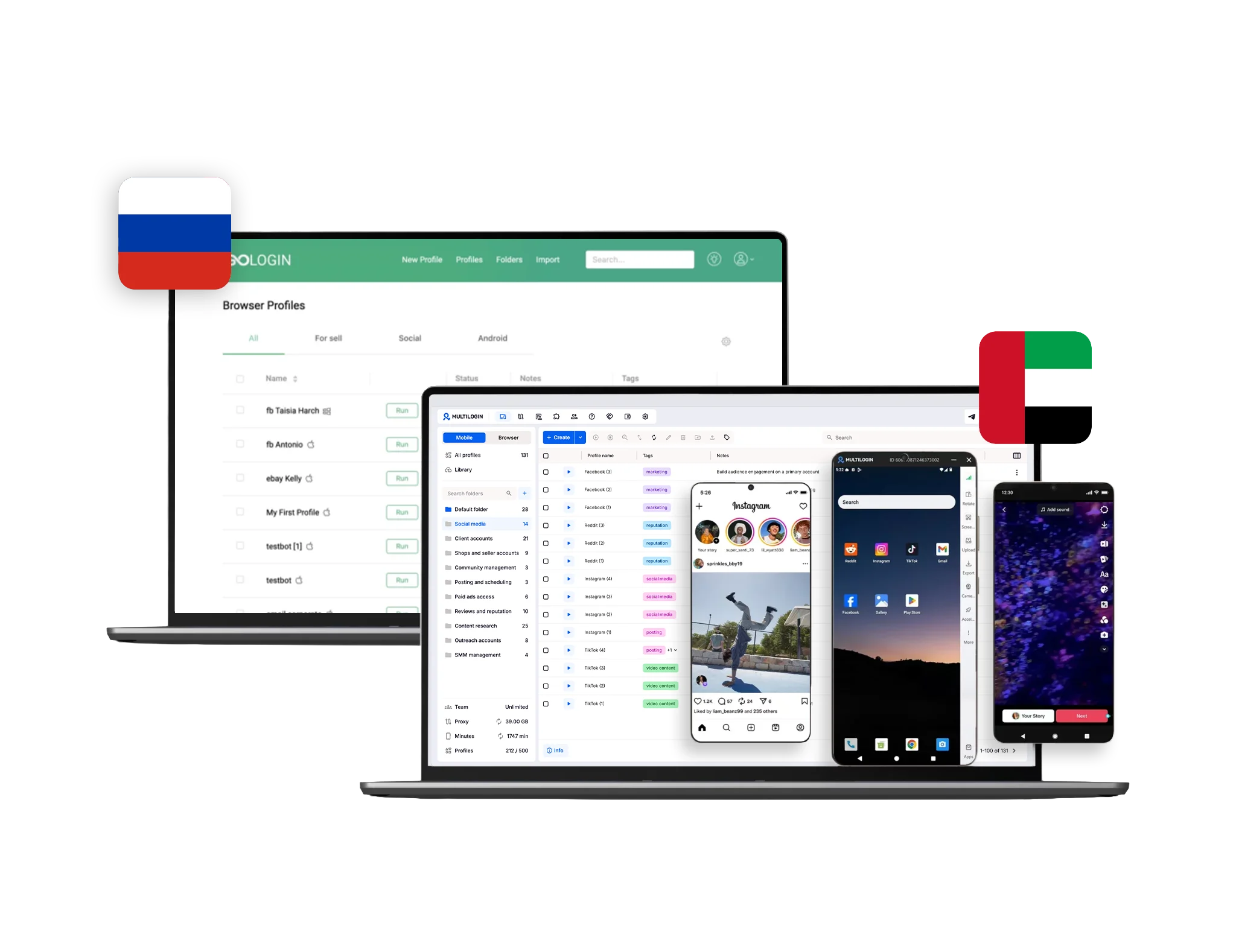
🇦🇪 United Arab Emirates

🇷🇺 Russia

Android device options

30+ device types across 12 brands

Cloud Android

Built-in proxies
Yes
Yes
Security
High security, uses md5, SHA-2, and AES
High security, uses Argon2 and AES
Undetectability
Advanced
Average
Anti-fingerprinting technology
Advanced
Basic
Team collaboration
Yes; unlimited team seats on Business
Yes; Team Members start from Business
Unused proxy rollover
Yes on paid Multilogin traffic
No
Quick profile creation
Yes
Yes
Support
24/7 Live Support,
supports 5 languages
Available, can be slow
Knowledge centre
Yes
No
Unlimited free team member accounts​
Yes
No
Passes all browser fingerprint checkers
Yes
No
Browser automation
API, Selenium, Puppeteer, Playwright, Postman, CLI
REST API, SDKs, Selenium, Puppeteer, Browser MCP
ADB for cloud phones
Yes, Android 11+
No equivalent ADB workflow currently documented

Grow your social media accounts with Multilogin cloud phones

Build account trust, reach any location, and boost your engagement
  • Unlimited time

  • Mobile and browser profiles included

  • Free built-in proxies & mobile minutes

  • Unlimited time

  • Mobile and browser profiles included

  • Free built-in proxies & mobile minutes

Why people love Multilogin

review_ha_d

Ha D.

Social Media Marketing Retail

A Good Cloud Phone for Account Management
Running a small team means I need control over who can access what, and Multilogin handles that well. The team access controls let me manage permissions without giving everyone the keys to every account. On top of that, the cloud phones keep everything isolated so one account issue doesn't put the rest at risk. Solid choice for agencies managing multiple clients or accounts.

Nino Latif

The best service for great ideas and big minds!
Always here for their clients, always ready to help out. I am using the service for 3-4-5 months now and brought me lots of great things 🙂 Hope to grow it on a larger scale and continue using the service ...

Stanislav K.

Marketing Manager

Cloud phones make it easy to manage multiple TikTok accounts with AI agents
I use Multilogin to manage a bunch of AI agents running TikTok accounts for different countries. Since each agent needs its own account, I wanted an easy way to keep everything organized. Cloud phones make it super easy. Every account has its own phone, so I don't have to buy or manage a bunch of real devices. I can see everything in one dashboard while the AI agents handle posting and the rest of the daily work.

Elen S.

Marketing Manager

Ideal for Social Media Management
I mainly use Multilogin for client social media management, and the cloud phones have been the biggest advantage for me. I can keep different clients in separate environments, leave their sessions running, and jump between accounts without constantly switching physical devices. It feels much more practical than trying to manage everything from a pile of phones.
Hamza Arif

Hamza Arif

E-commerce Manager

Perfect browser for work, worth the money!
My overall experience with Multilogin has been excellent. I really like its intuitive dashboard, reliable customer support, and competitive pricing. It has become an essential part of my e-commerce business, and I highly recommend it to anyone looking for a dependable solution.
Yasmin's Review

Yasmin D.

Social Media Manager

Safer accounts using Cloud Phones for social profiles
Running social profiles on cloud phones feels safer, everything is properly separated instead of relying on browser fingerprint tricks alone. Been running mine for a couple months with zero linking issues.
Nick H.

Nick Horvath

Marketing agency

Efficient Account Management and Outstanding Support with Multilogin
Multilogin has been an excellent tool for managing multiple accounts efficiently. The setup was quick, and I was able to start using it right away with no learning curve. The interface feels just like Chrome, making it easy to navigate and work without interruption. Performance has been smooth, and browsing feels natural and responsive.

See more comparisons

Watch the Multilogin Demo

Learn how Multilogin can boost your business. Check the video below to see its full capabilities in a short demo video.

What does Multilogin include for multi-account management?

Multilogin combines cloud Android phones, browser profiles, built-in proxies, mobile minutes, team tools, and automation in one platform for managing multiple accounts.

Mobile-app accounts can run on real Android devices in the cloud. Web-based accounts can run in isolated browser profiles. Both environment types are managed from the same Multilogin platform. Explore Multilogin cloud phones

How does Multilogin manage both mobile apps and browser accounts?

Multilogin uses cloud Android phones for native mobile apps and isolated browser profiles for web-based accounts.

This lets operators choose the environment that matches each task instead of forcing every account into a browser or every workflow into a cloud phone.

Use a Multilogin cloud phone when the account depends on a native Android app.

Use a browser profile when the workflow happens primarily on the web.

Both can be organized and managed from the same platform.

GoLogin also supports browser and Android workflows. Its core product is its Orbita-based antidetect browser, while Cloud Android adds support for native Android apps.

Are Multilogin cloud phones real Android devices?

Yes. Multilogin cloud phones run native Android apps on real cloud-hosted Android devices.

Users can choose from multiple Android versions and device models. Each cloud phone keeps its own:

  • app data;

  • login history;

  • account state;

  • device configuration;

  • location;

  • and network setup.

Apps can be installed from the available app library, through Google Play where applicable, or by uploading an APK. See Multilogin cloud phone features

This makes cloud phones useful when the account workflow depends on the mobile version of a platform rather than its website.

Does Multilogin include built-in proxies?

Yes. Multilogin includes built-in proxy traffic in every plan, and the monthly allowance increases on larger paid plans.

Current paid allowances include:

  • Pro 10: 1 GB per month;

  • Pro 20: 2 GB per month;

  • Pro 50: 3 GB per month;

  • Business: from 5 GB per month, increasing to 10 GB on larger tiers.

The Free plan includes 200 MB as a one-time allowance. Compare Multilogin plans and proxy allowances

Multilogin provides access to 30M+ residential and mobile IPs and supports built-in and custom proxy configurations. Users can also connect third-party HTTP, HTTPS, and SOCKS5 proxies. See Multilogin residential and mobile proxy options

Unused paid proxy traffic rolls over while the applicable subscription remains active.

GoLogin also offers built-in residential, mobile, and datacenter proxies and supports external proxies. Its paid plans include 2 GB of residential proxy traffic per month. That allowance refreshes monthly and does not roll over.

For higher-volume operations, the important difference is not simply whether proxies are included. Compare monthly traffic, additional traffic costs, proxy types, geographic coverage, and rollover rules.

Which has more included proxy traffic, Multilogin or GoLogin?

Multilogin can include more proxy traffic on larger plans, while GoLogin includes 2 GB per month across paid plans.

Multilogin currently includes:

  • 1 GB on Pro 10;

  • 2 GB on Pro 20;

  • 3 GB on Pro 50;

  • 5 GB+ across Business tiers.

GoLogin includes 2 GB of residential proxy traffic per month on paid plans. Check current GoLogin plan limits

Multilogin’s paid proxy traffic can roll over. GoLogin’s monthly allowance does not.

The better value depends on how much traffic the operation actually uses.

Which is better for browser automation: Multilogin or GoLogin?

Both support browser automation, but Multilogin supports a broader documented mix of browser integrations, while GoLogin provides its own API, SDK, and Browser MCP options.

Multilogin supports:

  • Selenium;

  • Puppeteer;

  • Playwright;

  • Postman;

  • CLI workflows;

  • and API access.

Multilogin can also manage cloud-phone environments through its API, including profile creation and configuration. See Multilogin cloud phone API documentation

GoLogin supports:

  • REST API;

  • SDKs;

  • Selenium;

  • Puppeteer;

  • and Browser MCP.

Before moving an established automation workflow, check the exact capabilities your scripts require.

Compare:

  1. profile creation;

  2. profile updates;

  3. proxy assignment;

  4. browser launch;

  5. API rate limits;

  6. concurrency;

  7. error handling;

  8. session persistence;

  9. and library compatibility.

Two products can both provide APIs without exposing the same functions.

Which is better for Android automation: Multilogin or GoLogin?

Multilogin currently provides the more clearly documented Android automation stack through ADB, Appium-compatible workflows, and cloud-phone APIs.

ADB is available on all paid Multilogin plans for cloud phones running Android 11 or later. See how ADB works with Multilogin cloud phones

It can be used to:

  • install APK files;

  • execute commands;

  • transfer files;

  • capture screenshots;

  • collect logs;

  • and connect cloud phones to Android automation tools such as Appium.

Multilogin’s API can separately create and configure cloud-phone environments, including:

GoLogin offers Cloud Android but does not currently document an equivalent ADB/Appium workflow.

For teams that need programmatic control inside native Android apps, this is one of the more important differences between Multilogin and GoLogin.

Which is better for browser profiles: Multilogin or GoLogin?

Both support separate browser profiles, but browser profiles play different roles in the two platforms.

Multilogin provides isolated browser profiles as the web layer of its cloud Android phone platform.

Each Multilogin browser profile keeps separate:

  • cookies;

  • sessions;

  • IP configuration;

  • browser settings;

  • and stored account state.

Users can apply a built-in Multilogin proxy, a third-party proxy, a saved proxy template, or their existing connection to a browser profile. See Multilogin browser profile proxy settings

Browser profiles are useful for browser-first workflows such as:

  • marketplace seller back offices;

  • Facebook Business Manager;

  • YouTube channel administration;

  • Reddit web workflows;

  • advertising dashboards;

  • and client portals.

GoLogin’s core product is its Orbita-based antidetect browser. Each profile can use separate browser settings, proxy configuration, location, and session data.

For a browser-only workflow, compare profile limits, automation, sharing, proxies, and price directly.

Which is better for mixed mobile and browser workflows?

Multilogin is designed around mixed mobile-and-web account management, while GoLogin starts from browser profiles and extends into Cloud Android.

With Multilogin, an e-commerce operator might use:

  • a cloud phone for a marketplace Android app;

  • a browser profile for the seller back office;

  • and API automation for profile-management tasks.

A social media agency might use:

  • cloud phones for Instagram or TikTok;

  • browser profiles for Business Manager or web administration;

  • and shared team access for client handover.

Multilogin’s plan limits cover both Android cloud phones and browser profiles. Compare Multilogin mobile and browser profile limits

GoLogin also combines browser profiles with Cloud Browser and Cloud Android.

The useful comparison is therefore how deeply each product supports both environment types, not simply whether mobile and browser options exist.

Which is better for social media account management: Multilogin or GoLogin?

Both can support social media workflows across Android apps and browsers, but Multilogin is built around cloud Android phones as the primary environment for mobile accounts.

A social media team can use Multilogin cloud phones for native apps such as:

  • Instagram;

  • TikTok;

  • Facebook;

  • YouTube;

  • and other Android-first workflows.

The same team can use browser profiles for:

  • Facebook Business Manager;

  • YouTube administration;

  • Reddit web workflows;

  • advertising dashboards;

  • and other browser-based tasks.

This lets teams use a cloud phone only where the mobile app is actually needed.

GoLogin also combines Orbita browser profiles with Cloud Android.

The practical comparison should focus on:

  • account volume;

  • mobile usage;

  • browser workload;

  • proxy traffic;

  • team access;

  • and automation.

Neither platform guarantees that an account will avoid restrictions. Platform policies, verification, account history, content, and user activity still apply.

Which is better for agencies: Multilogin or GoLogin?

Both support account sharing, but Multilogin includes structured team access earlier in its paid plans and provides unlimited team seats on Business.

Multilogin supports:

  • team seats and permissions;

  • profile sharing;

  • profile transfer;

  • profile assignment;

  • folders;

  • tags;

  • notes;

  • bulk actions;

  • and account handover.

Current Multilogin plans include:

  • Pro 10: 1 team seat;

  • Pro 20: 2 team seats;

  • Pro 50: 2 team seats;

  • Business: unlimited team seats.

GoLogin supports profile sharing, folders, and workspaces. Full Team Member functionality starts from Business, with one additional seat included by default and additional seats available separately.

Agencies should compare:

  • number of operators;

  • number of clients;

  • account ownership;

  • permission requirements;

  • team-seat costs;

  • mobile-account handover;

  • and browser-account handover.

A high profile limit alone does not tell an agency whether collaboration will remain manageable.

Which is better for e-commerce and marketplace accounts?

Both can support marketplace workflows, but Multilogin lets sellers manage native Android apps and browser-based seller tools within the same platform.

A marketplace seller might use a cloud phone for:

  • marketplace Android apps;

  • order notifications;

  • mobile listing tools;

  • app-specific features;

  • and native account activity.

The same seller can use a browser profile for:

  • seller dashboards;

  • inventory management;

  • catalogue management;

  • reporting;

  • customer support;

  • and marketplace back-office work.

This is relevant to workflows around eBay, Walmart, AliExpress, Depop, Whatnot, Amazon, and other marketplaces.

GoLogin also provides browser profiles and Cloud Android.

Marketplace verification, seller eligibility, regional availability, and platform rules remain independent of either tool.

Is Multilogin or GoLogin better for dropshipping?

Neither platform is specifically required for dropshipping; the right choice depends on the marketplaces, stores, apps, and browser accounts the business actually uses.

A dropshipping operation may work with:

  • marketplace seller accounts;

  • Shopify or another storefront;

  • supplier dashboards;

  • advertising platforms;

  • social accounts;

  • analytics;

  • and marketplace mobile apps.

Use browser profiles for browser-first work.

Use cloud Android environments where native Android apps are genuinely required.

Multilogin lets both environment types sit within the same account-management platform.

GoLogin also supports browser profiles and Cloud Android.

Can Multilogin and GoLogin support advertising account workflows?

Yes. Both provide separate browser environments that can support web-based advertising account workflows.

Browser profiles are usually the relevant environment for browser-based advertising dashboards.

A cloud Android phone is more relevant when the workflow genuinely requires a native Android app.

Multilogin can manage browser-based advertising administration alongside mobile account environments from the same platform.

GoLogin also provides separate browser profiles.

Neither Multilogin nor GoLogin changes advertising-platform verification requirements, account rules, or enforcement policies.

Can Multilogin and GoLogin be used for affiliate workflows?

Yes, but the correct setup depends on the accounts and tools involved rather than the affiliate-marketing label itself.

An affiliate operation might use:

  • browser accounts;

  • advertising dashboards;

  • analytics tools;

  • social platforms;

  • mobile apps;

  • or automation.

Browser-first tasks can use browser profiles.

Native mobile workflows can use cloud Android environments.

Multilogin’s broader focus is multi-account management rather than affiliate marketing specifically, so operators should evaluate it against their actual workflow.

Which is better for managing many client accounts?

Multilogin and GoLogin can both organize multiple client environments, but account ownership, permissions, and handover become increasingly important at larger scale.

A small setup may work with profile names alone.

A larger operation usually needs:

  • folders;

  • tags;

  • notes;

  • ownership;

  • permissions;

  • team handover;

  • proxy records;

  • and clear identification of whether an account uses a browser or mobile environment.

Multilogin provides these management capabilities across cloud phones and browser profiles.

GoLogin provides profile organization, sharing, folders, and workspaces, with broader Team Member functionality starting from Business.

For agencies, the important question is whether another operator can identify the correct environment and continue the work without rebuilding the setup.

Which is better for web automation and scraping?

Both provide browser automation capabilities that can support permitted automated web workflows, but the better choice depends on API requirements, proxies, concurrency, and existing automation tools.

Compare:

  • automation-library compatibility;

  • API limits;

  • browser concurrency;

  • proxy configuration;

  • cloud-browser capabilities;

  • session persistence;

  • error handling;

  • and total operating cost.

For an entirely browser-based workflow, a cloud Android phone may add little value.

If the operation also includes native Android apps, Multilogin adds ADB and Appium-compatible mobile automation.

Always follow the applicable access rules and terms of the websites involved.

Which is more cost-effective as you scale: Multilogin or GoLogin?

The answer depends on how many profiles, mobile minutes, proxy gigabytes, team seats, and automation capabilities the operation needs.

Which is more cost-effective for browser-only workflows?

GoLogin may fit browser-focused operators who mainly need Orbita profiles, proxy options, sharing, and browser automation.

Its annual pricing also lowers the published entry subscription price.

For a browser-only operation, compare:

  • profile count;

  • included proxy traffic;

  • additional proxy cost;

  • browser automation;

  • sharing;

  • and annual subscription price.

Which is more cost-effective for mobile and browser workflows?

Multilogin may fit operations that regularly combine native Android apps with browser-based account work.

A Multilogin subscription can include:

  • cloud mobile profiles;

  • browser profiles;

  • built-in proxy traffic;

  • mobile minutes;

  • browser automation;

  • Android automation;

  • and team access.

Current Multilogin Pro plans include 10, 20, or 50 profiles across mobile and browser environments, while Business starts from 100 profiles. See current Multilogin pricing and profile limits

This makes it easier to compare the combined cost of mobile and browser workflows within one platform.

Which is more cost-effective for teams?

Multilogin includes team access from its Pro plans and unlimited team seats on Business, while GoLogin’s full Team Member functionality starts from Business.

Multilogin Pro 10 includes one team seat, Pro 20 and Pro 50 include two, and Business provides unlimited team seats.

GoLogin Business includes one Team Member slot, while additional seats can be purchased separately.

The cost difference therefore depends heavily on how many people need access.

Which is more cost-effective for automation-heavy workflows?

For browser automation, compare APIs, libraries, rate limits, and concurrency. For Android automation, Multilogin currently has the more clearly documented ADB and Appium-compatible workflow.

The lowest subscription price is not necessarily the lowest operating cost if the required automation capability is missing.

What should you check before choosing Multilogin or GoLogin?

Start with the workflow you actually need to run, then compare the products against those requirements.

Ask:

  1. Which accounts require native Android apps?

  2. Which accounts can remain browser-based?

  3. How many mobile and browser profiles do you need?

  4. How many environments need to run simultaneously?

  5. How much proxy traffic will you use?

  6. Which countries or cities are required?

  7. How much mobile runtime do you expect?

  8. How many team members need access?

  9. Do you need browser automation?

  10. Do you need ADB or Appium?

  11. Which API functions are required?

  12. How will accounts move between operators?

Then test the same real workflow on both platforms.

This produces a more useful comparison than simply counting features.

Multilogin vs GoLogin: which setup fits which workflow?

GoLogin fits browser-centered multi-account workflows and extends them with Cloud Android. Multilogin is built around cloud Android phones for multi-account management and includes browser profiles for web-based accounts.

GoLogin may suit operators whose primary requirement is managing separate browser profiles with proxy, sharing, and browser automation tools.

Multilogin may suit operations where native Android apps are a central part of daily account management, especially when browser profiles, built-in proxies, team collaboration, ADB, Appium-compatible workflows, and API management are also required.

For mixed workflows, compare how each platform handles the complete mobile-and-browser operation rather than selecting based on one feature.

FAQ: Multilogin vs. GoLogin

GoLogin is an antidetect browser for managing multiple accounts.

Its core workflow uses Orbita browser profiles with proxy, sharing, organizational, and automation tools.

GoLogin also offers Cloud Browser and Cloud Android for remote browser and native mobile-app workflows.

GoLogin is a workable entry-level solution for browser-only work, but proxy targeting stays limited, mobile workflows need external tools, and scaling multiple accounts gets harder to manage as you grow. Multilogin adds 55+ fingerprinting customization options, GDPR compliance, built-in residential and mobile proxies across 150+ locations, and real Android cloud phones that GoLogin doesn’t have, all managed from the same dashboard.

Factoring price against what’s actually included, Multilogin bundles more into one subscription for anyone doing serious multi-account work rather than casual, browser-only use.

Yes, GoLogin includes built-in proxy access alongside support for external HTTP(S) and SOCKS proxies, though the built-in traffic still requires some setup to configure well. Reports put GoLogin’s own pool at around 10,000 rotating addresses across 78 countries.

Multilogin‘s proxy system is tightly integrated by comparison, with a pool of over 30 million residential proxies across 150+ countries, 95%+ clean IPs, and sticky sessions lasting up to 24 hours.

GoLogin Professional starts from $9 per month, or $4.50 per month with annual billing.

GoLogin also offers a Forever Free plan with three browser profiles.

Its current Help Center says all paid plans include 2 GB of residential proxy traffic.

Yes, GoLogin supports managing multiple TikTok accounts, though with TikTok’s detection systems getting stricter, proxy stickiness becomes a real factor; some users report shared or less-sticky proxies getting flagged during activity spikes, especially once you’re running enough accounts to need real TikTok accounts at scale.

Multilogin supports that scale through its 30M+ IP pool, 95%+ clean IPs, and sticky sessions up to 24 hours, combined with fingerprint updates and automation support.

For a handful of accounts, yes; the setup is simple enough for beginners working through the basics of TikTok marketing without needing deep technical knowledge. Once you’re running several accounts across regions or testing different content strategies, though, GoLogin’s country-level-only proxy targeting becomes a real limit.

Multilogin‘s city-level targeting and 24-hour sticky sessions hold up better once a single-account setup turns into a multi-account operation.

Yes, and it’s a common use case: isolated profiles let you browse and track competitor accounts without your research activity linking back to your own brand accounts. For deeper TikTok competitor analysis, consistent proxy location matters too, since a research profile that keeps jumping IPs can look as suspicious as a real account would.

Multilogin‘s city-level targeting and sticky sessions keep a research profile stable over longer tracking periods, which GoLogin’s country-level-only targeting doesn’t support as precisely.

Both tools help people manage multiple accounts securely, but they serve different scales. GoLogin suits solo users or small-scale browser-only work. Multilogin is built for teams handling multiple social media accounts for a business or agency clients, with 55+ fingerprint parameters, a built-in proxy pool across 150+ countries, the Mimic browser, and integrations with Selenium, Puppeteer, Playwright, and Postman for automating complex workflows.

GoLogin provides support through email and Telegram, and independent reviews note response times can vary, especially during peak periods. Multilogin offers 24/7 live chat support in multiple languages, which tends to matter more for businesses that need an urgent fix rather than a queued reply.

No, and no tool can. Detection depends on proxy quality, browsing patterns, and how naturally an account behaves early on, including whether engagement looks organic or resembles things like Instagram bot followers patterns that platforms specifically watch for. GoLogin can lower the risk but can’t remove it, especially for accounts that look “fresh.” Multilogin reduces that risk further with a cookie robot that builds natural browsing history during warm-up, paired with premium residential proxies from the start.

Yes, GoLogin supports two-factor authentication, though most profile data sits in GoLogin’s own cloud environment, which limits how much control users have over where that data lives.

Multilogin also supports 2FA, with the added option of local or encrypted cloud storage, so you choose where profile data, cookies, extensions, and bookmarks are kept.

GoLogin supports external HTTP(S) and SOCKS proxies you configure manually, plus built-in proxy traffic (roughly 2GB on paid plans). You assign a proxy per profile to set its apparent location, but targeting stays limited to country level, proxies are shared across users, and time zone and language still need manual adjustment to match.

Multilogin includes premium residential proxy traffic in every plan, with per-plan allowances that scale by tier and unused traffic rolling over, plus city-level targeting per profile that needs far less manual adjustment to get a consistent, believable location.

Both can technically run separate Reddit profiles, but Reddit karma and account age build slowly and get flagged quickly if activity looks coordinated across accounts from the same IP. Multilogin‘s sticky sessions and city-level proxy targeting help each Reddit profile build a more consistent, believable history over time, compared to GoLogin’s country-level-only targeting.

Not directly. Account isolation and proxy quality solve the safety side of running multiple profiles, whether that’s for social media SEO work or any other content angle; what gets posted and how it performs is still a separate part of the job. Multilogin‘s role is keeping the accounts themselves stable and unlinked so that content strategy work isn’t undone by a ban.

Yes. In GoLogin, you can assign a proxy to each browser profile to make it appear from a chosen location. GoLogin provides built-in proxies , including residential, mobile, and datacenter types. However, these proxies are shared and have limited targeting options — for example, you cannot select specific cities or states. You can also tweak time zones and languages to match the proxy region manually. This setup can take time, especially if you use multiple providers. 

Multilogin includes built-in residential proxies in every plan and simple tools to assign and configure them. Users must choose the proxy location and adjust geolocation/timezone manually if they want perfect consistency, but everything works within a beginner-friendly interface, making the process smooth and fast.

GoLogin covers the basics of fingerprinting and profile separation, but its features remain limited. Proxy options are restricted, mobile workflows require external tools, and scaling multiple accounts can become difficult to manage.

Multilogin provides a more complete solution for individuals and small teams. It combines advanced fingerprint protection, built‑in residential and mobile proxies across 150+ locations, and real Android cloud phones in one platform. Browser profiles and mobile apps are managed from the same dashboard, without third‑party services or complex setup.

For social media management, e‑commerce, and everyday multi‑account work, Multilogin offers a more stable and practical environment as your needs grow.

Both can run isolated profiles for X/Twitter the same way they do for other platforms, since the core need, keeping each account’s identity and IP separate, doesn’t change by platform. The harder part of growing followers on X/Twitter is content and engagement strategy, which neither tool handles directly. Multilogin‘s advantage shows up if you’re also running mobile-first platforms alongside X/Twitter, since GoLogin has no way to cover that mobile side at all.

No, and the distinction matters for detection risk. An emulator or cloud Android emulation setup simulates a device in software, which can produce signals that don’t fully match a real phone. Multilogin‘s cloud phones run on real Android devices in the cloud, which is part of why they hold up better than software-only alternatives for platforms that check device authenticity closely.

Telegram
Thank you! We’ve received your request.
Please check your email for the results.
We’re checking this platform.
Please fill your email to see the result.

Multilogin works with amazon.com