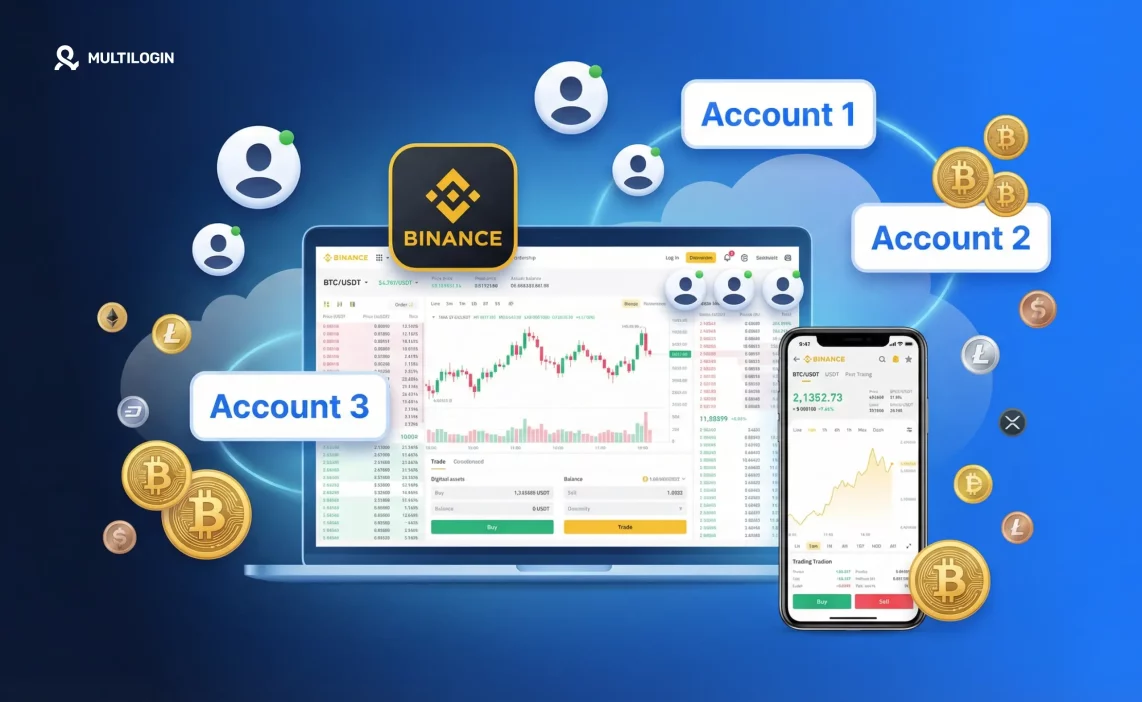

The short answer: no. Binance’s policy is one account per person, and they enforce it through identity verification.
That’s the honest answer — but there’s more to understand here. What the policy actually says, when it applies, what happens if you have two accounts already, and what Binance does offer for traders who need to manage separate funds or portfolios. This article covers all of it.
What Binance’s official policy says
Binance explicitly prohibits users from creating or using more than one personal account. Their Terms of Service state that each individual is permitted a single account only, and this applies globally regardless of which country you’re in.
The reason is primarily regulatory. Binance operates under financial compliance requirements in most jurisdictions, and those requirements — particularly anti-money laundering (AML) and know-your-customer (KYC) rules — are designed around individual identity. One person, one verified identity, one account.
When you complete KYC verification on Binance, you submit:
- Government-issued ID (passport, national ID, or driver’s licence)
- A selfie or live facial recognition check
- Personal information (name, date of birth, address)
That data is tied to your account permanently. If someone tries to register a second account using the same ID documents, Binance’s system will detect it. If they use different details but the same device, browser fingerprint, or IP address, there’s a meaningful chance the accounts get flagged and linked.
What happens if you already have two Binance accounts
People end up with multiple Binance accounts in a few scenarios: they signed up a long time ago, forgot about it, and created a new one later; they shared a device with someone else and got their accounts associated; or they created a second account during a registration issue and both are now active.
If Binance detects this, the outcome is usually suspension of one or both accounts — often without prior notice. In some cases, they’ll ask you to verify which account is the “real” one and permanently disable the other. Funds in a suspended account can sometimes be recovered through their support process, but it requires proving your identity and can take weeks.
The practical advice if you’re in this situation: contact Binance support proactively and disclose that two accounts exist under your identity. Self-reporting before they flag it typically leads to a better outcome than waiting for them to suspend both.
What about Binance sub-accounts?
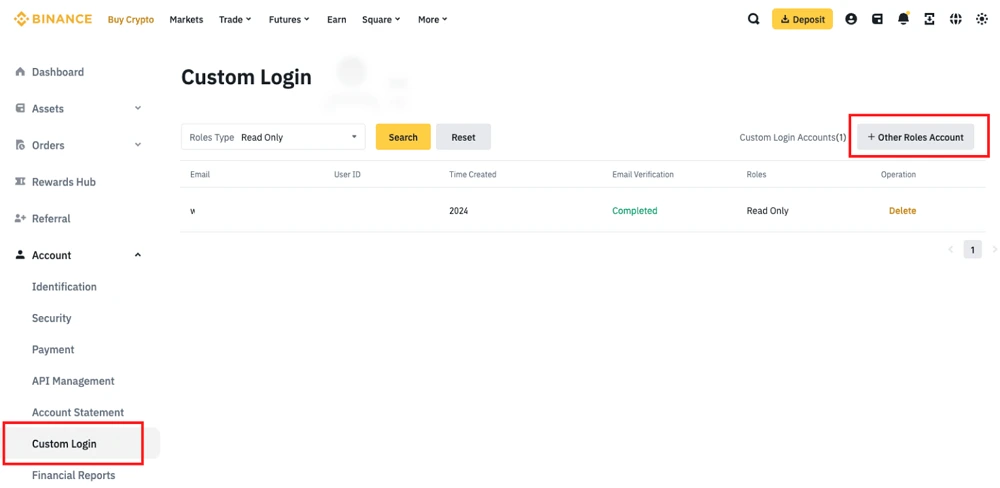
Here’s the important exception: Binance does offer a sub-account feature, but it’s only available to institutional and VIP clients — not retail traders.
Sub-accounts under the Binance institutional program allow a single verified entity (typically a trading firm or fund manager) to manage multiple trading accounts under one master account. Each sub-account can have separate portfolios, trading strategies, and API keys, all under a single KYC-verified identity.
This is legitimate and officially supported. But it requires:
- Applying for institutional or VIP status
- Minimum trading volume thresholds (which vary)
- A business entity in most cases
For the vast majority of individual traders, this isn’t an accessible option. Sub-accounts on Binance are built for professional operations, not personal use.
Why traders want multiple accounts — and what they actually do
People ask about multiple Binance accounts for a few common reasons:
- Separating strategies. A trader might want to keep a long-term hold portfolio separate from an active trading portfolio so they’re not tempted to move funds between them.
- Privacy between portfolios. Some traders don’t want a single account that shows every transaction across different strategies or assets.
- Family accounts. A user manages their own trading and wants to help a family member get started, using a different account.
- Regional access. Users in countries with restricted Binance access sometimes try to access the platform through different account setups.
- None of these are served by additional personal accounts under Binance’s current policy. What traders actually do instead:
- Use Binance’s portfolio features within one account. Binance has improved its account organisation tools — you can use different wallets (Spot, Futures, Earn) for different purposes without needing multiple accounts.
- Use multiple exchanges. Nothing stops you from having accounts on separate exchanges — one Binance account, one Coinbase account, one Kraken account. Each exchange verifies you separately and operates independently. This is the most common way traders separate their crypto activity without violating any platform’s terms.
- Use a legitimate business account. If you’re trading as part of a business entity, you may be able to register a Binance business account that’s separate from your personal one, provided they’re genuinely separate legal entities with different verification.
The KYC reality: why attempts to work around this don’t hold up
Some users try to create a second Binance account with different credentials — a different email, a different phone number. The problem is KYC.
At the verification stage, you have to submit your actual ID documents. Binance’s verification system is run through a third-party identity provider (Jumio or similar) that cross-references submitted documents against known databases. Submitting real documents means submitting your real identity — and if your real identity is already tied to an existing account, the system will flag it.
Submitting fake or altered documents is document fraud. That’s a legal issue, not just a platform policy issue.
From a device and network perspective: Binance, like most financial platforms, monitors device fingerprints and IP addresses for fraud signals. Multiple accounts logging in from the same device — even with different credentials — will typically be investigated. This is standard practice in fintech, not specific to Binance.
For crypto-adjacent strategies that benefit from multiple accounts — like airdrop farming or testing different DeFi protocols — those don’t typically require a Binance account at all. Airdrop operations are usually wallet-based, and crypto airdrop strategies are built around wallet management, not exchange accounts. An antidetect browser for crypto trading is relevant for browser-based DeFi tools and airdrop operations, not for creating multiple centralised exchange accounts.
What if you’re a professional trader or running a fund?
If you’re managing money for others or running a structured trading operation, you have two legitimate paths:
- Binance institutional account. Apply through Binance’s institutional portal. You’ll need to submit business documentation, pass enhanced due diligence, and likely meet minimum volume requirements. The upside is official access to sub-accounts, higher API rate limits, and dedicated account managers.
- Separate legal entities. If you’re operating multiple distinct businesses, each business can have its own Binance account (where legally permitted), as long as each is verified under its own legal entity and operates genuinely independently.
Neither of these is quick or simple, but they’re the paths that don’t put your accounts or funds at risk.
A quick reality check on third-party “multiple account” services
Search for “multiple Binance accounts” and you’ll find services claiming to help you set up and manage them. Be cautious with any service like this. What they typically offer involves either:
- Using other people’s verified identities (identity theft risk, KYC fraud)
- Using fake or altered documents (document fraud)
- Managing accounts through proxies that mask their shared origin (against Binance ToS)
The financial risk here is significant. Binance holds real funds. An account created or operated outside their terms can be frozen or suspended, with funds held pending investigation. Getting funds released from a suspended account for ToS violations is a slow and uncertain process.
For platforms where multi-account operation is either allowed or common — eCommerce marketplaces, advertising platforms, social media — multi-account management tools exist for exactly that purpose.
Financial exchanges like Binance sit in a different category: they hold your money, they operate under financial regulation, and the consequences of getting it wrong are financial, not just a temporary account ban.
What to do if you need separate crypto portfolios
If the underlying need is portfolio separation rather than exchange-level account separation, there are cleaner solutions:
- On-chain wallets. Self-custody wallets (MetaMask, Phantom, Ledger, etc.) don’t require KYC. You can create as many as you want. Your trading activity stays on-chain, separate from any exchange. You can then use one Binance account to on-ramp and off-ramp funds, while keeping separate portfolios in separate wallets.
- Multiple exchanges. Binance account for your primary trading. A separate account on Coinbase, Kraken, or OKX for a different strategy. This is how most active traders actually structure things.
- Using Binance’s own tools better. Within a single Binance account, the Earn section, Futures, and Spot wallets operate with some separation already. Portfolio tracking tools (CoinStats, Delta) can layer on top to give you a cleaner view of different strategies within one account.
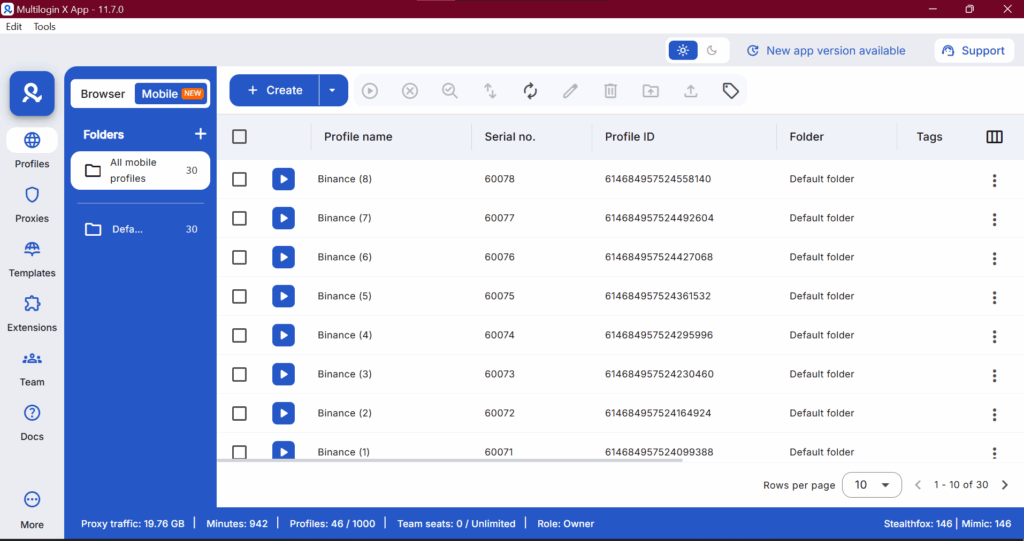
No more juggling physical devices or risking account links. Try Multilogin's cloud phones now.
Frequently Asked Questions About Can I have multiple Binance accounts
No. Binance’s Terms of Service prohibit individuals from holding more than one account. Creating a second account violates their policy and can result in both accounts being suspended.
Potentially, if you have a genuine legal business entity separate from yourself and operate them independently. This requires business verification and is subject to Binance’s approval. It’s not a workaround — it requires real separate entities.
Typically one or both accounts get suspended. You’ll need to contact support to clarify which is your primary account. Funds are usually recoverable but the process takes time.
You can register with a different email, but the KYC verification step requires your real ID documents. If those documents are already tied to an existing account, the system will flag the duplicate identity.
No. Sub-accounts are an institutional feature for professional trading operations with significant volume and business verification.