


There’s a question that comes up constantly in marketing: does social media help SEO? And the flip side — can SEO techniques work on social media?
Both answers are yes, but not in the ways most people think.
This guide breaks down what social media SEO actually is in 2026, how the two disciplines work together, and the specific tactics that improve discoverability both on social platforms and in traditional search. If you manage multiple accounts or brands, there’s a section specifically on doing this at scale.
What Is Social Media SEO?
Social media SEO refers to two related but distinct things:
- SEO for social platforms: Optimizing your social media profiles, posts, and content so they rank higher within each platform’s native search — on TikTok, Instagram, YouTube, Pinterest, and LinkedIn, internal search is a major discovery channel.
- Social media’s impact on traditional SEO: How your social media presence affects your Google and Bing rankings. This is more indirect but real.
Most people only think about one or the other. The most effective social media marketers work both angles simultaneously.
Does Social Media Help SEO? (The Real Answer)
Google has publicly stated that social media signals are not a direct ranking factor. Likes, shares, and followers don’t boost your website’s position in search results.
But that’s not the full picture. Social media affects SEO in several indirect but meaningful ways:
- Brand search volume: A strong social presence generates branded searches. When more people search your brand name in Google, it’s a positive trust signal.
- Backlink generation: Content that performs well on social media gets seen by journalists, bloggers, and website owners who then link to it. Social reach is a distribution mechanism for earning the backlinks that do directly affect SEO.
- Content indexing: Google crawls social profiles and social content. Well-optimized social content can itself rank in search results — this is particularly true for YouTube videos, Pinterest pins, LinkedIn articles, and Twitter/X posts.
- Local signals: For local businesses, consistent NAP (name, address, phone) information across social profiles and Google Business Profile strengthens local SEO.
The bottom line: social media is not a direct SEO ranking factor, but it’s an amplification mechanism that generates the secondary signals that do affect rankings. Treat them as partners, not competitors for your attention.
How SEO and Social Media Work Together
The highest-performing marketing teams think about SEO and social media as part of the same content ecosystem.
- Keyword research informs social content: Your SEO keyword research tells you what your audience is searching for. That same intent exists on social platforms — people looking for answers to “how to grow a Facebook group” are searching that on Google and on TikTok and YouTube. Creating content that addresses these queries across all platforms multiplies your reach.
- Top social content becomes SEO content: A video that performs exceptionally well on TikTok is a signal that the topic resonates. Turn it into a long-form blog post, target the same keyword, and earn both the social traffic and the search traffic.
- Social profiles rank in branded searches: Your brand’s Twitter/X profile, Instagram page, and LinkedIn company page typically appear on page one of Google for your brand name. Optimizing these profiles — complete bio, consistent branding, active posting — helps you control what potential customers see when they search you.
- Link in bio and social traffic: Traffic from social media to your website, while not a direct ranking factor, increases the number of users visiting your site. When users engage with that content (low bounce rate, time on site), it sends positive behavioral signals.
Social Media SEO Strategy: Platform by Platform
Each major platform has its own search engine, and optimizing for each requires a different approach.
YouTube SEO
YouTube is the second-largest search engine in the world. Getting your videos to rank in YouTube search — and in Google video results — is one of the highest-ROI activities in content marketing.
- Key ranking factors: Title (target keyword first), description (first 2–3 sentences matter most, include keyword), tags, watch time, click-through rate from thumbnails, comments, and subscriber growth from video.
- What works in 2026: Long-tail keyword targeting is easier to rank for than head terms. “How to grow a YouTube channel as a small business” is more attainable than just “YouTube growth.” Use TubeBuddy or VidIQ to research keywords with search volume but manageable competition.
For teams managing multiple YouTube channels, our guide on how to create multiple YouTube accounts covers the technical setup side.
Instagram SEO
Instagram has developed a genuine search function that goes beyond hashtags. In 2026, Instagram’s search prioritizes:
- Keywords in your username and name field
- Keywords in your bio
- Keywords used consistently in your captions
- Engagement signals (saves, shares, comments) when those posts contain a specific keyword
The practical implication: if you want to be discoverable for “fitness coaching London,” make sure that phrase or its components appear in your username, bio, and regularly in your captions. This is brand-new territory compared to the hashtag-only strategies of previous years.
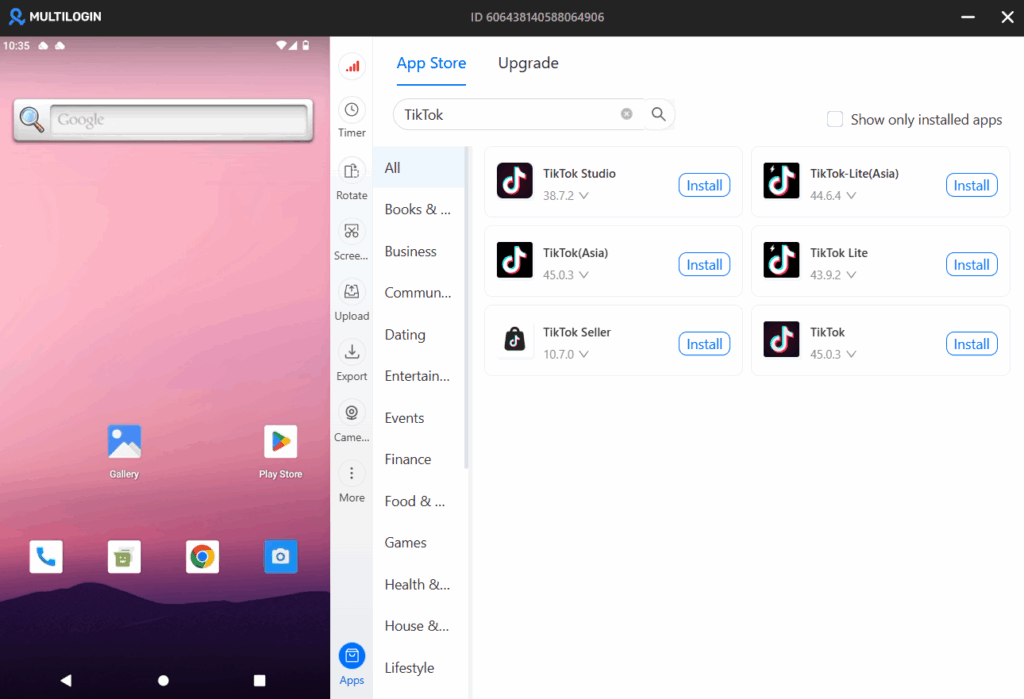
For managing multiple client Instagram accounts with per-account SEO strategies, Multilogin Cloud Phones keep each account fully isolated while you manage them all from one place.
TikTok SEO
TikTok has become a search engine in its own right, especially for discovery queries. A significant portion of Gen Z now searches TikTok before Google for recommendations, reviews, and how-to content.
- TikTok ranking factors: Keywords in captions (first sentence especially), keywords spoken in video (auto-transcribed), on-screen text, engagement rate (especially early engagement), and account authority in the niche.
- The opportunity: TikTok search is less competitive than Google for most queries. Optimizing a consistent series of videos around a specific keyword phrase can establish real search authority within weeks. This makes TikTok SEO a fast-win channel for new brands.
Combine TikTok search optimization with your TikTok marketing strategy for compounding results.
Pinterest SEO
Pinterest is a visual search engine, and it’s one of the most underused SEO channels for e-commerce and content brands. Pinterest content (pins) can rank in both Pinterest search and Google image search.
- Key factors: Pin title and description are the primary keyword fields. Board name and board description also affect discoverability. Fresh pins (newly created) get a temporary traffic boost — consistent posting matters.
- Who benefits most: E-commerce brands, food and recipe creators, home décor, fashion, and DIY content. If your audience is primarily women aged 25–45, Pinterest is worth taking very seriously as an SEO channel.
LinkedIn SEO
LinkedIn’s search algorithm favors profile completeness, keyword relevance in headline and summary, and engagement metrics.
- For personal profiles: Your headline is your most important SEO field. Include the keywords prospects would use to find someone with your skills — “B2B SaaS Marketing Manager” rather than just “Marketing Manager.”
- For company pages: Keyword-optimized About section, consistent posting, and employee engagement (reactions and comments from employees) are the main levers.
LinkedIn articles and posts can also rank in Google, especially for professional queries. A well-written LinkedIn article on a niche topic with reasonable search volume can bring in organic search traffic.
Twitter/X SEO
Twitter/X content ranks in Google, particularly for recent news and trending topics. Twitter profiles also frequently appear in branded search results.
- For SEO purposes: Your bio is indexed by Google. Include relevant keywords. Consistent posting on a topic builds topical authority signals that can help Twitter posts rank for relevant queries.
For teams running multiple Twitter accounts, our guide on how to create multiple Twitter accounts covers safe multi-account management.
Off-Page SEO and Social Media
Off-page SEO — building authority through external links and signals — benefits significantly from social media distribution.
How it works in practice: You publish a piece of research or a data-driven guide. You distribute it across all your social channels. The content gets seen by bloggers, journalists, and website owners in your space who link to it. Those backlinks improve your domain authority and rankings.
Social media is a distribution multiplier for link-earning content. Without distribution, great content just sits on your website unseen. Social media is how you get it in front of the people who will link to it.
This is why social media growth strategy and SEO should be planned together, not in separate silos.
Building a Social Media SEO Strategy
Here’s a practical framework for integrating the two disciplines:
Step 1: Unify your keyword research. Take your SEO keyword list and identify which of those queries also have native search volume on TikTok, YouTube, Pinterest, and Instagram. These are your highest-priority content topics — they can earn traffic from multiple channels simultaneously.
Step 2: Optimize your profiles. Every social profile should include your primary keywords in the bio/description fields. This takes 30 minutes per platform and has lasting impact.
Step 3: Create platform-native SEO content. For each platform where search matters (YouTube, TikTok, Pinterest, LinkedIn), create content that targets specific keyword phrases within that platform’s format. A YouTube video, a TikTok series, a Pinterest board, a LinkedIn article.
Step 4: Use high-performing social content as SEO seeds. When a social post performs exceptionally well (unusually high engagement, lots of saves, many comments), that’s signal. Build a long-form SEO article around the same topic. The social performance validated the interest; now capture the search traffic.
Step 5: Build internal link pathways from social to site. Your social content should regularly drive traffic to your website’s high-value pages. Link in bio, swipe-up links, and in-video links should point to landing pages, blog posts, or product pages that are themselves optimized for search.
Social Media SEO for Agencies: Managing Multiple Clients
If you’re running social media SEO for multiple clients, the challenge compounds quickly. Each client needs a unique keyword strategy, per-platform optimization, and content that doesn’t cross-contaminate.
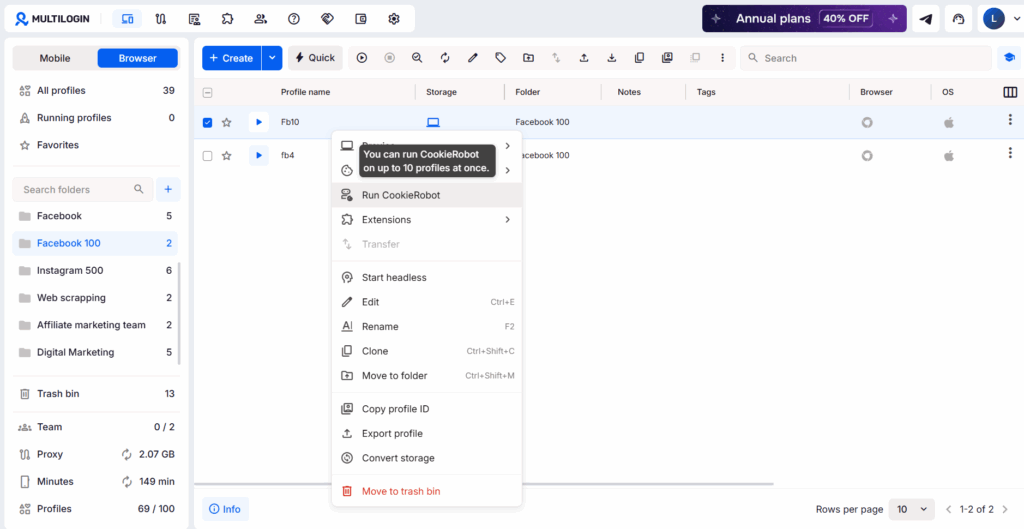
The practical side of this is account isolation. Running multiple client accounts from the same device or IP creates linkage risks — most obviously on TikTok and Instagram, which actively monitor for multi-account behavior. For agencies, browser profiles and cloud phones are the standard infrastructure for keeping client accounts separated.
Beyond infrastructure, multi-client social media SEO requires systematized processes:
- Per-client keyword library (SEO and social search)
- Per-platform content templates that can be customized per client
- Centralized tracking that shows SEO and social performance per account
- Regular audits that look at both Google Search Console rankings and native platform analytics
The teams that do this well treat social and SEO as one discipline with two sets of tools — not as two separate departments.
Content Types That Win at Social Media SEO
Not all content formats are created equal when you’re optimizing for discoverability on social platforms.
- How-to and tutorial content: These are query-driven by nature. “How to grow a Facebook group,” “how to write an Instagram bio,” “how to get Twitter followers” — these are search queries that people make on Google AND on YouTube, TikTok, and Pinterest. Tutorial content earns search traffic from multiple directions simultaneously.
- List content: “10 best tools for social media marketing,” “5 Instagram tips for small businesses” — list content gets shared, saved, and searched. It’s also easy for people to find relevant portions, which improves engagement metrics.
- Review and comparison content: High commercial intent. “Best [tool category] for [use case]” content ranks well in both Google and native platform search.
- Educational series: Creating a structured series around a keyword cluster (e.g., “Understanding TikTok SEO” as a 5-video series) builds topical authority on the platform, which signals to its algorithm that you’re a reliable source on that topic.
For inspiration on what works across different social channels, see our guides on how to use Instagram for business, Pinterest SEO, and Twitter SEO.
Measuring Social Media SEO Performance
You can’t improve what you don’t measure. Here’s what to track:
- On social platforms: Profile search impressions (available in Instagram Insights, LinkedIn Analytics, YouTube Studio), click-through rates from search to your profile, follower growth from search vs. recommendations.
- From social to your website: Google Analytics traffic from social channels, landing page conversion rates for social-sourced traffic, time on site for social visitors.
- In Google Search Console: Branded search volume trend (social media success should lift this), Google Image Search clicks (relevant for Pinterest and Instagram).
Combined signal: When a keyword topic performs well on social (high saves, views, engagement) AND ranks in Google, you’ve identified a genuine audience interest. Double down on those topics.
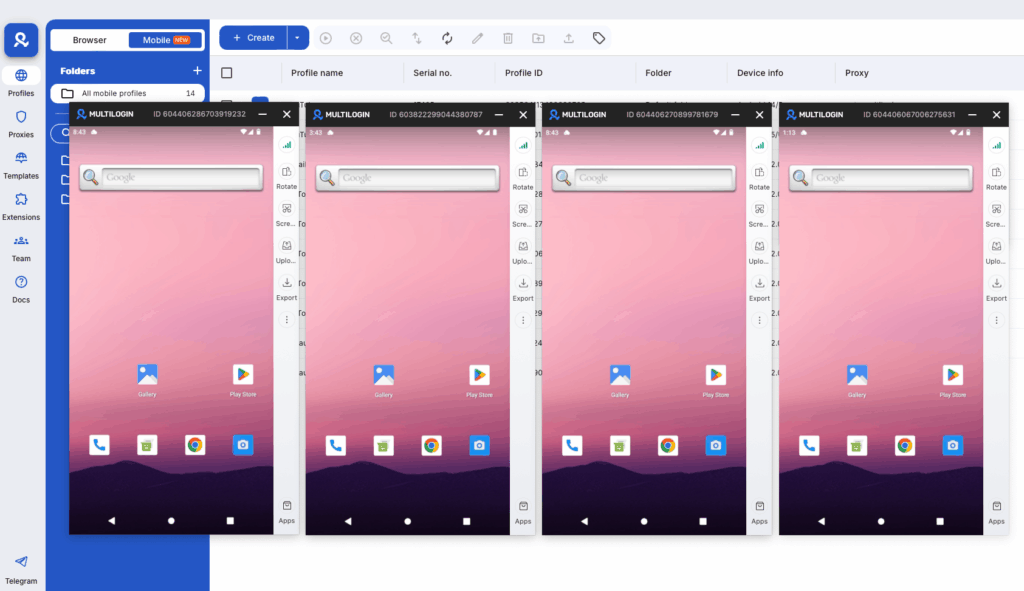
No more juggling physical devices or risking account links. Try Multilogin's cloud phones now.
Frequently Asked Questions About Social Media SEO
Not directly. But Instagram content can appear in Google Image Search and Explore results. A strong Instagram presence also generates branded search queries, which is an indirect positive SEO signal.
Yes. The most efficient content operations treat them as one team with shared keyword data, shared content calendars, and unified performance reporting.
Yes. TikTok videos frequently appear in Google video results, especially for how-to and review queries. This is growing as Google integrates more short-form video into search results.
Complete every field in your company profile. Use target keywords naturally in the About section. Post consistently (2–3 times per week minimum). Get employees to engage with content. LinkedIn pages with regular activity rank better in both LinkedIn and Google search.
For the right niches (e-commerce, food, home décor, travel, fashion, DIY), absolutely. Pinterest pins can rank in Google Image Search for years after posting. It’s a long-duration content channel with compounding returns.
Yes, cloud phones are ideal for managing multiple TikTok accounts because they provide isolated mobile environments that prevent platforms from linking your accounts together, reducing the risk of shadow bans or suspensions.