


A single income source is a single point of failure. If that job disappears, that client churns, or that business slows — your financial picture changes overnight.
Multiple streams of income solve this. Not because each stream is massive, but because several smaller streams together are more stable than one large one. A job loss that would be catastrophic with one income source is a setback when you have three or four running in parallel.
This guide covers nine real income streams, how each works, what you actually need to start, and honestly — which ones are worth the effort and which ones get oversold.
Why most “multiple income streams” advice is wrong
Most guides list 20+ income ideas and move on. The problem: they treat all income streams as equal when they’re completely different in terms of:
- Time to first dollar (some pay in days, some in years)
- Ceiling (some top out at $500/month, others are unlimited)
- Active vs passive (some require constant work, some run without you)
- Starting capital needed (some cost nothing, some need real investment)
- Skill requirements (some anyone can start, some take years to develop)
The real goal isn’t to have many income streams — it’s to have income streams that are diverse in type. A portfolio of income sources works like a financial portfolio: you want assets that don’t all move together. If all your streams depend on your time, losing your time (illness, burnout) collapses all of them simultaneously.
The framework most serious income builders use separates streams into three types:
- Active income — you trade time for money. The ceiling is your available hours.
- Leveraged income — you do work once, and it continues to pay. Royalties, content, digital products.
- Passive income — money that works without your ongoing input. Investments, rental income, ownership stakes.
A solid income setup includes at least one from each category. Here’s how to build toward that.
1. Your primary job or freelance work (active — foundation)
Start here because this is what funds everything else. Before adding income streams, make sure your primary income is stable enough to provide the capital and mental space to build others.
If you’re employed, that’s your foundation. If you’re freelancing, your freelance income is your foundation — but it’s more exposed to single-client risk, which makes adding other streams more urgent.
What to do: Before building new streams, build a 3–6 month emergency fund from your primary income. This is what lets you take small financial risks on new streams without one bad month wiping you out.
2. Content creation on social media (leveraged)
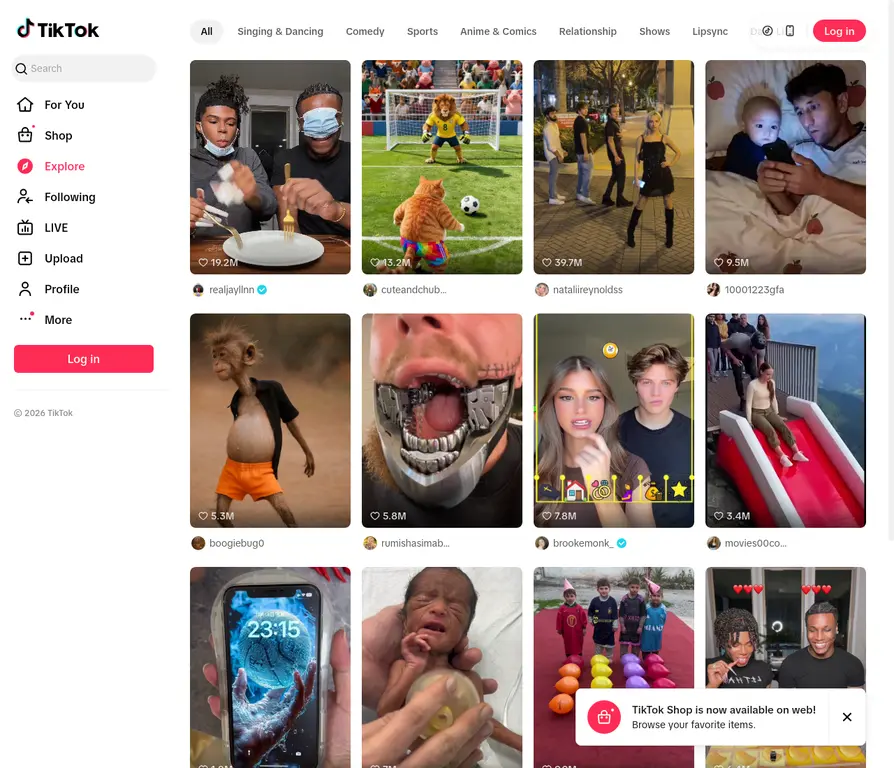
This takes longer than most people expect, but the economics work at scale. Creators who build audiences on TikTok, YouTube, or Instagram unlock multiple revenue paths simultaneously: platform monetization, brand deals, and affiliate income.
The key insight most beginners miss: you’re not trying to go viral. You’re building a body of work that accumulates over time. A library of 200 YouTube videos earns money every month from videos that were posted years ago. That’s genuine passive income — but it takes 12–24 months of consistent posting to build.
Where to start: Pick one platform based on your natural content style. Long-form explanation or storytelling → YouTube. Short, fast-moving hooks → TikTok. Visual products or lifestyle → Instagram. Don’t split your early effort across all three.
What it pays: YouTube ad revenue varies significantly by niche — finance content earns dramatically more per view than entertainment. Make money on TikTok through the Creator Rewards Program plus brand deals. Monetise Instagram through partnerships and product sales.
Scaling with multiple accounts: Some creators operate multiple niche channels (a finance channel, a cooking channel, a travel channel) as completely separate brands. Each targets a different audience and monetizes differently.
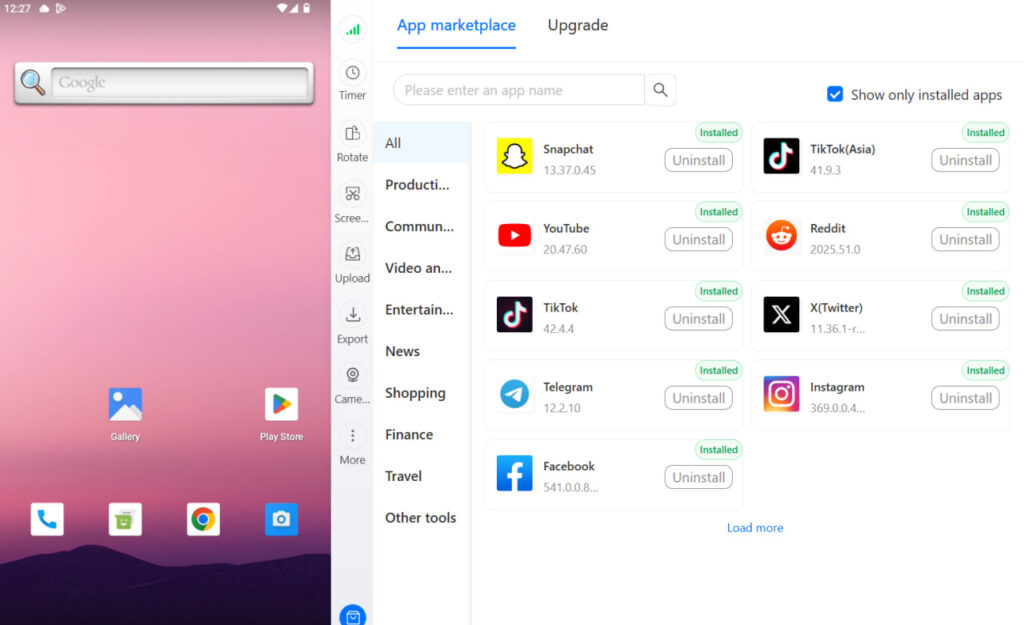
Managing multiple accounts across platforms without them getting linked requires proper account isolation — separate browser profiles or cloud phones per account — so that one account’s activity doesn’t affect the others. Instagram theme pages are a good example: operators run several niche pages simultaneously, each earning independently.
Try Multilogin now to manage multiple creator accounts across platforms without device linking.
3. Affiliate marketing (leveraged — often passive over time)
You promote someone else’s product. When someone buys through your link, you earn a commission. The commission is typically 5–50% of the sale price depending on the category.
The model works because the product exists before you start. You’re adding distribution — through content, social media, email, or paid ads — not building a product yourself.
What it actually takes: Affiliate marketing fails for most people not because the model is broken but because they expect it to pay immediately. Organic affiliate income (through content) takes months to build momentum. Paid traffic affiliate marketing (running ads to affiliate offers) can work faster but requires capital and skill to make profitable.
Good starting points: Product categories with high commission rates include software (20–50%), digital courses (30–50%), and financial products (fixed fees per lead). Physical products on Amazon’s affiliate program pay lower percentages (1–10%) but have enormous volume.
Explore established affiliate networks to find offers that match the audience you’re building.
4. Dropshipping and eCommerce (active → leveraged)
You sell physical products online without holding inventory. When an order comes in, the supplier ships directly to the customer. Your margin is the difference between what you charge and what the supplier charges.
It’s more competitive than it was five years ago, but it still works in niches where you can build a real brand or dominate specific product categories. The key shift: pure dropshipping (no branding, no differentiation) is hard. Building a branded product line with a manufacturer and scaling it is still a viable business.
Time to first dollar: 2–8 weeks to build and launch. Revenue timeline depends on your marketing.
What it pays: Margins vary widely. Low-margin niches (electronics, general consumer goods) compete mostly on price. High-margin niches (hobby equipment, speciality tools, pet products) leave more room. Dropshipping toward $1,000/month is achievable in most niches within 3–6 months of consistent effort.
5. Selling on Amazon and other marketplaces (active → leveraged)
Distinct from dropshipping — this covers selling your own products (or private label products) through marketplace infrastructure. Amazon FBA (Fulfilled by Amazon) specifically lets you send inventory to Amazon’s warehouses, and they handle storage, shipping, and customer service. Your job is product research, sourcing, and marketing.
The advantage over a standalone eCommerce store: Amazon’s built-in traffic. The disadvantage: competition, Amazon fees, and the risk of the platform changing rules or listing your competitors’ products on your page.
Make money selling on Amazon is a well-worn path with clear playbooks — product research tools (Jungle Scout, Helium 10), sourcing from Alibaba, listing optimisation. The path is documented; the work is execution.
6. Digital products and courses (leveraged — strong passive potential)
You create something once — an ebook, a course, a template pack, a software tool, a preset collection — and sell it indefinitely. Every sale after the first one is near-pure profit.
This is where the “passive income” idea is most accurate. A well-priced Gumroad product or Teachable course that ranks in search or gets recommended in your niche can generate income for years with minimal ongoing work.
What works: Digital products succeed when they solve a specific, painful problem for a specific audience. A generic “learn social media marketing” course competes with 10,000 others. A “How to grow a Pilates studio’s Instagram account from 0 to 10K followers” course has a specific audience and charges more because it’s more valuable to them.
Where to sell: Etsy for digital downloads (templates, printables), Gumroad for anything digital, your own website for premium pricing. Sell on Etsy is particularly good for design templates, planners, and creative assets because the buyer intent is already there.
7. Investing (passive — requires capital to matter)
Dividend stocks, index funds, REITs, bonds — these generate income while you sleep, but the income scales with the capital invested, not with your time. At $10,000 invested, a 4% yield is $400/year. That’s meaningful but not life-changing. At $500,000, it’s $20,000/year — genuinely significant. Understanding how compounding actually plays out over time is what makes investing worth the wait — it’s slow until it suddenly isn’t.
This is why investing works best as a destination for income from other streams, not a starting point. Build active and leveraged income first, invest the surplus, and compound over time.
What to know about real estate: The “buying homes” approach to multiple income streams refers to rental properties — buy a property, rent it out, earn monthly income. The appeal: leverage (you can control an asset worth $300K with $60K down), inflation protection, and cash flow. The reality: it’s not passive. Property management, maintenance, tenants, vacancies, and the complexity of finance make it a business, not a hands-off investment.
Real estate works well as an income stream but requires more capital and tolerance for operational complexity than most other streams on this list.
8. Freelancing in a secondary skill (active — quick to start)
Most people have more than one marketable skill. A software developer who’s also good at writing can freelance as a technical writer. A marketer who understands design can freelance on both. A teacher who knows a second language can tutor in both.
Freelancing in a secondary skill is the fastest way to add an income stream with zero starting capital. The platform infrastructure already exists (Upwork, Fiverr, Toptal, direct outreach on LinkedIn) and you can typically land a first client within a week of creating a profile.
The ceiling is your available hours — which is why this is an active income stream, not a passive one. But it’s a fast way to build capital you can invest in more scalable streams.
9. Licensing and royalties (passive — requires upfront creative work)
Write a book and earn royalties. License a photo and earn every time it’s downloaded. Create a software component and license it to developers. Compose music and earn every time it’s played.
Royalties are genuinely passive — they pay without ongoing work. But they require significant upfront creative effort and often take years before the returns are meaningful. Most books don’t make much money. Most stock photos make pennies per download. The ones that work do so because they fill a specific, ongoing need.
If you already create content professionally (writing, music, photography, software), building a royalty income stream is a natural extension of work you’re already doing.
How to actually build multiple streams without burning out
The most common mistake: trying to start everything at once. Someone reads a guide like this, gets excited, and launches a dropshipping store, starts a YouTube channel, opens an Etsy shop, and starts freelancing all in the same month. Three months later, nothing has traction because nothing got enough sustained attention.
The practical approach:
- Start with one new stream. Pick the one that fits your existing skills and available time. Give it 90 days of real focus before evaluating whether to continue or switch.
- Use early income to fund the next stream. First freelance income pays for your first Etsy product photography. First Etsy income funds your first ad test. Building sequentially is slower than trying everything simultaneously, but the compounding effect is real.
- Don’t confuse busy with building. Setting up five platforms in a week feels productive but generates nothing. One platform with 90 days of actual work generates data, income, and lessons.
If side income is your goal, start there — smaller wins, faster feedback, lower risk. If earning $100 a day online is the target, map out exactly which stream can realistically get you there and focus on that one first.
Try Multilogin now if your income-building strategy involves managing multiple platforms, creator accounts, or eCommerce operations — isolation and clean account management are what make multi-stream digital operations sustainable.
What works at different life stages
In your 20s: Favour speed and learning over optimization. Freelancing and content creation build skills and income simultaneously. The mistakes you make now are cheap because your expenses are typically lower and your time is relatively abundant.
In your 30s: Capital usually exists but time is compressed. Favour leveraged and passive streams over active ones. Invest freelance income into scalable systems (ads, tools, automation). Real estate becomes relevant if you have access to capital.
With a full-time job: Use nights and weekends to build one leveraged stream. The goal isn’t to replace your salary immediately — it’s to build something that provides financial flexibility over 2–3 years.
Need to manage multiple social media accounts? Try Multilogin Cloud Phones.
Frequently asked questions About How to create multiple streams of income
The answer varies by your situation, but three is a reasonable first target: one active (your primary income), one leveraged (something that grows without direct time), and one passive (investments). Beyond three, the complexity of managing them often outweighs the marginal benefit unless each stream is systematically run.
Freelancing in an existing skill has the shortest path to first dollar — often days. Affiliate marketing with paid traffic can pay within weeks. Content-based income (YouTube, blogging) typically takes 6–18 months.
Leveraged income still requires some ongoing work but multiplies the output of that work (a course you update once a year). True passive income requires minimal ongoing input (dividend investments, royalties). Most “passive income” ideas are actually leveraged income.
Yes — freelancing, content creation, and affiliate marketing all require near-zero starting capital. The investment is time and skill rather than money. Streams like dropshipping and investing require some starting capital to be viable.
For most people: 6–12 months to have two streams generating meaningful money simultaneously, 18–24 months to have three. This assumes consistent effort — most people underestimate how long it takes and quit 2–3 months before things start working.
Key takeaways
- Diversifying income across active, leveraged, and passive streams creates stability that no single source can provide
- Start with one additional stream rather than many — depth beats breadth in the early stages
- The fastest streams to start (freelancing, content) are active; the most valuable long-term (investments, royalties, digital products) take longer to build
- Several income streams that scale best online — social media monetisation, affiliate marketing, eCommerce, multi-platform content — benefit from proper account isolation when operating at any real volume
- Use income from earlier streams to fund the infrastructure for later ones
Making money online at scale — across multiple platforms, brands, or accounts — is operationally different from managing a single income source. The right tools for making money online matter more as you add streams, because complexity compounds faster than most people plan for.
Try Multilogin now and build the operational infrastructure that lets you run multiple income streams without each one interfering with the others.