



Most people searching for ways to make extra money on the side aren’t looking to quit their job. They want something flexible, realistic, and worth the time they put in. The problem is most guides pad these lists with things like “sell your plasma” and “do surveys” without being honest about what moves real money.
This guide sticks to methods that scale, work from home or remotely, and can be started without significant upfront investment.
Start your Multilogin plan if you’re managing multiple accounts across any of these and need them properly isolated.
Freelancing: the fastest path to real side income
Freelancing is the single most reliable way to make extra money on the side fast, because you’re trading a skill you already have for money. The time-to-first-dollar is days or weeks, not months.
High-demand skills that pay well on platforms like Upwork, Fiverr, and Toptal:
- Writing and content — SEO content, copywriting, email sequences, product descriptions. Rates start around $0.05–$0.10/word and scale to $0.25–$1.00+ for specialists.
- Design — logos, social media graphics, landing pages, pitch decks. Mid-level designers earn $30–$75/hour on freelance platforms.
- Development — web development, Shopify customization, automation scripts, WordPress builds. Even basic skills command $40–$80/hour.
- Video editing — short-form editing (Reels, TikTok, Shorts) is in high demand. Editors who specialize in social media formats often charge per video ($50–$200 per finished minute).
- Virtual assistance — calendar management, email triage, data entry, social scheduling. Lower per-hour ceiling ($15–$30) but extremely accessible entry point.
The key move: don’t try to compete on generalist platforms at low rates. Specialize in an industry vertical (e-commerce, SaaS, real estate) and your rate jumps immediately because clients pay for domain knowledge, not just execution.
Reselling: arbitrage that actually works
Retail arbitrage is buying underpriced products and reselling them at market rate. It requires time and attention, but the mechanics are simple.
- Online arbitrage — buy clearance items from retailers like Walmart or Target and sell them on Amazon or eBay. Use the Amazon Seller app to scan barcodes and check current prices before buying. Margins typically run 20–50% on good finds.
- Thrift and estate sale flipping — furniture, vintage clothing, electronics, collectibles. Knowledge of specific categories (sneakers, vintage cameras, mid-century furniture) gives you an edge. Poshmark, Depop, eBay, and Facebook Marketplace are the primary sell-side platforms.
- Domain flipping — buying undervalued domain names and selling them to buyers. Requires pattern recognition and patience, but high-value domains sell for thousands.
The ceiling for reselling is set by how much time you put in and how good your sourcing is. Serious resellers treat it as a business, not a side project.
Content creation and social media
Content creation is the side hustle with the highest upside and the longest ramp time. Most platforms require 3–12 months of consistent posting before generating meaningful income.
- YouTube — AdSense + affiliate links + sponsorships. Long-form content in high-RPM niches (finance, business, tech) earns significantly more per view than entertainment.
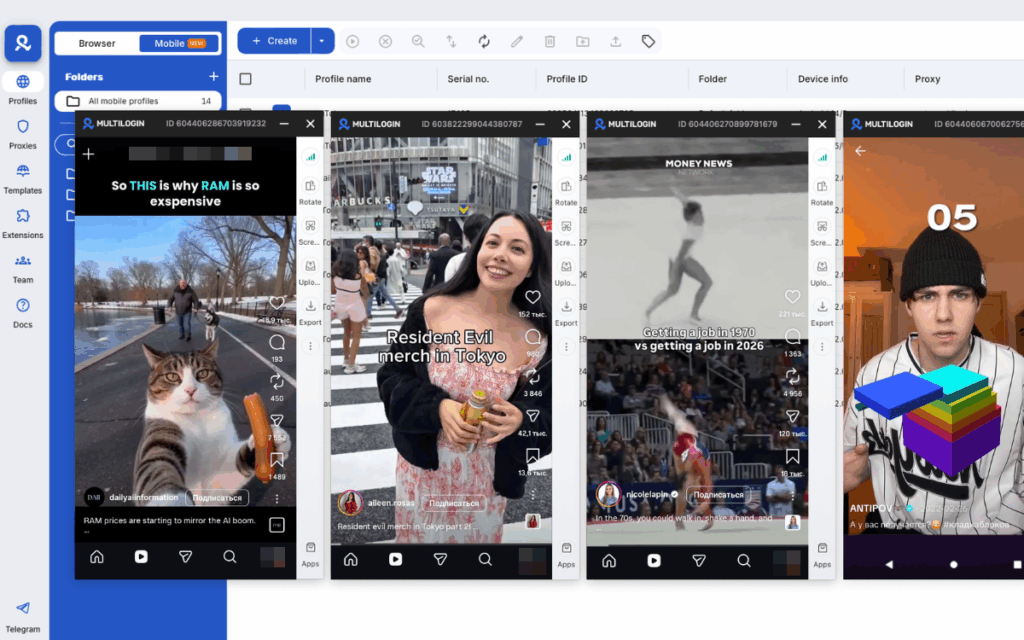
- TikTok — the Creator Rewards Program, brand deals, and TikTok Shop affiliate commissions. The algorithm can surface new accounts quickly, making it one of the more accessible platforms for early audience growth. Managing multiple TikTok accounts to test different niches or content formats is a common strategy for finding what works faster.
- Instagram theme pages — curating content in a niche (fitness, travel, quotes, pets) rather than creating original content. Income comes from affiliate links, sponsored posts, and account sales. Some Instagram theme pages generate $500/month at modest follower counts with the right niche.
- Newsletter and Substack — written content that builds a direct relationship with subscribers. Monetizes through paid subscriptions, sponsorships, and affiliated product recommendations.
Affiliate marketing
Affiliate marketing is recommending products and earning a commission on sales. It doesn’t require creating a product, holding inventory, or managing customers.
The three primary traffic sources:
- Content SEO — write blog posts that rank for product-related searches and embed affiliate links. Slow to build (6–12 months before traffic), but generates passive income once ranked.
- Social media — build an audience in a niche and promote relevant products through posts, Stories, or videos. Faster feedback loops than SEO but more dependent on algorithm changes.
- Email list — build a subscriber list through a lead magnet or content series and recommend products to a warm audience. Highest conversion rates of any channel.
Amazon Associates, ShareASale, CJ Affiliate, and Impact are common starting points. Niche-specific programs often pay higher commissions than general affiliate networks. See the breakdown of affiliate networks and how they work if you’re new to the structure.
Operators running affiliate campaigns across multiple social accounts or content sites use isolated browser environments to manage them cleanly. Multilogin’s browser profiles keep each account’s session, cookies, and fingerprint separate, so one flagged account doesn’t pull the others with it. The top antidetect browsers for affiliate marketing comparison covers the tooling options if you’re scaling past a single account.
Selling digital products
Digital products have zero marginal cost — you create once and sell indefinitely. The challenge is building the initial audience to sell to.
- Templates — Notion, Canva, Excel, Google Sheets templates for specific use cases. Gumroad and Etsy are the primary platforms.
- Online courses — packaging knowledge into a structured course. Teachable, Kajabi, and Gumroad handle delivery. The key is choosing a topic specific enough that buyers trust you’re the right teacher.
- Ebooks and guides — lower price point ($5–$30) but fast to produce and easy to sell through Amazon KDP or your own site.
- Presets and filters — Lightroom presets, Photoshop actions, video LUTs. Popular with photographers and videographers who build a following around their aesthetic.
Phone farming and mobile-first income
Phone farming is running passive-income apps (reward apps, data-sharing apps, market research apps) on multiple devices simultaneously. Each device earns a small amount; multiple devices multiply it.
Physical phone farms require buying and maintaining hardware. The more practical modern approach is cloud phones — virtual Android devices you run from your desktop that look and behave like real physical phones to the apps running on them.
Multilogin’s cloud phones are real Android devices in the cloud, each with genuine hardware identifiers (IMEI, Android ID, MAC address) and persistent app data. Each cloud phone maintains its own session state, so reward apps treat it as a unique, real device. You manage all of them from one desktop interface, with no physical hardware to maintain.
For a deeper look at how this works at scale, the phone farming with Multilogin guide covers the setup and what to expect versus a traditional physical phone farm.
Making extra money online: fastest to slowest ramp
Here’s an honest ranking by time-to-first-dollar:
Method | Time to first income | Ceiling |
Freelancing | Days to weeks | High (scales with skill + clients) |
Reselling | Days | Medium (scales with sourcing time) |
Affiliate (social audience) | Weeks to months | High |
Phone farming | Weeks | Low-medium |
Digital products | Weeks to months | High (passive once built) |
Content creation | Months | Very high (but few reach it) |
Affiliate (SEO content) | 6–12 months | High (passive once ranked) |
The mistake most people make: choosing based on appeal rather than fit. If you have a marketable skill, freelancing beats everything else in the short term. If you want fully passive income and have patience, content + affiliate or digital products are the right build.
Need to make extra money online? Try Multilogin Cloud Phones.
Frequently asked questions About How to make extra money on the side
Freelancing skills you already have is the fastest path. Platforms like Fiverr and Upwork can get your first client within a week if your profile is positioned well. Reselling on eBay or Facebook Marketplace is also fast if you have items to list or time to source.
Yes, though the ceiling is lower early on. Virtual assistance, basic data entry, reselling, and completing micro-tasks on platforms like Amazon MTurk or Prolific all require minimal prior experience. The trade-off is lower hourly rates until you build a track record.
$200–$1,000/month is a reasonable first-year target for most side hustles that require time investment. Some methods (freelancing in high-demand skills, reselling with good sourcing) can exceed this within months. Content creation and SEO affiliate income take longer but have higher passive upside.
It depends on whether you have or can build an audience. Affiliate marketing with an existing social following or a blog that already ranks can generate consistent passive income. Starting from zero requires 6–12 months of content work before seeing meaningful revenue. The upside once it works is real: you earn commissions without ongoing active effort.