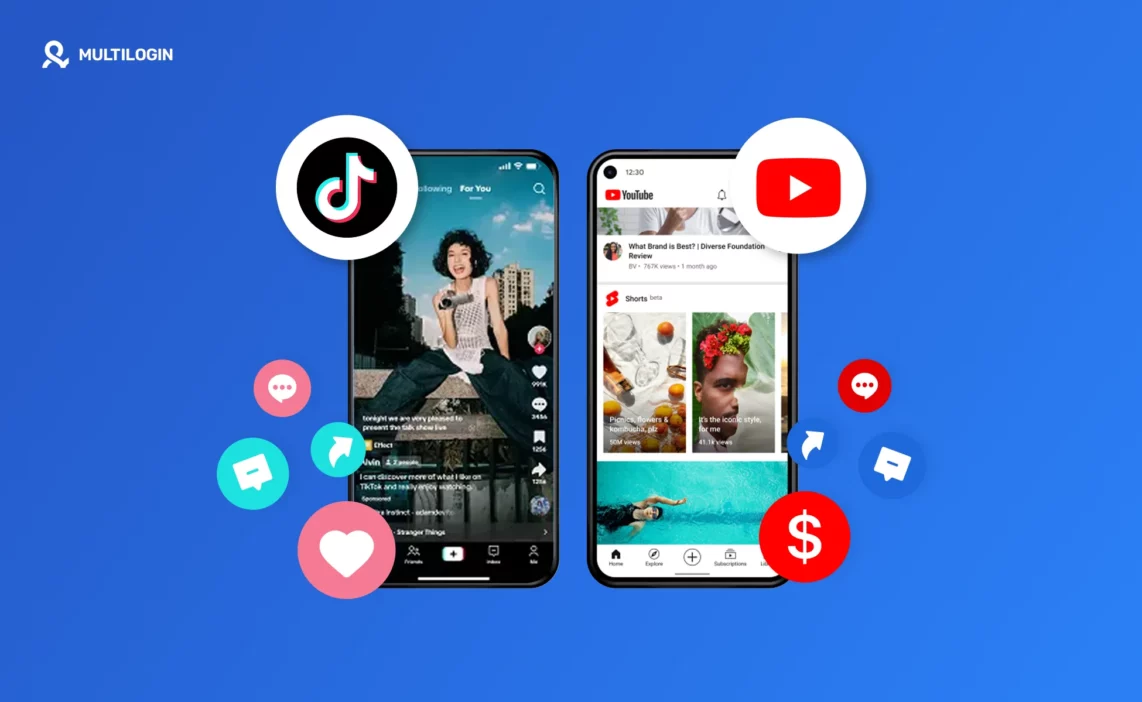



The better platform depends on what you need the short video to do. In the YouTube Shorts vs TikTok decision, TikTok provides documented native creation tools, personalized recommendations, search-demand insights, and creator analytics. YouTube Shorts can connect a short video to another Short, a regular video, or a live stream on the same channel. Neither platform is the automatic winner for every creator or brand.
The practical question is not, “Which app is bigger?” It is, “Which platform gives this content, team, and business model the right next step?”
Key takeaways
- YouTube Shorts is usually the stronger fit when short videos support a wider YouTube channel strategy. A Short can link viewers to another Short, a regular video, or a live stream from the same channel.
- TikTok is usually the stronger fit when native creation, trend research, search-demand research, and mobile content management are central to the workflow. TikTok Studio and Creator Search Insights support those tasks.
- Monetization cannot be reduced to a universal payout comparison. YouTube and TikTok use different eligibility rules and reward mechanisms, so creators should compare the programs they can access rather than rely on generic earning claims.
- The same content idea can be tested on both platforms, but each version should match the platform’s tools and analytics. YouTube provides Shorts-specific viewing and feed metrics, while TikTok Studio combines account, video, trend, and monetization information.
- Regular YouTube videos and Shorts serve different jobs. Shorts can support discovery and movement within a channel, while YouTube’s valid-public-watch-hour route and Shorts-view route are measured separately for full YPP eligibility.
Quick definitions
YouTube Shorts: Short-form YouTube videos that can be up to three minutes long. Shorts also have dedicated analytics and can link to related content on the same channel.
TikTok video: A TikTok post created with native tools such as sounds, text, effects, filters, captions, hashtags, tagging, and privacy controls. TikTok supports recordings up to 10 minutes and uploaded videos up to 60 minutes.
Regular YouTube video: A channel video considered separately from Shorts in this comparison. YouTube’s full YPP eligibility includes a 4,000-valid-public-watch-hour route, and Shorts Feed watch hours do not count toward that route.
Five verified facts to know before choosing
- YouTube Shorts can be up to three minutes long.
- YouTube reported that Shorts averaged 200 billion daily views in its 2026 CEO letter. This shows the scale of the format, but it does not predict how an individual channel will perform.
- TikTok recommendations use a changing mix of user interactions, content information, and user information.
- TikTok Creator Search Insights lets creators study search demand and review how their posts perform in search results.
- YouTube Shorts Analytics includes views, likes, subscriber change, shown-in-feed data, and the percentage of viewers who watched instead of swiping away.
What is YouTube Shorts?
YouTube Shorts is YouTube’s short-form video format, with uploads of up to three minutes and a dedicated set of Shorts analytics.
Its main strategic difference is that it sits inside a wider channel environment. A creator can add a clickable related-video link from a Short to a public or unlisted video, another Short, or a live stream on the same channel. That makes Shorts useful as standalone posts and as entry points to related channel content.
YouTube says its recommendations use signals connected to viewer interests and satisfaction. These include watch behavior, time watched, likes, dislikes, “not interested” feedback, and satisfaction surveys. This does not create a guaranteed formula. It gives creators a reason to study whether viewers watch, swipe away, or subscribe after seeing a Short.
What is TikTok?
TikTok is a content platform with native recording, editing, publishing, analytics, search-insight, and monetization tools.
The creation workflow supports sounds, text, stickers, effects, filters, descriptions, hashtags, tagging, locations, links, privacy settings, and drafts. TikTok allows recordings up to 10 minutes and uploaded videos up to 60 minutes, giving creators more length flexibility than the three-minute Shorts limit.
TikTok Studio brings creation, management, trend discovery, account analytics, video analytics, and monetization views into one creator tool. Creator Search Insights adds a separate research layer by showing search demand and helping creators evaluate post performance in TikTok search.
YouTube Shorts vs TikTok: What are the core differences?
The core difference is that TikTok centers its documented workflow around native content discovery and creation, while YouTube Shorts connects short videos to a wider YouTube channel and content library.
That distinction matters more than declaring one platform universally better.
Comparison area | YouTube Shorts | TikTok | What it means for your decision |
Maximum documented length | Up to three minutes. | Record up to 10 minutes or upload up to 60 minutes | TikTok gives more room for longer vertical posts. Shorts keeps the format tighter. |
Recommendation inputs | Viewer-interest and satisfaction signals such as watch behavior, watch time, likes, dislikes, feedback, and surveys | User interactions, content information, and user information, with factor importance changing over time | Both are personalized systems. Neither source supports a universal algorithm winner. |
Native creation tools | Shorts creation and YouTube publishing tools | Sounds, text, stickers, effects, filters, advanced editing, drafts, and more | TikTok documents a broader set of in-app creative options in the approved sources. |
Analytics | Views, likes, subscriber change, shown in feed, and viewed-versus-swiped-away percentage | Account analytics, video analytics, trend discovery, and monetization views in TikTok Studio | Both provide native data, but their dashboards emphasize different parts of the workflow. |
Search research | The approved source set does not document a direct Shorts equivalent to Creator Search Insights | Creator Search Insights shows search demand and search-result performance | TikTok provides a documented tool for planning around platform search demand. |
Connection to other content | Related-video links can point to a Video, Short, or Live on the same channel | The approved source set focuses on post tools, recommendations, Studio, and search insights | Shorts has a documented route from short-form viewing to other YouTube content. |
Direct monetization path | YPP eligibility and Shorts revenue sharing apply under YouTube’s published requirements | Creator Rewards applies under eligibility, originality, length, and regional requirements | Compare accessible programs and rules, not unsupported payout averages. |
Best fit in this comparison | Supporting a wider YouTube channel and measuring Shorts performance | Native creation, trend discovery, search research, and TikTok performance analysis | Choose according to the next action you want the viewer or team to take. |
Policy or workflow constraint | Shorts Feed watch hours do not count toward the 4,000-hour YPP route | Creator Rewards availability and eligibility conditions apply, and qualifying content must be original and at least one minute long | Each platform has constraints that can change the content plan. |
Which platform is better for creators?
YouTube Shorts is the stronger fit for creators building a wider YouTube channel, while TikTok is better suited to creators whose workflow depends on TikTok-native creation, trend research, and search-demand research.
Use YouTube Shorts when you want short posts to lead toward another video, Short, or live stream on the same channel. The related-video feature gives creators a documented bridge between quick viewing and deeper channel content. Shorts Analytics also lets them review feed exposure, viewing choices, likes, and subscriber changes.
TikTok makes more sense when content planning begins inside the platform. TikTok Studio supports creation, content management, trend discovery, analytics, and monetization views. Creator Search Insights can help identify topics people search for and show how published posts perform in search.
Test both when the underlying idea fits each platform but the business question is still open. Compare the native signals tied to the intended outcome, then adapt the edit, caption, sounds, link path, and call to action to the tools available on each platform.
Which platform is better for brands?
YouTube Shorts is the stronger fit for brands connecting short videos to an established YouTube content library, while TikTok is the stronger fit for brands prioritizing native production, trend discovery, and TikTok search research.
A brand with product explainers, interviews, webinars, demonstrations, or regular channel programming can link a Short to related content on the same channel. The team can then review Shorts metrics such as subscriber change and viewed-versus-swiped-away percentage.
A brand planning content around TikTok behavior can use TikTok Studio for trend discovery and performance review. Creator Search Insights adds topic-demand information that may help the team decide which questions, themes, or phrases deserve a test.
The deciding factor should be the campaign’s next step. When the desired action is deeper YouTube viewing, Shorts has the clearer documented connection. When the work starts with TikTok trends, search behavior, and native production, TikTok provides the more direct approved toolset.
TikTok vs YouTube Shorts monetization: Which pays more?
Neither approved source set supports a universal claim that TikTok or YouTube Shorts pays more, because the programs use different eligibility rules and reward systems.
For full YouTube Partner Program eligibility, a channel can qualify with 1,000 subscribers plus either 4,000 valid public watch hours during the previous 12 months or 10 million valid public Shorts views during the previous 90 days. Watch hours from the Shorts Feed do not count toward the 4,000-hour path.
For partners who accept the Shorts Monetization Module, YouTube pays 45% of the revenue allocated to the creator from the Creator Pool. That is a defined revenue-sharing mechanism, not a promised amount per view.
TikTok’s Creator Rewards Program includes a requirement for at least 100,000 video views during the previous 30 days. Eligible videos must be original and at least one minute long. Other eligibility conditions and regional availability also apply.
The useful comparison is personal and operational:
- Which program is available to you?
- Which eligibility path is realistic for your current audience and content?
- Can your format meet the originality and length requirements?
- Does the platform support the wider business outcome, such as channel viewing, client reporting, or content research?
A generic payout table cannot answer those questions.
YouTube Shorts vs videos: How are regular YouTube videos different?
Regular YouTube videos are the better fit for the valid-public-watch-hour route, while Shorts use a separate Shorts-view route and can direct viewers toward related channel content.
The two formats should not be treated as substitutes in every content plan. Shorts Feed watch hours do not count toward the 4,000 valid public watch hours required by one full YPP eligibility route. YouTube provides a separate route based on 10 million valid public Shorts views in 90 days.
Shorts can still support regular videos. The related-video feature lets a creator connect a Short to a public or unlisted video, another Short, or a live stream on the same channel.
That creates a simple division of labor:
- Use Shorts for concise ideas, mobile viewing, and entry points into the channel.
- Use regular videos when the topic needs more depth or when valid public watch hours are part of the monetization plan.
- Add related-video links when a Short and a longer piece belong to the same viewer journey.
How should creators test YouTube Shorts and TikTok?
Creators should test both platforms by defining one outcome, adapting comparable ideas, using native analytics, tracking production resources, and repeating the test before committing the full workflow.
Here are exactly five practical steps.
1. Define one outcome
Choose one result for the test, such as subscriber change, Shorts feed behavior, TikTok search performance, or content-production efficiency. A single outcome prevents the team from declaring victory based on whichever number looks nicest.
2. Publish a matched content set
Create a small group of posts around the same topic and audience problem, then adapt each version to the platform’s available tools. TikTok supports sounds, effects, text, hashtags, drafts, and advanced editing, while a YouTube Short can include a related-video path to other channel content.
3. Track native metrics
Review YouTube’s Shorts metrics, including shown in feed, viewed versus swiped away, likes, views, and subscriber change. On TikTok, use TikTok Studio for account and video analytics, and Creator Search Insights when search performance is part of the test.
4. Compare production cost
Record the time and money required to create, revise, publish, and review each format. YouTube recommends comparing the time and monetary cost of Shorts with the viewership and revenue they generate, while keeping the upload schedule sustainable.
5. Repeat before committing
Run more than one content cycle before moving the full workflow to one platform. YouTube describes recommendations through viewer-interest and satisfaction signals, while TikTok says the importance of its recommendation factors can change over time. Repeated tests give the team more useful evidence than one unusually strong or weak post.
Two worked decision examples
Example 1: A tutorial creator with long-form YouTube videos
This creator publishes detailed tutorials and wants short-form posts to give interested viewers a route to longer lessons.
A useful test would publish several Shorts based on specific tutorial questions, add a related-video link to the full lesson, and review views, viewed-versus-swiped-away percentage, and subscriber change. The related link provides the content path, while the native Shorts metrics show how the Short itself performed. TikTok can still be tested for topic discovery, but YouTube Shorts has the clearer documented connection to the existing video library.
This is a workflow example, not a performance benchmark.
Example 2: A brand researching mobile content topics
This brand wants to identify recurring search interests, produce native vertical posts, and review content performance inside one TikTok creator tool.
A useful test would use Creator Search Insights to find topic demand, prepare posts with TikTok’s native creation options, and review account and video analytics in TikTok Studio. The team could then adapt the strongest concepts for YouTube Shorts and compare Shorts-specific analytics.
This is a workflow example, not a claim that TikTok will produce more reach or revenue.
How to organize Shorts, TikTok, and client channel workflows
Creator teams and agencies can organize separate brand, client, region, or niche workflows by assigning each social profile a dedicated environment and managing mobile and browser work from one dashboard.
Multilogin is a cloud phone platform for social media marketers. Its Android cloud phones can support native mobile workflows by installing apps, uploading creative files, capturing screenshots, using a camera, and connecting through ADB. Browser profiles can support YouTube Studio and other web-based channel work. Persistent app data, built-in residential proxies, team workflows, and supported automation tools are available in the same platform.
A practical team setup could look like this:
- Assign a dedicated Android cloud phone to each client, brand, region, or niche social profile.
- Use browser profiles for YouTube Studio, reporting, channel settings, and other web tasks.
- Keep app data and login history with the relevant profile to support consistent team handoffs.
- Give team members access according to the work they need to complete.
- Use ADB or supported automation tools when repeatable workflows require them.
Test a Shorts workflow inside a dedicated Android cloud phone.
The free plan has no time limit and does not require a credit card. It includes five cloud mobile and browser profiles, 200 MB of proxy traffic, and one cloud mobile profile with 30 minutes. Paid plans start at $7.08 per month. Additional mobile minutes start at $0.0073 per minute, and extra proxy traffic costs $3.50 per GB. Purchased extra minutes and proxy traffic roll over.
Cloud phone streaming requires a stable internet connection, and first-time users may need a short adjustment period to learn desktop-based phone controls. Clear profile naming and usage planning can make the setup easier to manage.
For creator teams managing multiple brand or client profiles, Multilogin can help keep daily account work organized without turning your analytics workflow into a login mess.
Multilogin is not a way around platform rules; the safest approach combines clean account separation with original content, real engagement, and platform-compliant activity.
Conclusion
The YouTube Shorts vs TikTok choice should come from the job the content needs to do. Pick Shorts when short-form posts should support a wider YouTube channel. Pick TikTok when native creation, trend discovery, and search research are central to the plan. Use both when the concept fits both environments and the team can measure each platform on its own terms.
The useful answer will come from your analytics, production capacity, monetization eligibility, and next-step strategy, not from a universal platform ranking.
Run Unlimited Accounts Without Bans
Run your social media accounts on cloud phones & web browsers
Frequently Asked Questions: YouTube Shorts vs TikTok
Neither platform is universally better for audience growth, so creators should choose according to the viewer journey they want and verify the result in native analytics. YouTube Shorts provides feed, viewing-choice, like, view, and subscriber metrics, while TikTok Studio provides account and video analytics alongside trend discovery.
The approved sources do not support a universal payout winner because YouTube and TikTok use different eligibility conditions and monetization mechanisms. Compare YPP and Creator Rewards based on availability, eligibility, content requirements, and the role each platform plays in your business.
The same underlying footage can be adapted for both platforms, but the approved sources do not support treating an identical upload as the optimal version for each. TikTok documents recordings up to 10 minutes and uploads up to 60 minutes, while Shorts supports videos up to three minutes and can link to related YouTube content.
Neither official source establishes a universally better recommendation system. YouTube describes recommendations through viewer-interest and satisfaction signals, while TikTok describes a personalized mix of user interactions, content information, and user information.
Creators should focus on YouTube Shorts when short videos support a wider YouTube channel, and on TikTok when native creation, trend discovery, and search-demand research are the main needs. Testing both is sensible when the same concept can serve both workflows.
YouTube Shorts is the stronger fit for brands connecting short posts to an existing YouTube library, while TikTok is the stronger fit for brands using native production, trend discovery, and TikTok search research. The right choice still depends on the campaign’s intended next step.
YouTube Shorts is a short-form format within the wider YouTube channel ecosystem, while TikTok provides a wider native creation, discovery, search-insight, and creator-management environment. Their documented length limits, analytics, monetization rules, and content connections also differ.
YouTube Shorts are not universally better than regular videos because the formats serve different roles. Shorts can direct viewers to related channel content, while the valid-public-watch-hour route and Shorts-view route are measured separately for full YPP eligibility.