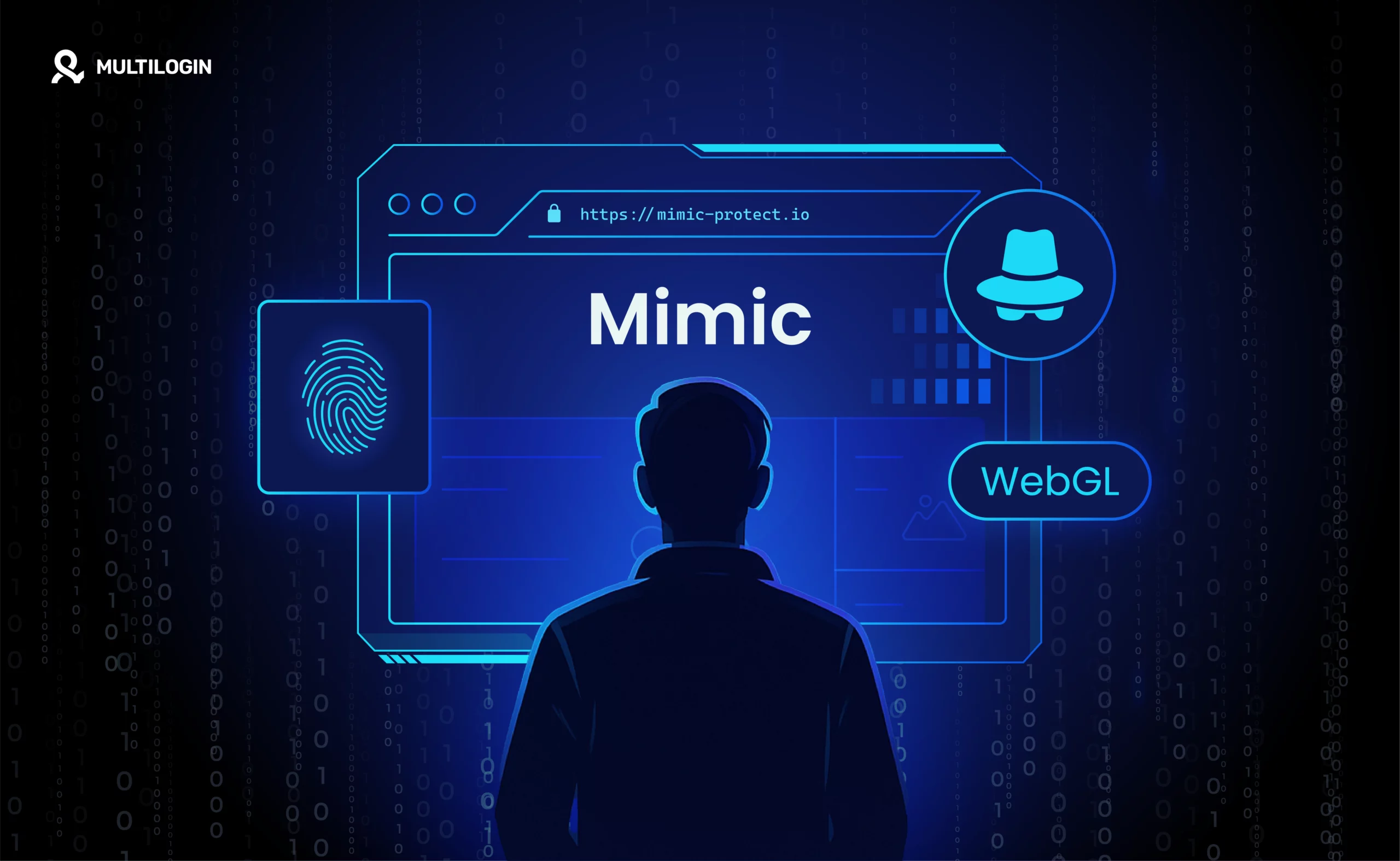



account data, locations, and workflows are spread across different browsers and devices. Mimic browser is Multilogin’s Chromium-based browser engine for creating isolated browser profiles for web-first platforms like YouTube and Reddit.
Mimic is part of Multilogin’s broader cloud phone platform for social media marketers. Web-first platforms such as YouTube and Reddit run in isolated browser environments, while mobile-first platforms such as TikTok, Instagram, and Facebook can operate on dedicated Android cloud phones. This gives marketers, agencies, creators, and AI workflow builders one place to manage social profiles across both web and native mobile apps.
What this setup gives you
- Isolated Chromium browser profiles powered by Mimic browser
- Dedicated Android cloud phones for mobile-first social profiles
- Persistent sessions, cookies, app data, and login history
- Built-in residential proxies for consistent profile locations
- One dashboard for web and mobile social media workflows
What is Mimic browser?
Mimic browser is Multilogin’s Chromium-based browser engine for managing isolated web profiles. It gives every profile its own cookies, local storage, settings, session data, and network configuration, so web-based social media workflows remain organized and separate.
Standard browsers are designed mainly for everyday browsing, not for teams managing multiple client, campaign, brand, or regional profiles. Logging in and out of several accounts in the same browser can make sessions difficult to organize and creates unnecessary operational friction.
With Mimic, each web profile opens in its own persistent browser environment. The profile keeps its session history between launches, allowing users to continue working without repeatedly signing in, rebuilding settings, or manually restoring cookies.
This makes Mimic useful for web-first platforms such as YouTube and Reddit, along with Facebook web, marketplaces, community platforms, and other services that are commonly managed through a desktop browser.
Mimic is not positioned as a standalone antidetect product. It is the Chromium browser layer inside Multilogin’s social profile management platform, working alongside Android cloud phones for native mobile app workflows.
How browser environments support web social profiles
A browser profile stores the data that allows a web account to maintain a consistent working environment over time. This includes its login state, cookies, local storage, browser preferences, extensions, and assigned network location.
When each social profile has its own isolated browser environment, marketers can organize accounts by client, platform, campaign, region, product, or team member. Instead of repeatedly switching logins in one browser, every profile has a dedicated workspace.
What each Mimic browser profile keeps separate
- Cookies and local storage
- Saved login sessions
- Browser settings and extensions
- Profile identity and device configuration
- Proxy, IP address, and location settings
Why persistent browser profiles matter
- Profiles can continue from their previous sessions
- Teams spend less time repeating logins and setup
- Account history stays tied to the correct workspace
- Campaigns and client profiles are easier to organize
Where browser profiles fit best
- YouTube channel management and web operations
- Reddit profile and community workflows
- Facebook pages, groups, and browser-based workflows
- Marketplace, e-commerce, and affiliate dashboards
- Web-based social media research and campaign management
YouTube and Reddit are both web-first platforms, which is why they’re managed through browser profiles rather than Android cloud phones. Some teams also run Reddit through its mobile app — for that workflow, a dedicated cloud phone for Reddit keeps the mobile app version separate from any browser-based Reddit profiles.
Why browser profiles are only one part of the workflow
Browser profiles remain important for web-first platforms like YouTube and Reddit, but many social media growth workflows now happen inside native mobile apps. TikTok, Instagram, and Facebook are mobile-first platforms, and important features are often designed around their Android applications.
A browser profile cannot run a native Android app or maintain its app storage, mobile login history, and device-level environment. For these workflows, social media marketers need a dedicated mobile workspace rather than another browser tab.
This is why Multilogin combines Mimic browser profiles with Android cloud phones. Users can choose the environment that matches each platform: browser profiles for web workflows and cloud phones for native mobile workflows.
Extending social profile management to mobile apps
Multilogin Android cloud phones give each mobile social profile its own dedicated Android environment in the cloud. Each cloud phone keeps its own apps, login states, app data, location, and profile identity.
This approach is especially useful for social media marketers managing multiple TikTok, Instagram, or Facebook profiles. Instead of buying, storing, and switching between physical devices, users can open and manage cloud phones remotely from the Multilogin dashboard.
Why mobile-first workflows need cloud phones
- Native apps require an Android environment, not a browser profile
- Each social profile can keep its own app data and login history
- Mobile workflows remain separate from browser-based operations
- Profiles can be organized by client, campaign, region, or niche
One cloud phone per social profile
- Each profile runs in its own dedicated Android environment
- Apps and account data stay inside the correct profile workspace
- Locations and proxies can be assigned consistently
- Teams can manage profiles without sharing physical devices
Persistent app data and session continuity
- App storage and login states remain available between sessions
- Profiles resume from where the previous workflow ended
- Long-term social profile history can develop consistently
- Teams spend less time repeating account setup
Managing mobile workflows without a physical phone farm
- No need to purchase and maintain shelves of Android devices
- Launch and manage cloud phones remotely
- Add more social profiles without rebuilding the physical setup
- Give team members controlled access to the profiles they manage
Managing web and mobile social profiles from one dashboard
Social media operations often require a combination of web and mobile environments. A team may manage Reddit communities through browser profiles, YouTube channels through the web, and TikTok or Instagram profiles through native Android apps.
Using a separate browser manager, cloud phone provider, proxy service, and team-access tool makes these workflows harder to organize. Multilogin brings the core infrastructure together in one platform.
Browser-based profiles run inside Mimic, while mobile profiles run on Android cloud phones. Built-in residential proxies, mobile minutes, profile storage, and team features are available from the same dashboard.
This gives each social profile a clear workspace. Teams can see which environment belongs to each account, organize profiles by campaign or client, and manage mobile and web workflows without constantly moving between unrelated tools.
From one dashboard, users can:
- Create and launch Chromium browser profiles
- Run native Android apps on cloud phones
- Assign proxies and profile locations
- Save browser and mobile sessions
- Share profiles with team members
- Connect automation and AI workflows through API and ADB access
How does Mimic browser work inside Multilogin?
Mimic works as the Chromium browser engine inside Multilogin. When a user creates a browser profile, Mimic launches a dedicated Chromium environment with its own cookies, local storage, browser settings, session history, and assigned proxy configuration.
Each profile remains persistent, so users can close it and return later without rebuilding the environment. This is useful for ongoing social media, e-commerce, marketplace, affiliate, and client-management workflows that require consistent access over time.
Mimic is designed for web-based social profiles. For native mobile app workflows, Multilogin provides Android cloud phones. Both profile types can be created, organized, and managed from the same platform.
Who should use Mimic browser?
Mimic is suitable for users who manage multiple web-based social profiles or online workspaces and need each one to keep its own persistent environment.
- Social media marketers managing web-based platform workflows
- Agencies organizing profiles for different clients
- Creators managing multiple channels, brands, or communities
- Affiliate and media buyers managing campaign workspaces
- E-commerce and marketplace teams working across products and regions
- AI workflow builders connecting browser profiles to automated processes
Mimic browser as part of Multilogin’s social profile platform
Mimic remains an important part of Multilogin, but it is no longer the complete product story. It supports the browser side of social profile management, while Android cloud phones support mobile-first workflows.
Together, these environments let social media marketers create, run, and manage multiple social profiles across TikTok, Instagram, Facebook, Reddit, and YouTube from one dashboard.
Use Mimic for web-based profiles that need persistent Chromium sessions. Use Android cloud phones for profiles that depend on native mobile apps. Multilogin brings both together with built-in residential proxies, mobile minutes, team collaboration, and automation support for people and AI agents.
Key features inside Multilogin
- Chromium-based Mimic browser for isolated web social profiles
- A dedicated browser profile for each account, client, campaign, or region
- Persistent cookies, local storage, and login sessions for every profile
- Built-in residential proxies and profile location management
- Unified management of browser profiles and Android cloud phones from one dashboard
How Android cloud phones support mobile social profiles
Browser profiles work well for web-based workflows, but TikTok, Instagram, and Facebook are built primarily around native mobile apps. These apps rely on an Android environment, persistent app data, login history, and device-level signals that a browser profile cannot provide.
Multilogin Android cloud phones give each mobile social profile its own dedicated Android environment in the cloud. Apps, account data, login states, location, and profile identity remain tied to the correct workspace over time.
Each social profile can run inside its own cloud phone rather than sharing one physical device with multiple accounts. Users can pause a session, return later, and continue from the same app state without reinstalling applications or rebuilding the setup.
This makes mobile-first workflows easier to organize and scale. Social media marketers can manage profiles by client, brand, campaign, product, niche, or region while keeping everything accessible from the Multilogin dashboard.
How Android cloud phones support mobile workflows
- One dedicated Android cloud phone for each mobile social profile
- Persistent app storage, login history, and account state
- Native Android apps for TikTok, Instagram, Facebook, and other mobile platforms
- Sessions that resume from where the previous workflow ended
- Profile organization by client, campaign, region, or business goal
- Mobile account management without maintaining physical phone farms
Built-in proxies and consistent profile locations
A social profile works best when its location remains consistent with the audience, market, or campaign it is designed to reach. Frequently changing IP addresses or using unrelated locations across sessions can create an inconsistent profile history and make regional workflows harder to manage.
Built-in residential proxies let users assign an IP address and location to each browser profile or Android cloud phone without relying on a separate proxy provider. This keeps profile infrastructure easier to manage and gives each social profile a clear regional setup.
Location consistency is especially useful for marketers managing campaigns across different countries or audiences. A profile created for one market can maintain the same regional configuration across browser and mobile workflows, helping teams build a more consistent long-term account history.
Because proxies are included in Multilogin plans, users can manage cloud phones, browser profiles, profile locations, and sessions from one platform instead of combining several disconnected tools.
Why location consistency matters
- Each social profile can maintain a clear regional identity
- Browser and mobile workflows can use matching profile locations
- Teams can organize profiles by country, client, audience, or campaign
- Consistent locations support persistent account history over time
- Built-in proxies reduce the need to manage a separate proxy service
Run multiple social profiles without disruption
Run your social media accounts on cloud phones and web browsers. Start free
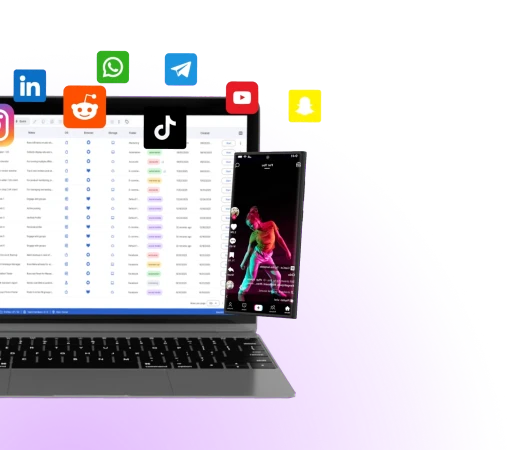
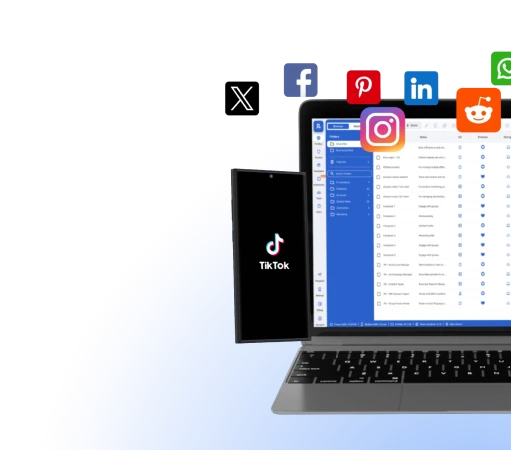
Manage multiple accounts with Android cloud phones
Build account trust, reach new locations, and grow faster from one dashboard
Conclusion: You can’t stay private without it
Managing multiple social media profiles becomes harder when account data, sessions, and workflows are spread across reused browsers and shared devices. Mimic browser gives each web-based social profile its own isolated Chromium environment with persistent cookies, local storage, settings, and login history.
For mobile-first platforms such as TikTok, Instagram, and Facebook, Multilogin Android cloud phones provide each social profile with its own dedicated Android environment. Apps, account data, location, and session history remain tied to the correct profile, allowing marketers to continue workflows without rebuilding the setup each time.
Together, Mimic browser and Android cloud phones give social media marketers one platform for managing both web and native mobile profiles. Use browser profiles for Reddit, YouTube, Facebook web, and other browser-based workflows. Use cloud phones for social profiles that depend on native Android apps.
The result is a clear and scalable structure: one social profile, one persistent environment, all managed from one dashboard. This helps marketers, agencies, creators, and AI agents organize profiles, maintain consistent account history, and grow social media operations over time.
Frequently asked questions about Mimic browser
Mimic browser is used to manage multiple profiles on web-first platforms like YouTube and Reddit without them interfering with each other. Each profile runs in its own isolated browser environment with separate cookies, session data, and login history, so client, campaign, and brand accounts stay organized and independent.
Mimic is Multilogin’s Chromium-based browser engine for creating isolated browser profiles. Each profile keeps its own cookies, local storage, session data, and settings, so web-based social profiles remain organized and separate from one another.
Mimic looks and performs like Chrome, but each profile runs inside its own isolated environment with separate cookies, local storage, and session history. This makes it possible to manage multiple client, campaign, or brand profiles side by side without them sharing data or overlapping.
Mimic browser is designed for web-first platforms like YouTube and Reddit. For native mobile apps such as TikTok, Instagram, and Facebook, Multilogin provides Android cloud phones instead. This keeps browser and mobile profiles separated while managing both from the same dashboard.
Yes. Mimic is included in Multilogin’s Free plan, which comes with 5 browser profiles, no time limit, and no credit card required. It’s also included at no extra cost across all paid plans.
Yes. Mimic is compatible across Mac, Windows, and Linux, and automatically adjusts timezone and system settings to match each profile’s configuration.