Manage multiple Facebook accounts: Free 2026 guide

A practical guide to managing multiple Facebook accounts with Multilogin, safely and at scale.

How Can You Have Multiple YouTube Accounts Without Facing Restrictions?

Why managing multiple Facebook accounts triggers detection

Facebook is built to spot patterns across accounts, not just individual actions. When several accounts share the same technical signals or behave too similarly, Facebook assumes they’re controlled by one operator. That’s when reviews, limits, or bans start to appear.

  • Shared IP addresses across multiple logins

  • Reused browser fingerprints and device details

  • Repeating login, posting, or ad activity patterns

Why managing multiple Facebook accounts triggers detection

How this guide helps you manage multiple Facebook accounts with Multilogin

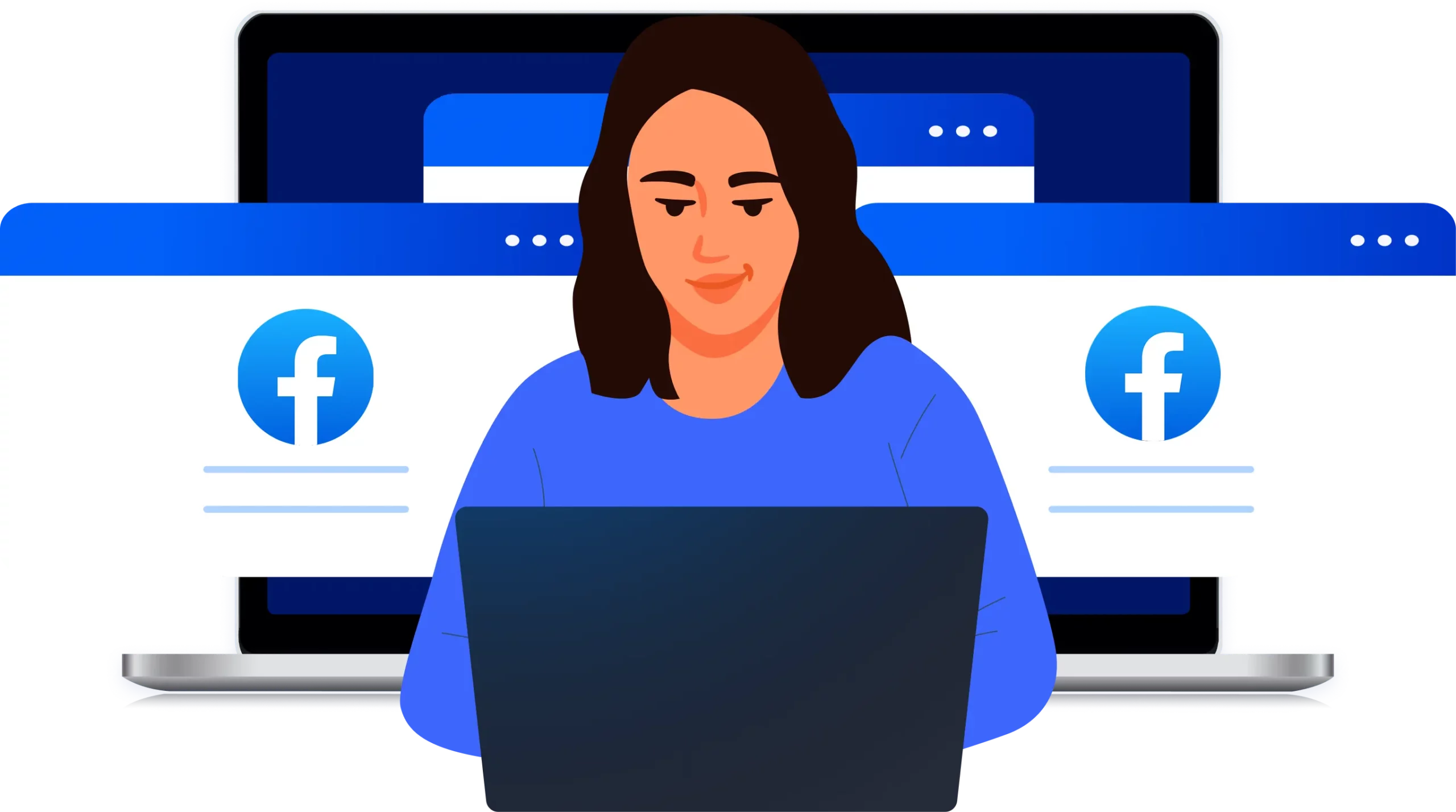
This guide shows how to manage multiple Facebook accounts with Multilogin by keeping every account fully separated. It focuses on isolating IPs, browser profiles, and behavior so Facebook can’t link accounts during daily use or scaling.

  • How to isolate each Facebook account in its own browser profile

  • How to assign clean, account-specific IPs without overlaps

  • How to switch, scale, and automate accounts without triggering flags

3B+

Monthly active users on Facebook, making it one of the largest and most competitive platforms globally.

80M+

Active Facebook business Pages used for ads, community management, and customer engagement.

200M+

Brands operating across Meta platforms, competing for reach, attention, and ad performance.

What this guide explains about why Facebook accounts get flagged

Facebook flags multiple accounts when activity stops looking like it comes from separate, real users. Its detection systems connect IP behavior, browser fingerprints, cookies, and usage patterns; and restrict accounts that appear linked or automated.

Same IP used across accounts makes Facebook link profiles as coming from one user.

Actions performed too quickly signal automation and trigger account review.

Identical or unstable browser fingerprints expose shared devices and environments.

Shared cookies or session data connect accounts inside the same browser.

Low-quality or reused proxies raise trust issues and increase ban risk.

Predictable usage patterns make repeated behavior easy to detect.

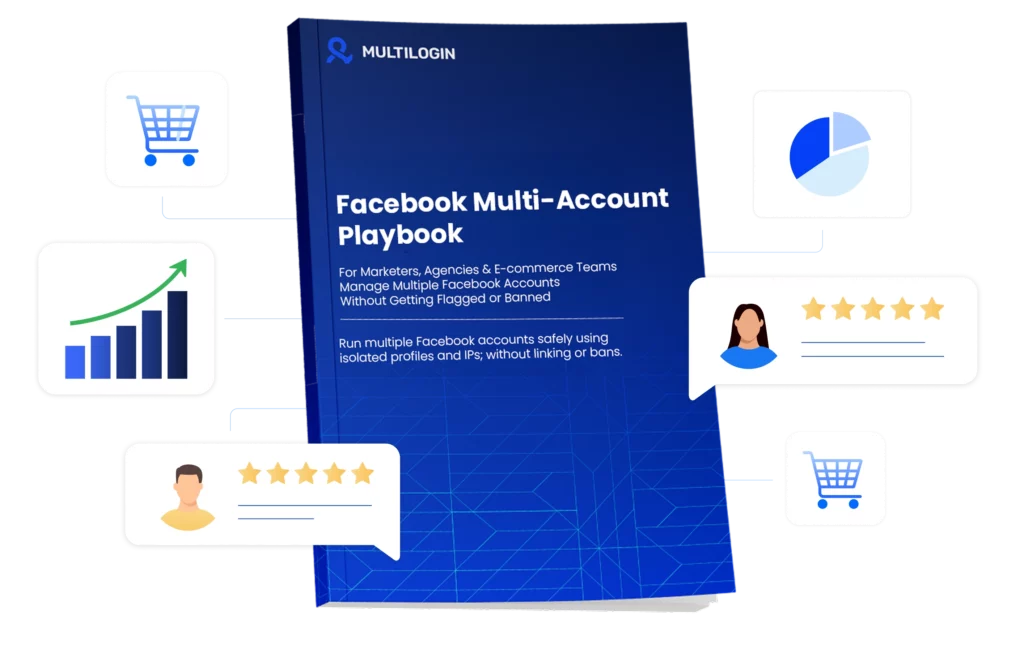
Download our latest Facebook account management guide

Manage multiple Facebook accounts: Free 2026 guide
Name *
Email *

Your industry *
Position *

Manage multiple Facebook accounts: Free 2026 guide

FAQ

Managing multiple Facebook accounts can be legal depending on how the accounts are created and used. Facebook generally allows one personal profile per individual but supports managing multiple Pages, ad accounts, and Business Managers for business or agency purposes. Problems occur when multiple personal profiles represent the same person, or when accounts are used to bypass restrictions, misrepresent identity, or avoid enforcement. In practice, Facebook evaluates both policy compliance and technical signals, so legality depends on intent, accuracy, and how accounts are accessed and maintained.

Facebook allows one personal account per person, which can then control multiple Pages, ad accounts, and Business Managers. Creating additional personal profiles for the same individual violates Facebook’s terms and often leads to restrictions or bans. Even when accounts appear separate, Facebook may still link them through shared devices, IP addresses, cookies, or usage patterns, which is why users often experience repeated enforcement across multiple accounts.

Facebook can detect multiple accounts on the same device by analyzing browser fingerprints, stored cookies, local storage, login behavior, and device-level signals. Detection does not require accounts to be logged in at the same time; repeated access from the same environment over time is often enough for Facebook to associate them. This is one of the most common reasons accounts become linked, especially when switching between profiles in a standard browser.

When Facebook links multiple accounts, enforcement often extends beyond a single profile and can result in a Facebook ban, identity verification requests, temporary restrictions, or ad account limitations. In many cases, action taken on one account triggers reviews or penalties on related accounts as well, which is why users often experience cascading issues after an initial flag.

Businesses can manage multiple Facebook Pages safely when they use Business Manager, assign roles correctly, and maintain consistent access environments. Facebook supports multi-page management for brands, agencies, and franchises, but risks increase when Pages are accessed from mixed devices, shared logins, or inconsistent setups. Stability depends on clear ownership, structured access, and predictable management behavior.

Managing multiple Facebook ad accounts can be safe, but ad accounts are closely monitored and sensitive to linking signals. Shared IPs, overlapping billing details, repeated login patterns, or activity across accounts can trigger reviews or shutdowns. Once one ad account is restricted, related ad accounts are often examined as well, making consistency and separation critical for long-term use.

Shared cookies are a common reason Facebook links accounts because they store session data, identity markers, and behavioral history. When multiple accounts reuse the same browser storage, Facebook can associate them even if logins occur at different times. While shared cookies alone may not always cause immediate bans, they significantly increase the likelihood of detection when combined with other overlapping signals.

Where to send you the pdf?

Name *
Email *

Your industry *
Position *

Thank you! We’ve received your request.
Please check your email for the results.
We’re checking this platform.
Please fill your email to see the result.

Multilogin works with amazon.com