


Most people on TikTok post content and then spend an anxious hour watching the view count. A smaller group — the ones who consistently grow — spend time before posting studying what’s already working for accounts in their space. They run a systematic TikTok competitor analysis before they invest time in content.
That research advantage compounds fast. If you know which content formats are driving the most engagement in your niche, which hooks are stopping people from scrolling, and which posting times correlate with view spikes for accounts similar to yours, you’re starting from a much better position than someone who’s guessing.
Why TikTok competitor analysis matters
TikTok’s algorithm is more forgiving to new accounts than most platforms. A fresh account with zero followers can have a video reach millions if it generates strong engagement signals early — which means your content strategy matters more than your history, and competitor analysis helps you understand what content is already proven to generate those signals. Understanding how the TikTok algorithm distributes content is the foundation of competitive research.
A well-executed TikTok competitor analysis tells you which content formats are working in your niche, what hooks are stopping people from scrolling past the first two seconds, which topics generate the most comments and therefore the most algorithmic distribution, what posting frequency looks like for high-performing accounts in your category, and where the content gaps are — topics your competitors aren’t covering that your audience wants.
Understanding How TikTok’s Algorithm Works
Before you build a strategy, you need to understand the machine you’re feeding content into.
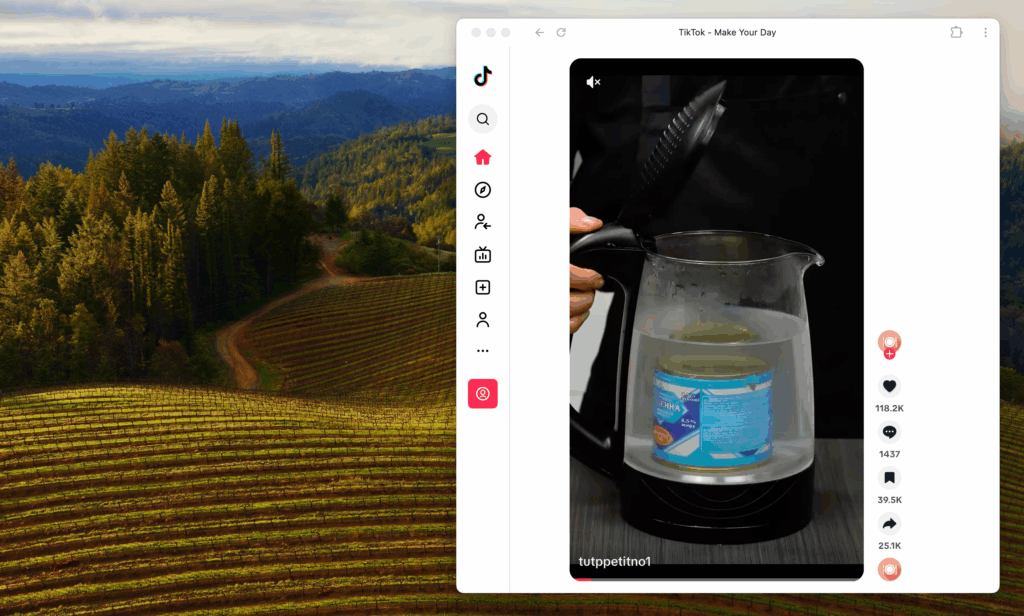
TikTok’s recommendation algorithm distributes content through a series of increasingly large test audiences. Here’s roughly how it works:
- Initial distribution: Your video gets shown to a small audience (typically a few hundred users) that TikTok believes matches your content based on your caption, sounds, hashtags, and previous performance.
- Engagement signals: TikTok measures watch time (the most important signal), replays, likes, comments, shares, and follows generated. If your video performs well with that initial audience, it gets pushed to a larger group.
- Escalating reach: Videos that keep performing get progressively wider distribution — from hundreds to thousands to potentially millions of views over hours or days.
- What kills reach early: People swiping away in the first 2–3 seconds. A bad hook is the fastest way to limit your distribution. The algorithm treats early swipe-aways as a strong negative signal.
Understanding this tells you exactly where to put your effort: on the first 2–3 seconds of every video, and on creating content that earns replays. Everything else is secondary.
Setting Up Your TikTok Marketing Account
A few decisions at the start save you headaches later.
- Creator vs. Business account: Business accounts get access to the Business Suite, ads manager, and commercial analytics. Creator accounts get access to the Creator Fund, Creator Marketplace, and certain trending sounds. For marketing purposes, most brands should start with a Business account. Creators monetizing through the platform should use a Creator account.
- Profile optimization: Your bio has 80 characters. Use them to state clearly who you are and what your content is about. Add a website link if you have one. Your profile photo should be clear and recognizable at thumbnail size.
- Niche clarity: TikTok’s algorithm categorizes accounts. Pick a clear content niche from the start and stay consistent for your first 20–30 videos. Jumping between unrelated topics confuses the algorithm and slows growth.
- Username: Keep it short, memorable, and consistent with your other platforms. Changing it later resets some discoverability signals.
If you’re setting up multiple brand accounts or client accounts, each one needs its own isolated environment. Using the same device for multiple TikTok accounts is a fast route to account linking issues. Cloud phones for TikTok give each account its own dedicated Android device with separate IP, device fingerprint, and session — the right infrastructure from day one.
TikTok Content Strategy: What Actually Works
The single most important thing about TikTok content: it has to hook in the first 2–3 seconds.
Most TikTok users decide whether to keep watching in the first two seconds. A strong hook can be a surprising statement, a visual pattern interrupt, a direct question, or a promise of value. Weak hooks lose you the algorithm’s confidence immediately.
Content formats that perform well in 2026:
- “What I learned” / insight videos: Share a genuine insight, counter-intuitive finding, or professional lesson. These get saves and replays. Example: “3 things I learned running 20 Instagram accounts.”
- Before/after and results: People want to see transformation. Product demos, skill progressions, business results — show the outcome, not just the process.
- Trending audio + original angle: Use currently trending sounds but with a twist that makes the content your own. Pure trend-chasing without originality gets lost in the noise.
- Educational series: Break a complex topic into a multi-video series. This builds returning viewers and can turn a single-video viewer into a follower.
- Behind-the-scenes: For brands and agencies, showing what the work actually looks like builds trust and authenticity signals.
For anyone managing content across multiple TikTok accounts, building a social media content calendar is non-negotiable. Without it, you’re constantly reacting instead of executing.
Step 1: Identify your TikTok competitors
Direct competitors
Businesses or creators in the same niche, serving the same audience, with roughly similar follower counts. If you’re a personal finance creator targeting 25-to-35-year-olds, other personal finance creators in that demographic range are direct competitors for the same audience’s attention.
Aspirational competitors
Accounts significantly larger than yours but serving the same audience. What they’re doing now is often what works at scale — a useful benchmark for where you’re trying to go.
Adjacent competitors
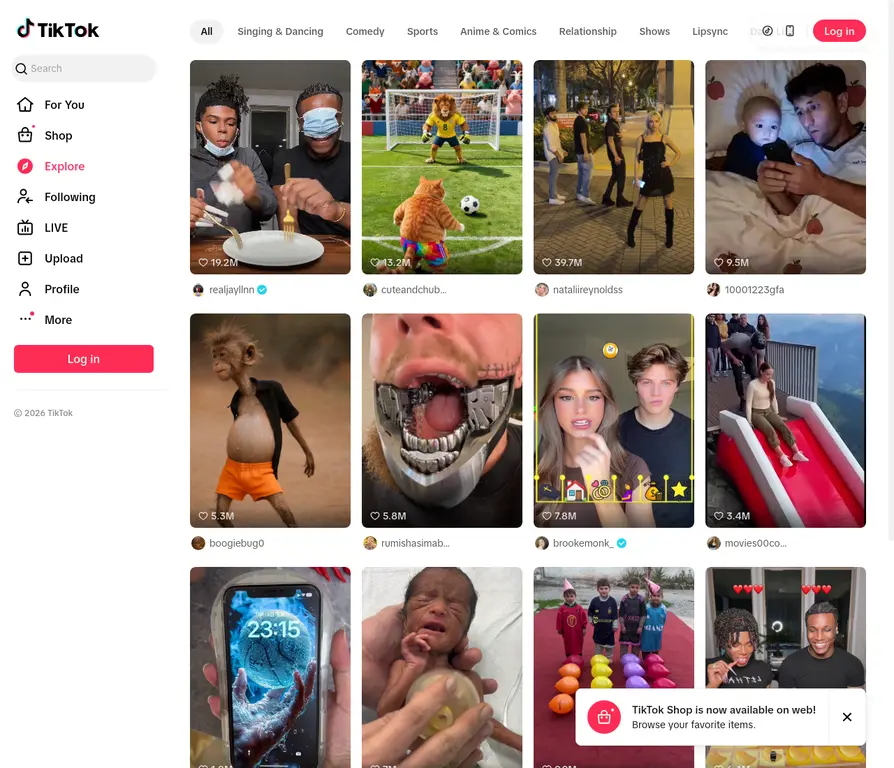
Accounts in related niches whose audience overlaps with yours. A fitness creator’s audience probably also watches nutrition creators, mental health creators, and lifestyle creators. Adjacent accounts can reveal content formats and topics that work for your shared audience. Search your main niche keywords on TikTok, look at the ‘Others you may like’ suggestions when you follow an account, and look at who your own followers also follow.
Step 2: Build your TikTok competitor analysis framework
For each competitor account you’re analysing, track:
- Account overview: follower count, total videos, follower growth rate
- Posting frequency: how often they post and what days and times are most common
- Top-performing content: sort their videos by most viewed and note the content type, hook, topic, and format of the top 10
- Engagement metrics: average views, likes, comments, and shares on their last 20 posts
- Content formats used: talking head, text-on-screen, green screen, duet, stitching trending audio, tutorial, POV, trend participation
- Hook analysis: what do their most-viewed videos say or show in the first 2 seconds
Step 3: Use the right TikTok competitor analysis tools
TikTok Creative Center
TikTok’s own free tool at ads.tiktok.com/business/creativecenter shows trending content, trending hashtags, trending sounds, and top-performing ads in any country and industry. The ‘Inspiration’ tab shows creative examples analysable by industry and format. This is essential for any TikTok competitor analysis.
Third-party TikTok competitor analysis tools
- Exolyt: TikTok analytics and competitor tracking. Shows any public account’s growth, engagement rate, and content performance over time
- TikTok Ads Library: View all active TikTok ads from any account — useful for understanding what competitors are spending money to promote
- Pentos: Tracks TikTok account and hashtag analytics over time — useful for spotting trends in competitor posting behaviour
Free analysis using TikTok Creative Center plus manual profile review covers most of what you need without a paid tool subscription.
Step 4: Analyse what you find
Content format patterns
Do your competitors’ top-performing videos share a format? If the top five videos from three different accounts in your niche are all tutorials, that’s a strong signal that tutorials work for your audience. If the top videos from one competitor are all trend participation and they’re getting 10x the views of their regular content, that’s a clear signal about what resonates.
Hook analysis
Write down the first line or first visual of each of your competitors’ top 10 most-viewed videos. Look for patterns. Are they leading with a question? A surprising statement? A relatable situation? A promise of an outcome? The most common hook types in your niche’s top-performing content tell you what your specific audience responds to in that critical first two seconds.
Topic gaps
What are your competitors consistently not covering? These are your opportunities. If five accounts in your niche all cover investing and savings but none talk about debt payoff in detail, that’s a content gap — an area where you can own the conversation by going deep on something they’re ignoring.
Engagement quality
High view counts don’t always mean the content is performing as well as it looks. Look at the comment-to-view ratio. An account with 100k views and 50 comments is getting less genuine engagement than one with 50k views and 200 comments. Comments are the highest-weight engagement signal on TikTok — high comment counts indicate content that’s generating real conversation.
Step 5: Apply the research to your TikTok marketing strategy
- Create a tested content mix. Use competitor data to build a content plan that includes the formats and topics you’ve seen work in your niche.
- Test hooks systematically. The hooks you identified in your research are your starting point. Create 5 to 10 variations of your best content ideas with different hooks and see which combination generates the highest completion rate.
- Own a content gap. Choose one or two topic gaps you’ve identified and create a series of videos in that area. Being the dominant voice on an underserved topic compounds faster than being one of many voices on an overcrowded topic.
- Watch trends before they peak. Check TikTok Creative Center’s trending sounds and hashtags weekly. The accounts that gain the most from trends are the ones who participate before the trend peaks.
Running multiple TikTok accounts for analysis and management
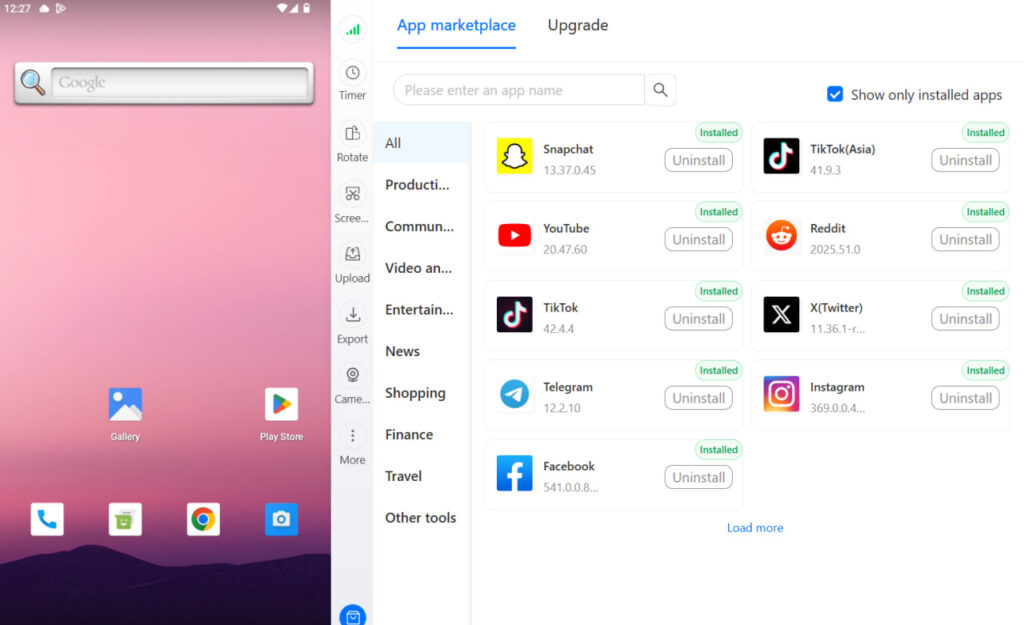
Some marketers and agencies maintain secondary TikTok accounts specifically for competitive research — accounts that can observe content without appearing as the brand or client account in competitors’ viewer data. Others manage TikTok accounts for multiple clients and need each account isolated to prevent platform linkage.
Multilogin Cloud Phones give each TikTok account its own isolated Android environment with a unique device fingerprint and dedicated IP. Each account operates independently — whether it’s a research account or a client account. Plans from $7.08/month.
Managing TikTok accounts for multiple clients? Multilogin Cloud Phones keep each account completely isolated. Plans from $7.08/month — try at multilogin.com.
Need to manage multiple social media accounts? Try Multilogin Cloud Phones.
Frequently asked questions
TikTok competitor analysis is the process of systematically studying other accounts in your niche to understand what content formats, topics, hooks, and posting strategies are generating strong engagement for your target audience. The goal is to use that research to inform your own content strategy.
TikTok Creative Center (free) and manual review of competitor accounts covers most of what you need. Dedicated tools like Exolyt add competitor tracking over time and more detailed analytics. For most creators and small businesses, the free tools are sufficient to get actionable insights.
For TikTok Shop affiliate, there’s no minimum. For the Creator Rewards Program, you need 10K followers. For brand deals, you can start at a few thousand followers if engagement is strong in a commercial niche.
TikTok Studio is TikTok’s official desktop management tool at studio.tiktok.com. It’s free and lets you upload, schedule, and analyse your content. You can schedule posts up to 10 days in advance. It’s the desktop alternative to scheduling within the mobile app.
Often yes — not because deleting fixed something, but because the repost gets a fresh distribution window, and you’re typically more present and engaged when you manually repost. TikTok makes its distribution decisions early in a video’s life, and a fresh upload resets that process.