


LinkedIn business networking works best when you treat it as relationship-building, not a numbers game. In this guide, you’ll learn how to build a practical LinkedIn networking strategy, write more relevant connection requests and messages, maintain consistent engagement, and avoid behaviors that can make your outreach look like spam.
Instead of sending dozens of identical connection requests, focus on quality. Reference something real about the person’s work, content, role, or shared interests. This approach may be slower, but it creates stronger professional relationships that can support B2B sales, partnerships, recruiting, and personal branding over time.
As your networking activity grows and you need to manage multiple LinkedIn workflows or accounts, the device environment also becomes part of the setup. Multilogin cloud phones provide separate Android cloud environments that can help teams keep LinkedIn activity more organized and consistent without relying on multiple physical devices.
👉 Learn how to build a LinkedIn business networking strategy that is practical, sustainable, and aligned with your business goals.
What Is LinkedIn Business Networking, and Why Does It Matter?
Most B2B buying decisions start with a search that includes a person’s name, not just a company’s. Before a meeting, people check profiles. Recruiters look through professional networks before reaching out. Investors often want to know who you’re connected to before they even look at your deck. That’s why your LinkedIn network matters. Think of it as a public record of your professional reputation. It shows who trusts you enough to connect, who engages with your content, and whether people in your industry actually know who you are. Ignore your network for a year, and you may notice the difference the next time you’re looking for a job, building partnerships, or trying to close a deal.And networking doesn’t stop at making connections. Once someone is interested in you or your business, the next step should be easy. Whether they want a quick introduction, a sales call, or a consultation, giving them a clear way to book the right type of meeting helps turn a LinkedIn connection into a real business conversation.
That’s really the value of LinkedIn networking: building visibility, credibility, and relationships that can eventually lead to real opportunities.
How Do You Actually Start Building a Network Worth Having?
You start by fixing your profile before you touch a single connection request. A half-finished profile with no photo and a vague headline tells people you’re not really here.
Your headline should say what you do and who you help, not just your job title copied from a business card. “Marketing Manager” tells nobody anything useful. “Helping SaaS founders turn cold traffic into demo bookings” tells a stranger exactly why they’d want to talk to you.
A few quick fixes that move the needle:
- Add a real photo. Not a group shot cropped weird, not a logo. A person, smiling, looking approachable.
- Write a summary that reads like a person wrote it. Skip the buzzword soup.
- List specific projects or outcomes, not just responsibilities.
- Turn on “open to opportunities” or “providing services” only if it’s true. Don’t fake availability.
What’s the Right Way to Send Connection Requests?
The right way is to personalize every single one, even if that means sending fewer requests per week. A generic “I’d like to add you to my professional network” message gets ignored more often than not, and honestly, who could blame the person ignoring it?
Instead, mention something specific. Maybe you read their recent post. Maybe you share a mutual connection. Maybe you’re both attending the same virtual event next Tuesday. Whatever the hook, use it.
Quick gut check before hitting send: would this message make sense to nobody but this specific person? If yes, send it. If it could go to literally anyone in your industry, rewrite it.
Comparing Networking Approaches: What Actually Gets Results
Not every method of building a network performs the same way, and picking blind wastes time. Here’s a quick side-by-side.
| Approach | Speed | Relationship Quality | Best For |
|---|---|---|---|
| Mass cold connection requests | Fast | Low | Almost nobody, honestly |
| Personalized outreach | Slow | High | Founders, consultants, recruiters |
| Content-first (posting regularly) | Medium | High | Thought leaders, sales teams |
| Event and group-based networking | Medium | High | Conference attendees, niche industries |
| Automated outreach tools | Fast | Variable | Agencies managing volume, with care |
Notice something? The fast options tend to trade quality for speed. That tradeoff is fine occasionally, but not as a permanent strategy.
How Often Should You Post to Grow a Real Network?
Two to four times a week is a solid target for most professionals, though consistency matters more than the exact number. Posting once and vanishing for a month resets whatever momentum you built.
Content doesn’t need to be groundbreaking. Share a lesson from a recent project. Comment thoughtfully on someone else’s post (this counts, and people underrate it). Ask a genuine question your network could answer.
What tends to flop: generic motivational quotes, humble brags dressed up as lessons, and anything that reads like it was written entirely by an AI tool with zero personality. People can tell. They always can.
Running Multiple LinkedIn Profiles for Agencies and Teams
Sometimes networking isn’t just personal, it’s a job. Agencies manage LinkedIn presence for multiple clients, recruiters run several outreach identities, and marketing teams often need separate accounts for separate brand voices. That’s where things get technically tricky fast.
LinkedIn (like most platforms) watches for signals that suggest one person or one device is behind several accounts. Shared IP addresses, identical browser fingerprints, and overlapping login patterns can all raise flags, sometimes resulting in restricted accounts right when you need them most.
Where Cloud Phones Fit Into Serious LinkedIn Networking
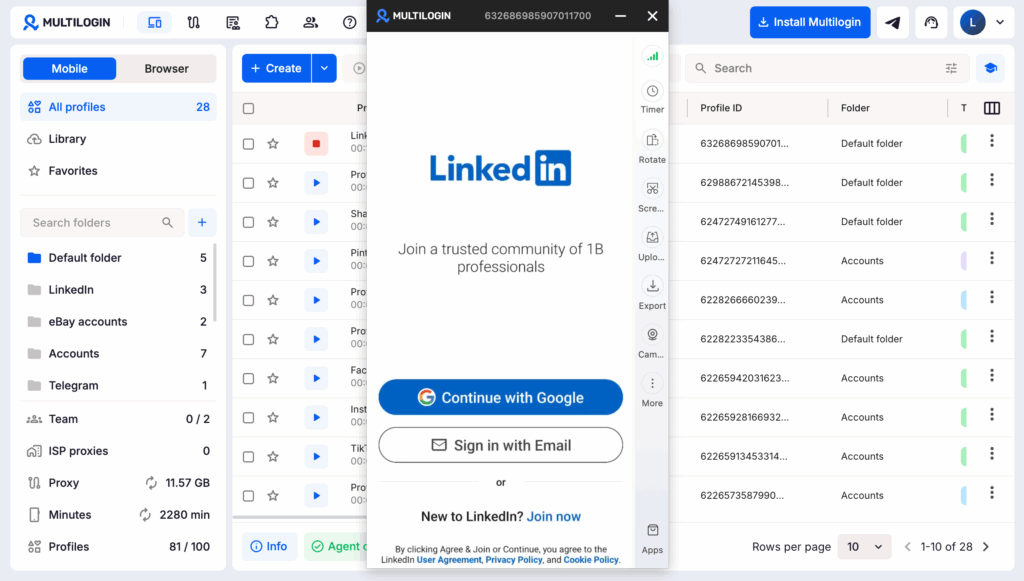
Here’s a wrinkle a lot of guides skip entirely: LinkedIn increasingly checks mobile app activity too, not just browser sessions. If your team is managing outreach across desktop and mobile, doing it from shared devices or emulators tends to create the exact same fingerprint overlap problem browsers create, just on the mobile side.
A Multilogin cloud phone solves this by giving each LinkedIn profile its own isolated Android environment hosted in the cloud, complete with its own device identity and network signals, so nothing bleeds between accounts.
Instead of buying a drawer full of burner phones (which, let’s be honest, nobody wants to manage), teams running multiple networking identities can spin up a dedicated cloud phone per profile and control it from a single dashboard. For agencies handling several client accounts, that’s less risk and considerably less hardware clutter.
Whatever tool you use for multi-account management, pair it with a legitimate residential or mobile proxy setup. A clean device identity paired with a flagged IP still gets you flagged. Both pieces need to line up.
Common LinkedIn Networking Mistakes That Quietly Kill Momentum
A handful of mistakes show up again and again, and most of them are fixable in an afternoon.
- Connecting and then never engaging. A connection that never interacts again isn’t a relationship, it’s a number.
- Pitching immediately. Nothing kills goodwill faster than a sales pitch as message number one.
- Ignoring comments on your own posts. Someone took the time to respond. Answer them.
- Ghost profiles. No photo, no summary, no activity. Would you trust that account either?
- Treating LinkedIn like Instagram. Different platform, different tone. What lands on one flops on the other.