


Phones with TikTok have traditionally meant physical smartphones bought for a mix of reasons. Some people needed a device from another region because TikTok was unavailable in their local app store. Others wanted separate phones to manage multiple accounts, avoid linking signals, or keep work profiles isolated from personal use.
For a long time, buying a physical phone with TikTok installed felt like the safest and most controllable option. But as TikTok’s detection systems evolved, the role of the device changed. Today, a phone with TikTok is no longer just a way to access the app, but a core part of how the platform evaluates trust, behavior, and long-term account stability.
Why TikTok work still depends on mobile devices
Even though TikTok can be opened in a browser, serious TikTok work still depends on mobile devices. The platform is designed mobile-first, and many of its most important trust signals come directly from the phone itself. A mobile device provides hardware data, operating system details, sensor inputs, and long-term behavioral patterns that simply don’t exist on desktop setups. This is why phones with TikTok continue to outperform browser-based access when it comes to account stability and reach.
For TikTok, a phone with this app represents a complete environment, not just an entry point. Mobile devices allow the platform to evaluate how accounts behave over time, how they interact with the app, and how consistent their signals remain. In practice, this means TikTok relies on mobile devices to validate things like:
- Device fingerprint consistency
- OS and hardware behavior over time
- App-level interactions and usage patterns
- Regional and network alignment
Because of this, smartphones with TikTok remain the foundation for creators, marketers, and teams who want predictable results instead of short-term wins.
What for are people buying phones with TikTok?
One of the main reasons people buy phones is simple: in some countries, TikTok is banned, restricted, or removed from local app stores. When the app cannot be downloaded officially, a physical phone from another region becomes the most straightforward way to access the platform. These phones often come with TikTok already installed, correct regional settings, and fewer setup barriers, which makes them attractive for both personal use and work.
That said, regional bans are not the only driver. Phones are also bought for operational reasons, especially by people who treat TikTok as a business tool rather than a social app. Common use cases include:
- Managing multiple TikTok accounts without linking them to one device
- Separating work accounts from personal activity
- Reducing the risk of account bans tied to shared environments
- Testing content, ads, or regions from different device setups
For many users, buying a phone with TikTok feels like the most controlled option available. It offers physical ownership, predictable behavior, and a sense of isolation between accounts. But while these reasons explain why people still buy TikTok phones, they don’t solve the growing challenges that come with scaling, flexibility, and long-term management.
Why buying phones for TikTok no longer scales
Buying physical phones for TikTok can feel manageable at first. One phone, one account, everything under control. But as soon as the number grows, the process becomes messy. Every new account means another device to order, set up, charge, update, and eventually replace. What started as a simple solution slowly turns into a system that demands constant attention.
Phones for sale with TikTok also come with risks that are easy to underestimate. Device histories are often unclear, reuse is common, and even small mismatches in location or network behavior can link accounts together. On top of that, physical phones are difficult to share across teams, which limits collaboration and slows down workflows. Over time, relying on a phone for sale with TikTok becomes less about scaling TikTok work and more about maintaining hardware.
Problems with emulators and physical devices
As TikTok workflows become more complex, the gap between how people work and how devices are managed keeps growing. Emulators and physical phones both struggle here, but for different reasons.
Emulators
With emulators, the main issue is inconsistency. Updates break setups, environments change unexpectedly, and behavior often differs from real user activity. This creates uncertainty: things may work today and fail tomorrow, without a clear reason.
Physical devices
Bring a different kind of friction. They lock work to a single location and a single piece of hardware. Access is limited, scaling takes time, and adapting setups for new regions or strategies is slow. What should be a dynamic TikTok operation ends up tied to static devices.
At this stage, both options feel out of sync with how TikTok is actually used by modern teams.
How a new generation of phones with TikTok looks like
The new generation of phones with TikTok is less about owning hardware and more about owning control. Instead of relying on a physical phone that sits on a desk or an emulator that tries to imitate one, modern setups are built around real mobile environments that live in the cloud. These phones behave like real devices, but without the limitations that slow people down.
What defines this new generation is not the form factor, but the capabilities. A modern phone with TikTok can be:
- Created on demand
- Configured for a specific region
- Kept isolated from other accounts.
It runs a real Android system, maintains stable device parameters, and works consistently over time. For teams and creators, this means phones with TikTok are no longer tied to shipping, storage, or manual handling.
Cloud phones for TikTok: how they work
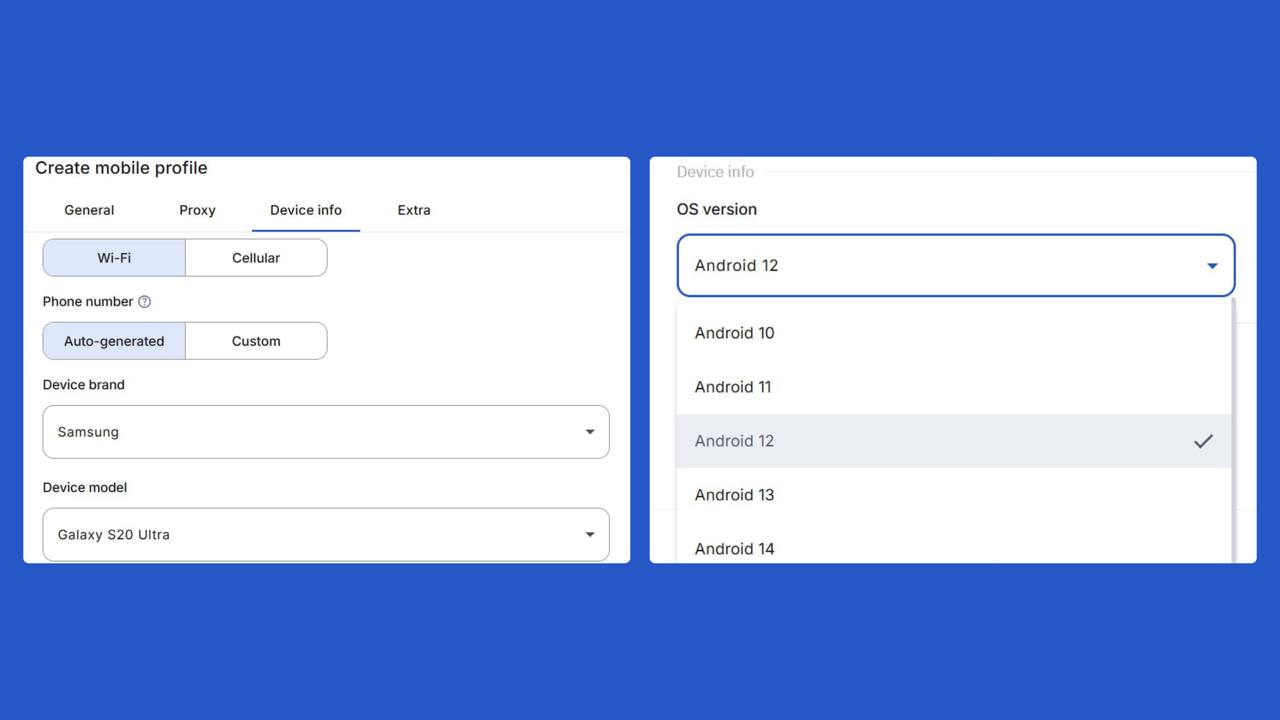
Cloud phones for TikTok are cloud-hosted Android devices with their own operating system, system identifiers, and device-level parameters. Each phone is created as an isolated mobile environment, meaning it behaves like a standalone phone with TikTok installed, not a shared or simulated setup.
From a workflow perspective, cloud phones for TikTok are accessed remotely and managed through a centralized dashboard. Devices can be created, assigned, and organized without physical handling. Key characteristics include:
- A full Android OS running independently
- Persistent device parameters across sessions
- Isolated environments per phone with TikTok
- Remote access without hardware dependency
This setup allows teams to work with multiple phones while keeping device consistency and control, without the operational overhead of physical phones.
How Multilogin cloud phones replace buying phones
Buying smartphones with TikTok has always been a hardware-first approach. You search for phones for sale with TikTok, check the region, wait for delivery, and hope the device hasn’t been reused or flagged before. Multilogin Cloud Phones flip this model completely by turning phones with TikTok into on-demand infrastructure.
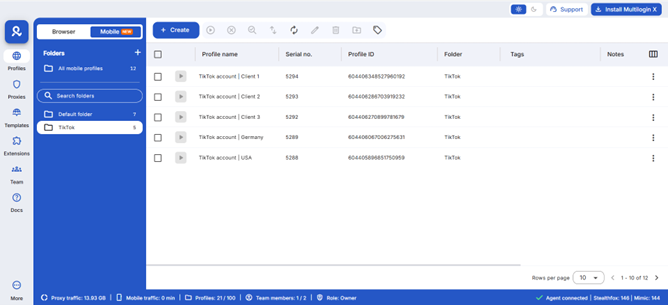
With Multilogin Cloud Phones, a phone with TikTok is created instantly. There is no shipping, no setup time, and no dependency on physical hardware. Everything is managed from a single laptop through the Multilogin interface, whether you are running a few personal accounts or a large TikTok farm.
Cost comparison: physical phones vs cloud phones
A physical phone with TikTok on marketplaces like eBay typically starts at $100 per device, often more depending on region and condition.
At scale, the costs add up fast:
- 10 phones → $1,000
- 50 phones → $5,000
- 100 phones → $10,000
This does not include replacements, broken devices, phones that stop working, or hardware that becomes unusable over time. Every issue means new purchases and more delays.
With Multilogin Cloud Phones, there is no upfront hardware investment. You can start with a 3-day trial for €1.99, which includes access to Cloud Phone profiles, and test the full workflow before scaling. Paid plans start at €5.85 per month (billed annually) and already include Cloud Phone profiles, allowing teams to grow gradually instead of spending thousands upfront on physical phones.
Operational advantages in daily work
Multilogin Cloud Phones remove most of the friction that comes with physical devices:
- Only a laptop is needed to manage hundreds or thousands of phones with TikTok
- Devices are never broken, lost, or damaged
- No waiting for delivery or customs clearance
- Phones can be organized, assigned, and accessed instantly
This makes cloud phones especially effective for fast-moving TikTok workflows.
Built for both personal use and farms
Multilogin Cloud Phones work equally well for individual creators and large-scale farms. Personal accounts benefit from clean, isolated devices without extra hardware. Farms benefit from centralized control, stable environments, and the ability to scale without physical limits.
Instead of buying and maintaining phones with TikTok, Multilogin Cloud Phones provide a more flexible, secure, and cost-efficient way to work with TikTok at any scale.