
How Does the TikTok Algorithm Work in 2026?
The Core Signals TikTok Measures
TikTok has confirmed the primary signals its algorithm weighs. In order of influence:
Watch time and completion rate — The single most important signal. What percentage of your video does the average viewer watch? A 15-second video watched to completion signals strong content. A 60-second video abandoned at 8 seconds signals the opposite. Completion rate beats raw views every time.
Replays — If viewers watch a video multiple times, the algorithm reads it as compelling content and widens distribution. Build hooks and endings that make people want to rewatch.
Engagement signals — Likes, comments, shares, and saves. Shares carry the most weight because they signal the viewer found the content worth putting their name on. Saves signal the viewer wants to return — also weighted heavily.
Follows from the video — When viewers follow the creator directly from a video, it’s one of the strongest signals TikTok can receive. It means the content didn’t just land — it converted.
“Not interested” reports and skips — Negative signals matter. If viewers tap “not interested” or scroll past quickly, the algorithm contracts distribution. A high skip rate early in a video’s life can kill it before it gets traction.
The TikTok Algorithm Point System
TikTok’s internal distribution works in stages. New videos are shown to a small initial audience — often a few hundred to a few thousand accounts depending on your account’s history. If engagement metrics in that first pool clear a threshold, the video gets pushed to a larger pool. Then a larger one still.
This is the “algorithm point system” creators refer to online. Each engagement type carries implied weight:
- Completion — highest value signal
- Share — very high
- Save — high
- Comment — medium-high
- Like — medium
- Skip / not interested — negative
The exact thresholds TikTok uses to advance a video to the next distribution stage aren’t public. But the pattern is consistent: early engagement from a small initial audience determines whether a video ever reaches a large one.
TikTok FYP Algorithm: What Gets You on the For You Page
The For You Page isn’t a single feed — it’s a personalised experience rebuilt for each user based on their behaviour. Getting on someone’s FYP isn’t hard. Getting on the FYP of the right audience at volume is the real objective.
Three things drive FYP placement:
Content signals — Captions, sounds, hashtags, and video content itself. TikTok’s computer vision analyses what’s in the frame. Its audio recognition identifies music and speech. Its NLP reads captions and on-screen text. All of this helps TikTok categorise your content and decide who to show it to.
User interaction history — The algorithm matches content to users based on what they’ve previously watched, liked, and engaged with. Your content gets shown to users who’ve engaged with similar content.
Device and account settings — Language, location, and device type contribute weaker signals. They’re not ignored, but they’re far less influential than behaviour.
TikTok Algorithm Changes in 2025
Several meaningful shifts happened to the TikTok algorithm in 2025:
Longer content gets more support. TikTok has been actively pushing creators toward 1–3 minute videos and even longer-form content, offering expanded distribution to creators who hit minimum watch time thresholds on longer videos. Short-form still works, but the platform is clearly incentivising longer content to compete with YouTube.
Search is weighted more heavily. TikTok has developed into a search engine, particularly for Gen Z. Videos that appear in TikTok search results get consistent long-tail traffic. SEO-informed captions, specific keyword use in on-screen text, and structured content formats perform better than they did two years ago.
Repost and duet signals matter more. The algorithm now weights social sharing more heavily — particularly reposts within TikTok itself. Content that gets reposted spreads through the recommendation graph in a fundamentally different way than content that only gets likes.
Niche specificity is rewarded. TikTok’s algorithm has become better at identifying micro-niches and routing content to tightly relevant audiences. Generalist content increasingly underperforms compared to content with a clear, specific subject.
The regulatory environment in the US. The Oracle handover situation and US regulatory pressure created uncertainty around TikTok’s algorithmic infrastructure in 2025. The algorithm itself remains functionally unchanged for most creators, but the ownership questions remain live.
How to Reset Your TikTok Algorithm
Resetting your TikTok algorithm is about clearing the signal history that’s built up around either your account (what you post) or your For You Page (what you consume). They’re different problems with different solutions.
How to Reset Your TikTok For You Page Algorithm
If your FYP has drifted away from content you want to see:
Mark videos “not interested.” Press and hold on any video in your feed, select “Not interested.” Do this aggressively for content you don’t want. The algorithm adjusts after 20–50 consistent not-interested signals.
Clear your watch history. Go to Settings → Privacy → Personalisation and data → Clear watched video history. This removes the behavioural signals TikTok has accumulated about your viewing preferences.
Reset your interests manually. In Settings → Content Preferences, you can update topic preferences to guide what TikTok shows you.
Give it time and consistent new signals. After clearing history, actively engage with the content you do want to see — watch to completion, like, save. The algorithm rebuilds around your new behaviour within a few days of consistent use.
How to Reset Your TikTok Algorithm as a Creator
If your account’s reach has collapsed and your videos aren’t getting pushed to new audiences:
Check for a shadow ban first. A collapsed reach is often not an algorithm reset problem — it’s a TikTok shadow ban. Shadow bans suppress distribution without notifying the creator. If your videos show normally on your profile but aren’t appearing in hashtag results or on new users’ FYPs, a shadow ban is the likely cause. See the guide on preventing a TikTok shadow ban for how to recover.
If it’s not a shadow ban, the fix is consistency. Post daily for 2–3 weeks with a clear niche focus. Let the algorithm re-learn what your account is about. Erratic posting schedules and topic drift are the most common reasons accounts lose reach without a policy violation.
Consider starting a fresh account. If your account has heavy negative signals built up — lots of not-interested reports, high skip rates across many videos — a new account is sometimes faster than rehabilitating an old one. Warming up a new TikTok account properly from scratch avoids the pattern that got the original account suppressed.
TikTok Algorithm Tips: What Actually Works in 2026
Hook in the First 2 Seconds
The algorithm measures whether viewers stay past the 3-second mark as a primary early signal. Your first frame needs to earn the next one. Ask a question, make a bold claim, start mid-action, or use pattern interrupt. Whatever it takes — the first 2 seconds decide whether the next 30 happen.
Optimise for Completion, Not Just Views
A video with 10,000 views and 85% completion rate gets pushed further than a video with 50,000 views and 15% completion rate. Cut anything from the middle or end of your video that doesn’t earn its seconds. Pacing is a ranking signal.
Post at the Right Times
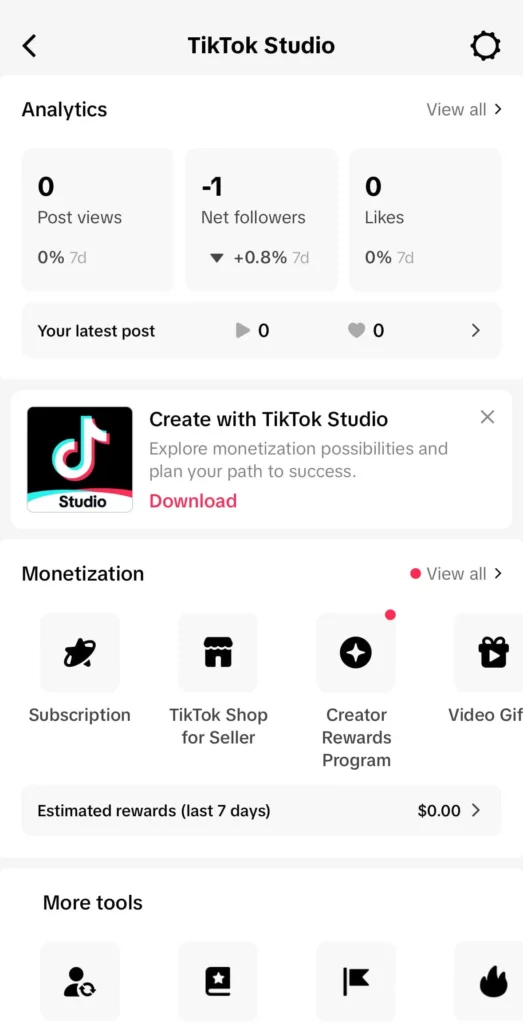
The algorithm boosts content when it gets fast early engagement. Post when your audience is active. Check your TikTok Analytics (Creator Tools → Analytics → Followers) for the days and hours your followers are most online. Posting at your audience’s peak activity window gives your video the best chance at fast early engagement.
Use Sounds Strategically
Trending sounds carry their own algorithm momentum. TikTok actively promotes content using trending audio. But using a 3-week-old trend won’t help — find sounds at the early-trending stage (rising in the TikTok Creative Center) before they peak. If you’re creating niche content, original audio that starts trending from your account is one of the strongest possible algorithm signals.
Write Captions for Search
TikTok is increasingly a search engine. Include your primary keyword naturally in the caption. On-screen text that matches what people search gets indexed. Think about what someone would type to find your content and make sure that phrase appears somewhere in the video’s text layer.
Post Consistently in a Defined Niche
The algorithm builds a model of what your account is about. Consistent niche posting reinforces that model and improves how accurately TikTok routes your content to relevant audiences. Posting across 5 unrelated topics confuses the categorisation and weakens distribution.
For more on getting more likes on TikTok, consistency and niche focus are the two variables that compound fastest. For comprehensive guidance on avoiding TikTok bans long-term, account behaviour consistency matters as much as content quality.