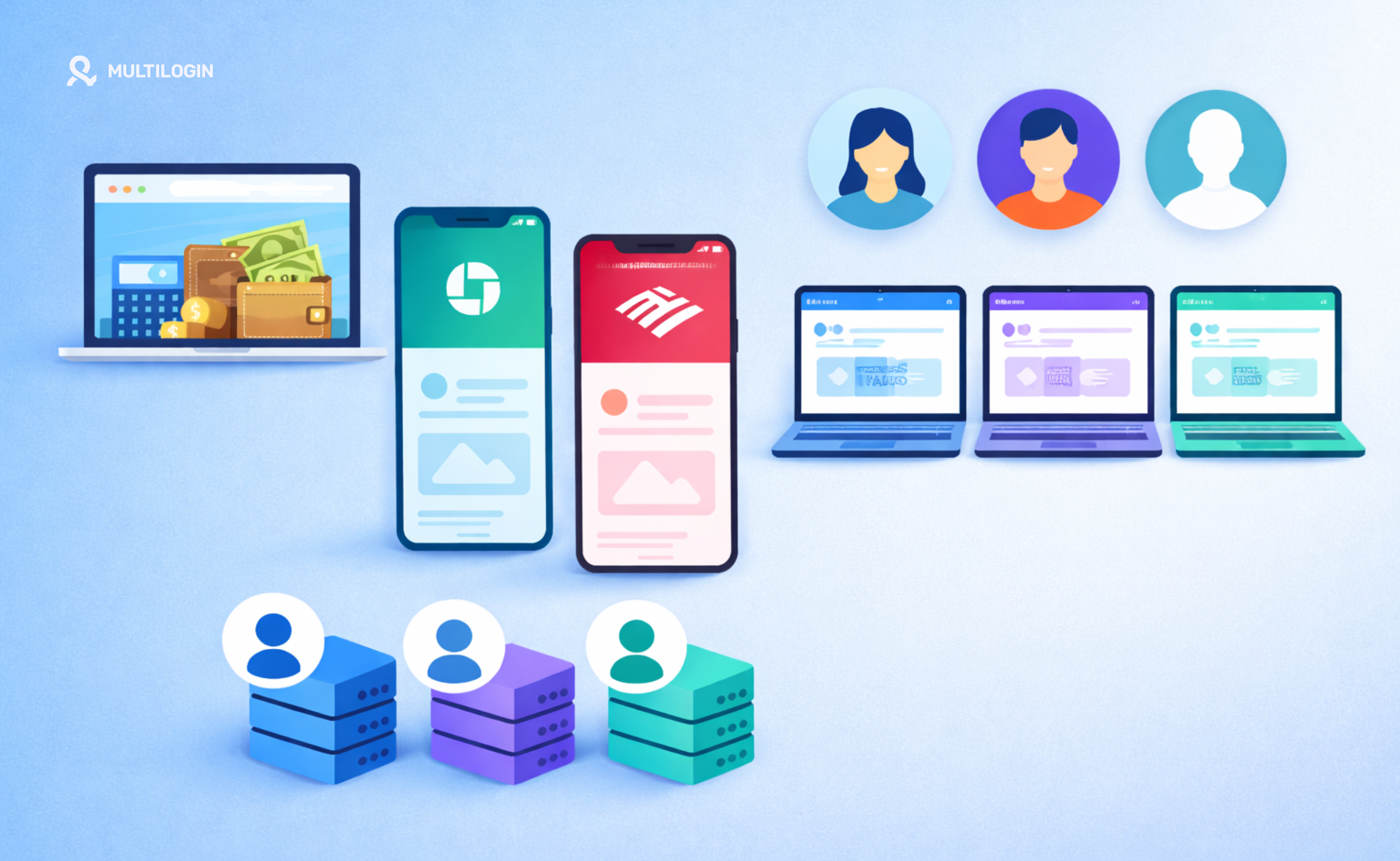



Picture this: You’re running three different e-commerce stores, each with its own PayPal account. Everything’s legitimate—separate LLCs, different bank accounts, proper tax filings. Then one morning, you wake up to find all three PayPal accounts frozen. Your funds are locked. Your businesses are paralyzed. What went wrong?
The answer isn’t in your financial setup. It’s in your digital fingerprint.
The question “Can you have multiple bank accounts?” is one of the most common financial queries out there. The short answer is an enthusiastic yes. Having multiple checking accounts and multiple savings accounts isn’t just legal—it’s actually a smart financial strategy recommended by countless advisors.
However, there’s a twist that most financial guides won’t tell you about: the moment you connect those bank accounts to online platforms like PayPal, Stripe, Cash App, or Venmo, you enter a completely different game.
One where traditional banking rules meet cutting-edge anti-fraud technology. One where having perfectly legitimate multiple business bank accounts can still get you banned if you don’t understand how digital fingerprinting works.
This guide will walk you through both sides of the coin: the financial benefits of having multiple bank accounts and the critical digital security measures you need to protect them when operating online. Whether you’re managing personal finances, running multiple businesses, or selling across different platforms, understanding both aspects is essential for success in today’s interconnected world.
The Financial Strategy: Why Multiple Checking Accounts Make Perfect Sense
Let’s start with the basics. Having multiple bank accounts is actually a cornerstone of modern financial planning. It’s not just about having options—it’s about creating a system that makes your money work harder and smarter for you.
Can You Have Multiple Checking Accounts at the Same Bank?
Absolutely, and here’s why you might want to. Most major financial institutions don’t just allow multiple checking accounts at the same bank—they actively encourage it. Banks understand that different accounts serve different purposes, and they’ve built their systems to accommodate this reality.
Think about your monthly financial life. You’ve got bills that need to be paid automatically—rent or mortgage, utilities, insurance, subscriptions. Then you’ve got your daily spending—groceries, gas, entertainment, unexpected expenses. Mixing these together in a single account makes budgeting a nightmare. You’re constantly trying to remember what’s already committed versus what you can actually spend.
Here’s how smart account holders typically structure their multiple checking accounts:
- The Bills Account: This is your fortress of financial responsibility. Your paycheck comes in, and you immediately transfer your calculated bills amount here. All your automated payments pull from this account. You never touch it for discretionary spending. When you check the balance, you know exactly where you stand with your obligations.
- The Spending Account: This is your real-life money. After bills are covered, this is what you have for groceries, dining out, entertainment, and life’s little pleasures. When this account hits zero, you know you’re done spending for the month. Simple, visual, effective.
- Sinking Funds: These are separate accounts for specific savings goals that aren’t quite your emergency fund. Maybe you’re saving for a vacation, a new car down payment, or a major home renovation. Having dedicated accounts prevents you from accidentally spending this money on everyday expenses.
The beauty of keeping these as multiple accounts with the same bank is convenience. You can transfer between them instantly, view everything in one app, and manage it all from a single login. No juggling different bank websites, no waiting for transfers between institutions.
The Strategic Advantage of Accounts at Multiple Banks
Now, while convenience is wonderful, there’s a compelling case for spreading your wealth across multiple banks. This isn’t about distrust—it’s about smart risk management and maximizing opportunities.
FDIC Insurance: The $250,000 Rule
Here’s something many people don’t fully understand: the Federal Deposit Insurance Corporation (FDIC) insures deposits up to $250,000 per depositor, per ownership category, per insured bank. Notice those words: “per insured bank.”
If you have $500,000 in savings all at one bank, only $250,000 is FDIC insured. The rest? You’re exposed. However, if you split that $500,000 across accounts at multiple banks, you can ensure your entire nest egg is federally protected. This becomes particularly relevant for those managing multiple business bank accounts or anyone with substantial savings.
Diversification of Services: Different Banks, Different Strengths
Not all banks are created equal, and this disparity actually works in your favor when you use multiple institutions strategically. When considering whether you can have multiple bank accounts with the same bank versus spreading across different institutions, think about what each bank does best.
Your local credit union might offer fantastic interest rates on savings accounts and personal customer service that feels like family. However, they might lack the sophisticated business banking tools you need for your e-commerce operation. Meanwhile, a major national bank might have terrible savings rates but excellent business services, a cutting-edge mobile app, and specialized lending products for entrepreneurs.
The savvy move? Use the credit union for your personal savings and the national bank for your business accounts. You get the best of both worlds rather than accepting compromises. This is why you can have multiple bank accounts at different banks—to leverage each institution’s unique strengths.
Risk Mitigation: When One Bank Has Issues
Banks are technology companies now, and technology fails. We’ve all seen the headlines: major banks experiencing hours-long outages, security breaches requiring password resets, or service disruptions affecting millions of customers.
If your entire financial life—personal spending, bill payments, business operations—is tied to one bank, you’re completely paralyzed when that bank has problems. Having multiple checking accounts at different banks provides a crucial financial backup. You can pivot to your backup account, keep operations running, and avoid the cascade of problems that come from bounced payments and missed deadlines.
Similarly, if you’re traveling internationally and your primary bank flags your card for fraud (even though you notified them), having accounts at multiple banks means you’re not stranded abroad without access to your money.
Can You Have Multiple Business Bank Accounts? The Business Case
For entrepreneurs and business owners, the question “can you have multiple business bank accounts” has an even more emphatic answer: yes, and you probably should. Many successful businesses operate with several accounts for different purposes, and understanding how to structure these accounts is crucial for both financial organization and legal protection.
Can You Have Multiple Business Bank Accounts Under One LLC?
One of the most common questions is “can you have multiple business bank accounts under one llc.” The answer is yes. A single LLC can maintain multiple bank accounts for various legitimate purposes:
- Operating Account: Your primary account for day-to-day business transactions, paying suppliers, and receiving customer payments.
- Tax Savings Account: A dedicated account where you set aside money for quarterly tax payments, ensuring you’re never caught short when tax time arrives.
- Payroll Account: If you have employees, a separate payroll account simplifies accounting and makes it easier to track labor costs.
- Investment or Growth Fund: An account where you accumulate capital for future expansion, equipment purchases, or market opportunities.
Having multiple business bank accounts isn’t just about organization—it’s about creating financial clarity that makes your business easier to manage, easier to audit, and easier to understand at tax time.
Platforms like PayPal, Stripe, Cash App, Venmo, and major e-commerce marketplaces are in a constant arms race against fraud. They’ve invested millions in anti-fraud technology that analyzes every aspect of how you interact with their platform. While you might have legitimately opened multiple business bank accounts under different legal entities, linking them to online accounts without proper digital isolation can trigger immediate red flags.
The Reality of Digital Fingerprinting
Let’s talk about what your computer and browser are actually revealing about you. Most people think they’re anonymous online if they use different email addresses and maybe switch IP addresses. That’s like thinking you’re disguised because you changed your shirt while your face, voice, and fingerprints remain identical.
Modern browser fingerprinting techniques analyze hundreds of unique data points that your browser and device involuntarily broadcast with every web request:
- Canvas Fingerprinting: Your graphics card and browser render HTML5 canvas elements in ways that are unique to your hardware and software combination. Even identical computer models will produce slightly different outputs based on minor driver variations. This creates a unique identifier that’s stable across sessions and doesn’t require cookies.
- WebGL Fingerprinting: Similar to canvas, but using your graphics card’s 3D rendering capabilities. This reveals information about your GPU, drivers, and rendering stack that’s incredibly difficult to mask without specialized tools.
- AudioContext Fingerprinting: Your audio processing hardware produces unique outputs that can be measured and used as an identifier. Yes, your speakers and audio chip can identify you.
- Font Lists: The exact combination of fonts installed on your system is surprisingly unique. Professional designers might have hundreds of specialized fonts, while casual users stick with system defaults. This pattern is instantly recognizable.
- Device Parameters: Screen resolution, color depth, touch support, hardware concurrency (CPU cores), available memory, platform details—all of these combine to create a profile that’s statistically likely to be unique.
- Behavioral Biometrics: Advanced systems even analyze how you type (keystroke dynamics), how you move your mouse, how you scroll, and your interaction patterns with forms. These behavioral patterns are as unique as a signature.
The critical point: when you log into two separate PayPal accounts—even if each is linked to a completely different, legitimate business bank account—from the same computer, PayPal’s anti-fraud system sees the identical digital fingerprint across both accounts. The system doesn’t care that your bank accounts are different. It sees that the same “person” (same device, same browser environment) is operating both accounts, and that triggers an immediate link between them.
This is where the disconnect happens between financial legality and digital security. You’re not doing anything illegal by having multiple business bank accounts. You’re not violating any banking regulations. However, you are violating platform policies against multi-accounting if those platforms detect the connection through browser fingerprinting.
The Cascade Effect of Account Linking
Here’s what makes this situation particularly dangerous: once platforms link your accounts through digital fingerprinting, the consequences cascade across your entire operation.
Let’s say you’re managing three PayPal accounts for three legitimate businesses. Each has its own LLC, its own business bank account, its own tax ID. Everything is completely above board from a legal and financial perspective.
However, you log into all three from the same laptop. PayPal’s system creates a hidden connection between these accounts based on your digital fingerprint. For weeks or even months, nothing happens. Then one of your accounts receives a chargeback or gets flagged for some other reason—maybe you sold something to a buyer in a high-risk country, or maybe you simply triggered an automated review for hitting certain transaction thresholds.
When PayPal’s security team reviews that one flagged account, they see it’s connected to two other accounts via shared digital fingerprints. Even though each account is legitimate on its own, the mere existence of hidden connections triggers their multi-accounting detection. All three accounts get frozen simultaneously. Your funds across all accounts—potentially tens of thousands of dollars—are now held for review or permanently limited.
The same scenario plays out on Stripe, Cash App, Amazon seller accounts, eBay, and virtually every major platform. They’re all using similar bot detection and fingerprinting technology, often sourced from the same third-party security companies.
This is why understanding multi-account management isn’t just a nice-to-have skill—it’s essential for anyone serious about operating multiple legitimate businesses online.
Platform-Specific Rules: Navigating PayPal, Stripe, Cash App, and Zelle
Each major platform has its own specific policies and technical limitations when it comes to linking multiple bank accounts. Understanding these nuances is crucial for structuring your financial and digital strategy.
Can You Have Multiple Bank Accounts on PayPal?
PayPal’s official policy is actually fairly permissive for a single account: you can link multiple bank accounts to one PayPal account. This is useful for personal finance management—maybe you want to link both your checking and savings accounts, or perhaps you’re managing funds across multiple banks for the FDIC insurance benefits we discussed earlier.
However, here’s the critical restriction: you cannot link the same bank account to multiple PayPal accounts. Each PayPal account must have unique funding sources.
For professionals running multiple businesses—perhaps you’re operating three different e-commerce stores, managing client funds for several projects, or running separate service businesses—you need multiple PayPal accounts. Each business should have its own PayPal account linked to its own business bank account.
The technical challenge isn’t the bank accounts themselves. You can easily open multiple business bank accounts under different LLCs or as separate business entities. The challenge is ensuring that PayPal’s anti-fraud system doesn’t detect that all these separate PayPal accounts are being managed by the same person from the same device.
If PayPal’s system links your accounts through digital fingerprinting, all your accounts become vulnerable. This is particularly frustrating because you’re not doing anything deceptive—you’re running legitimate businesses with proper separation at the corporate and banking level.
However, PayPal’s systems don’t distinguish between legitimate multi-business operators and fraudsters trying to abuse the platform.
This is where antidetect browsers become non-negotiable for serious business operators. The keyword “can you have multiple PayPal accounts with same bank account” highlights a specific concern, but the real issue is broader: managing multiple PayPal accounts period, regardless of whether they share bank accounts.
Can You Have Multiple Bank Accounts on Stripe?
Stripe operates differently from PayPal in some key ways. As a payment processor rather than a payment wallet, Stripe’s structure is more closely tied to legal business entities.
Typically, you can only link one primary bank account for payouts per Stripe account. This makes sense from Stripe’s perspective—each Stripe account represents a business entity, and that entity should have a consistent payout destination.
If you have multiple business bank accounts under different legal entities (different LLCs, corporations, or DBA structures), you would need multiple Stripe accounts. Each business entity gets its own Stripe account, connected to its own business bank account.
The technical challenge is identical to PayPal: managing these multiple Stripe accounts from a single workstation without triggering Stripe’s anti-fraud systems. Stripe uses sophisticated fingerprinting and behavioral analysis to detect multiple accounts controlled by the same individual.
Creating multiple Shopify stores with different Stripe accounts is a common use case where proper digital isolation becomes essential. Each store should appear to Stripe as if it’s operated by a completely different person, on different hardware, from a different location.
The query “can you have multiple bank accounts in stripe” often comes from entrepreneurs who are structuring their business operations and need clarity on both the financial and technical requirements for running multiple legitimate businesses through Stripe’s platform.
Can You Have Multiple Bank Accounts on Cash App?
Cash App’s structure is more restrictive than PayPal or Stripe. You can link one bank account and one debit card to your Cash App profile. This limitation makes sense for a peer-to-peer payment app designed primarily for personal use.
For business operators who need to manage multiple Cash App accounts—perhaps for different business ventures, separate revenue streams, or client payment processing—each account would need its own unique bank account or debit card connection.
The challenge with Cash App is that it’s particularly aggressive in its anti-fraud detection. Cash App deals with significant fraud attempts, and their security systems are calibrated accordingly. Running multiple Cash App accounts from the same device without proper fingerprint isolation will almost certainly result in all accounts being linked and subsequently limited or banned.
The platform also implements strict account verification bypass prevention, making it difficult to operate multiple legitimate accounts without proper tools.
Can You Have Zelle on Multiple Bank Accounts?
Zelle operates on a different model entirely since it’s integrated directly into many banking apps rather than being a standalone platform. You can only enroll one bank account per Zelle profile (tied to your phone number or email address).
If you have multiple checking accounts at the same bank or accounts at multiple banks, you can only link one to your Zelle profile at any given time. To use Zelle with a different account, you would need to de-enroll the first account and enroll the new one, or use a different phone number/email address to create a separate Zelle profile.
For most personal users, this limitation isn’t a significant issue since Zelle is designed for simple peer-to-peer transfers. However, for business operators who might want to receive Zelle payments across different business accounts, the restriction requires careful planning around which phone numbers and email addresses are associated with which business entities.
The Solution: Digital Isolation with Multilogin
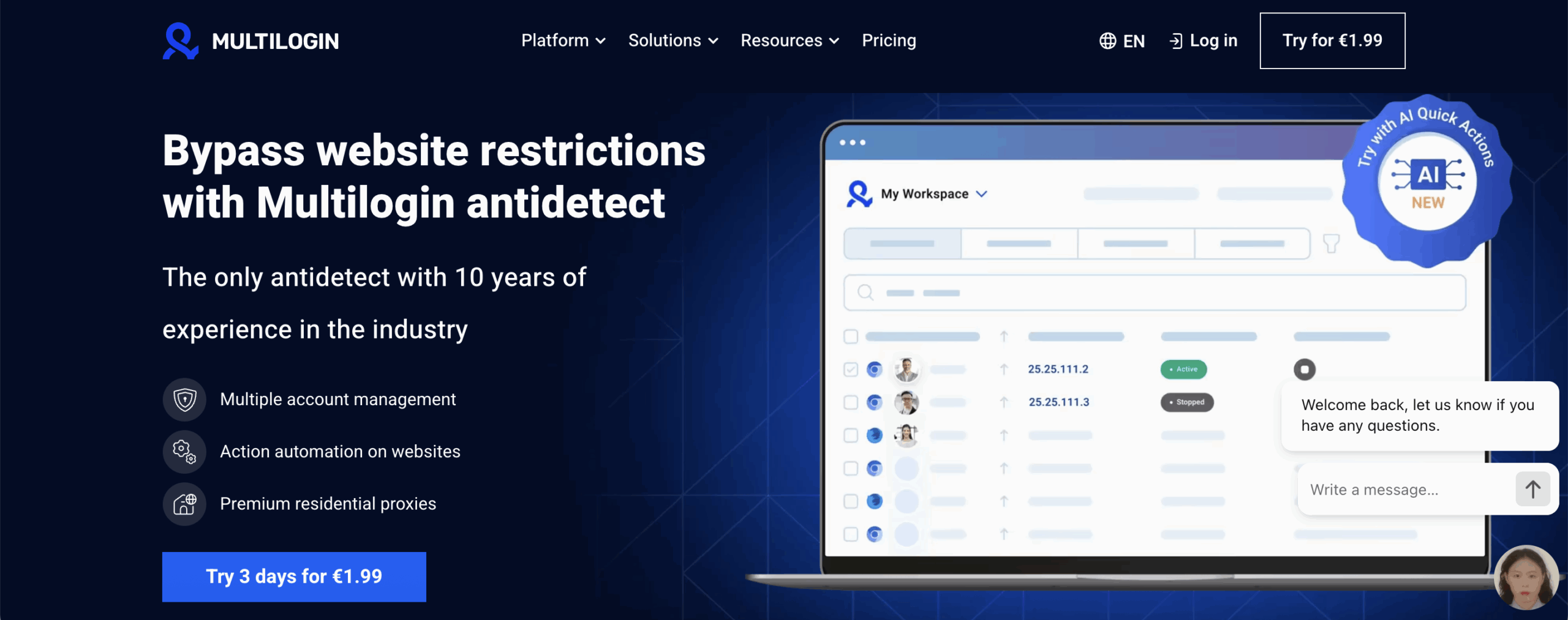
If you’ve been following along, you’ve probably identified the core challenge: the financial strategy of having multiple bank accounts is completely legitimate and recommended, but safely managing the online platform accounts connected to those bank accounts requires solving the digital fingerprinting problem.
This is precisely where Multilogin transforms from a nice-to-have tool into an essential business infrastructure component.
What Multilogin Actually Does
Multilogin is an antidetect browser that creates completely isolated digital environments for each online account you manage. Think of it as creating a virtual computer for every single account—except it’s more sophisticated than simple virtualization.
When you create a browser profile in Multilogin, you’re not just getting a clean slate. You’re getting a completely unique digital fingerprint that’s indistinguishable from a real, separate user. This means:
- Canvas Fingerprinting Protection: Each profile generates unique canvas outputs based on the fingerprint you’ve configured. Platform systems see completely different hardware signatures across your accounts.
- WebGL Masking: Your GPU rendering output is uniquely masked for each profile, making it appear that each account is being accessed from different hardware.
- Font Management: Each profile can have different system fonts, removing one of the most stable and revealing aspects of browser fingerprinting.
- Geolocation Control: Beyond basic IP masking (which you’d get with a simple proxy), Multilogin handles geolocation spoofing at the browser level, including GPS coordinates, timezone, and locale settings that all remain consistent with your chosen location.
- User Agent and HTTP Headers: Every technical detail about your browser version, operating system, and capabilities can be customized per profile and remains consistent across sessions.
What makes Multilogin particularly powerful is the consistency of these fingerprints. Creating random fingerprints is actually easy—maintaining fingerprints that remain stable across sessions while still appearing natural and authentic is the hard part. Multilogin handles this complexity automatically.
Advanced Strategies: Optimizing Your Multi-Account Setup
Once you understand the basics of maintaining multiple bank accounts with proper digital isolation, there are several advanced strategies that can further optimize your operations.
Proxy Selection and Management
While Multilogin handles the browser fingerprinting, you still need to consider IP address variation. Using residential proxies that match the geographic locations of your business bank accounts adds another layer of authenticity to your setup.
For example, if your New York-based business bank account is connected to a PayPal account, that PayPal account should consistently access the platform through a New York IP address. Sudden location changes trigger security reviews even when fingerprints remain consistent.
Multilogin integrates seamlessly with professional proxy services, allowing you to assign specific proxies to specific browser profiles and maintain this consistency automatically.
Cookie Management and Account Warming
When you create a new online account linked to a new business bank account, that account starts with zero history and trust. Platforms are more suspicious of brand-new accounts, particularly those that immediately start conducting business.
Pre-made cookies and account warming strategies involve gradually building account history and trust scores before conducting serious business. This might mean logging in regularly, performing small transactions, and generally behaving like a normal user before scaling up operations.
Multilogin supports sophisticated cookie management, allowing you to save, transfer, and manipulate cookies across profiles as part of account warming strategies.
Team Collaboration Without Compromise
Many multi-account operations require team members to access accounts. Traditional password sharing creates security vulnerabilities and makes fingerprinting consistency nearly impossible when different team members access accounts from different devices.
Multilogin’s team features allow multiple team members to access the same browser profiles without compromising fingerprint consistency. The profile maintains its unique digital identity regardless of who’s actually using it at any given moment. This solves the operational challenge of delegation while maintaining the security requirements for account isolation.
Automation and Efficiency
Managing multiple business bank accounts and their associated online accounts can become time-consuming as you scale. Multilogin supports automation through integration with tools like Puppeteer and Selenium, allowing you to automate routine tasks across your multiple accounts while maintaining proper fingerprint isolation.
This is particularly valuable for operations like ticket scalping or airdrop farming, where speed and efficiency across multiple accounts can be the difference between success and failure.