


Multilogin and DuoPlus both provide Android cloud phones for managing social media accounts and mobile workflows. The main difference is their product scope.
DuoPlus focuses primarily on cloud phones, browser-based remote access, synchronized operations, RPA, and flexible usage pricing. Multilogin combines Android cloud phones and isolated browser profiles in one platform, with built-in proxies, automation access, and team management.
The quick answer: Choose Multilogin when your workflow covers both Android apps and desktop websites, or when you want cloud phones, browser profiles, proxies, and team controls in one platform. Choose DuoPlus when you mainly need browser-accessible cloud phones, operation synchronization, RPA, or live-streaming workflows.
Pricing and features were checked on September 11, 2026. Because both platforms can change their plans, confirm current details on their official pricing pages before purchasing.
Multilogin vs DuoPlus at a glance
| Feature | Multilogin | DuoPlus |
|---|---|---|
| Main product | Android cloud phones and isolated browser profiles | Android cloud phones |
| Best suited to | Teams working across mobile apps and websites | Mobile-first cloud phone operations |
| Device approach | Android cloud phones with real device parameters | Authentic ARM devices with simulated environment settings |
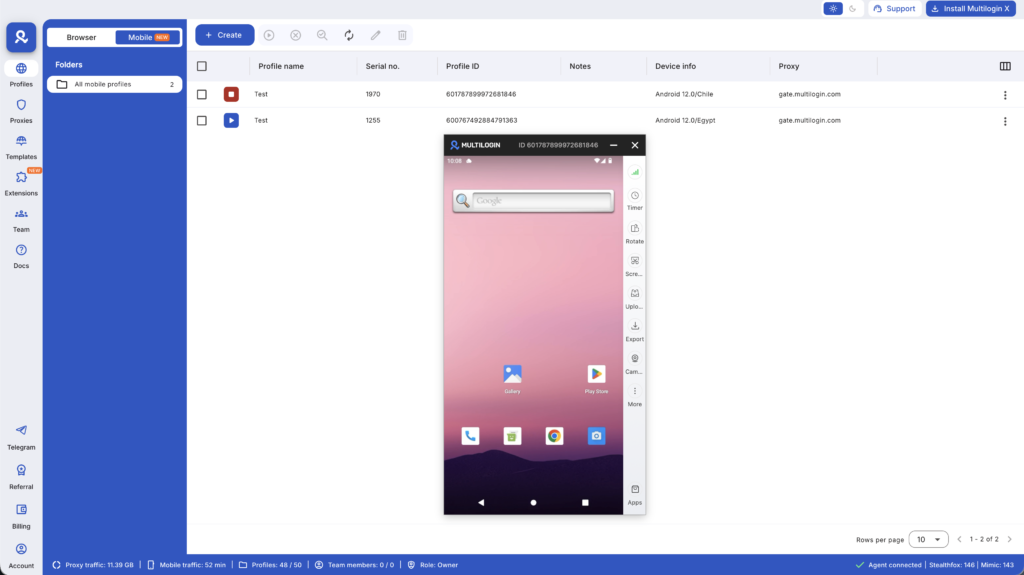
| Access method | Multilogin desktop application | PC and mobile web browsers |
| Browser profiles | Included | Not listed as a separate product |
| Proxies | Built-in proxies plus support for third-party proxies | Proxy configuration and separate proxy solutions |
| Automation | API, ADB, Selenium, Puppeteer, Playwright, and Postman support | API, ADB, RPA, and operation synchronization |
| Team features | Profile sharing, folders, permissions, and unlimited seats on Business | Team collaboration and cloud-phone sharing |
| Free access | Free plan with five profiles | Free trial with one cloud phone and limited startup time |
| Pricing model | Subscription plus optional proxy traffic and mobile minutes | Cloud-phone allocation plus startup-time packages |
What is DuoPlus?
DuoPlus is a cloud phone platform designed for mobile account operations, social media marketing, e-commerce, affiliate marketing, app testing, gaming, and live streaming.
According to the official DuoPlus website, its cloud phones run on authentic ARM devices deployed in the cloud. DuoPlus also provides tools for changing device environments, configuring GPS and SIM information, managing proxies, installing applications, and sharing cloud phones with a team.
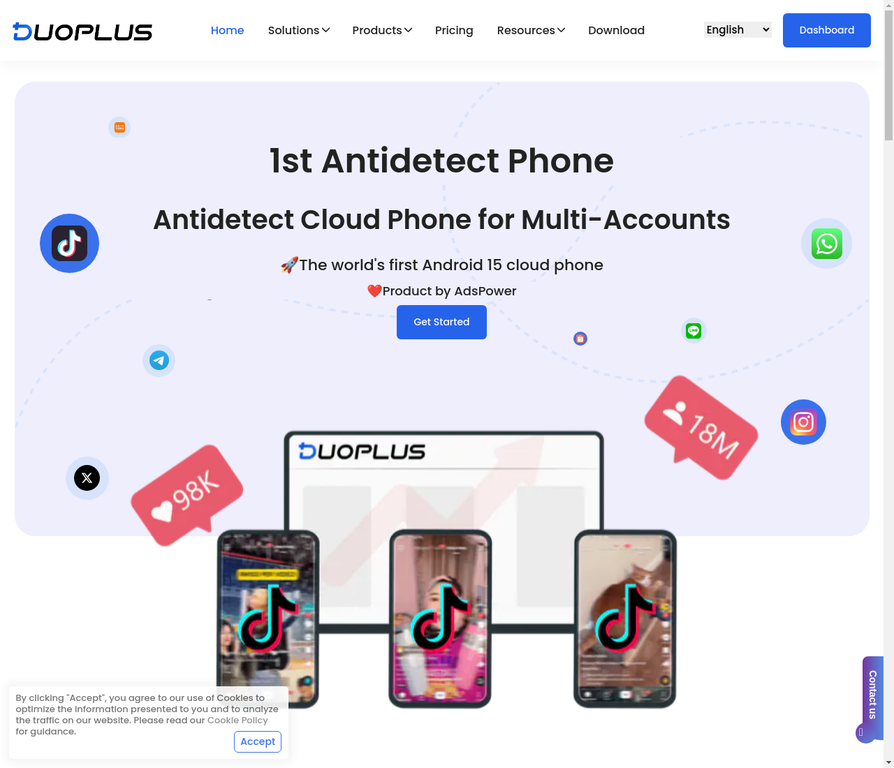
DuoPlus cloud phones can be accessed from PC and mobile browsers without downloading a desktop client. This makes the platform convenient for users who want to open and control Android environments remotely.
Its main workflow features include:
- Operation synchronization across cloud phones
- RPA for repeatable mobile tasks
- API access
- Android ADB access
- Team collaboration
- Proxy management
- Cloud storage management
- Preinstalled applications
- Live-streaming automation
DuoPlus describes “one-click skin change” and “simulated fingerprint” features on its pricing page. At the same time, its homepage says the platform deploys authentic ARM devices. Therefore, it would be inaccurate to describe DuoPlus as a basic Android emulator or claim that its hardware model is undisclosed.
What is Multilogin?
Multilogin is a cloud phone platform for social media marketers. It enables people, teams, and AI agents to create, run, and manage multiple social profiles from one dashboard.
The platform provides two types of environment:
- Android cloud phones for mobile apps such as TikTok, Instagram, Facebook, Reddit, and YouTube
- Browser profiles for website-based workflows, with separate cookies, sessions, storage, and IP settings
This distinction matters because many social media workflows are not limited to an Android application. A team may publish through a mobile app, review analytics in a website, manage advertising through a browser, and work with client assets on a desktop.
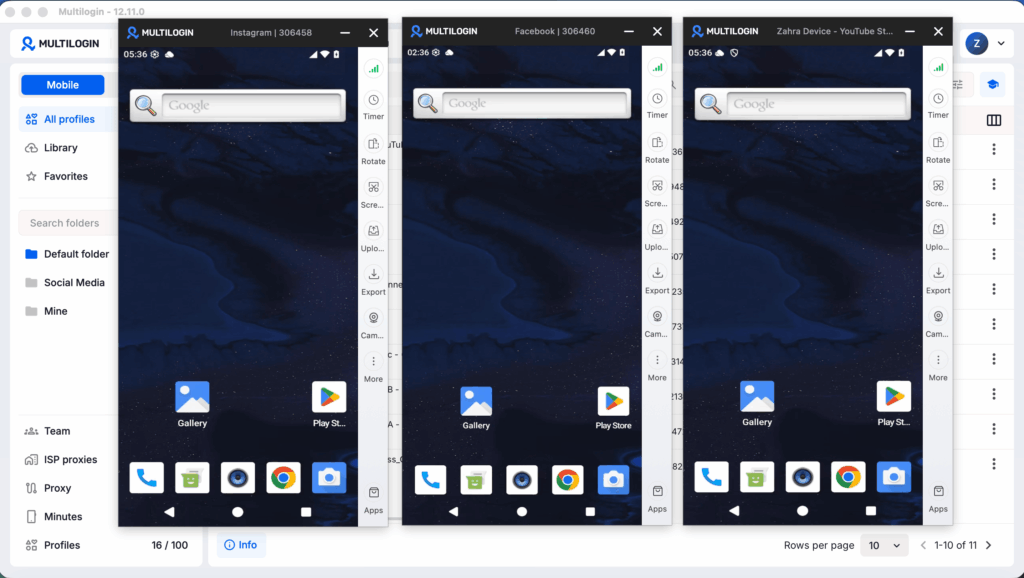
Multilogin puts those mobile and web environments in the same workspace. Its current plans include cloud mobile and browser profiles, API access, built-in proxy traffic, and an allowance of mobile minutes. You can review the exact allowances on the Multilogin pricing page.
Multilogin also supports third-party proxies, so teams are not limited to the built-in proxy service.
What is the main difference between Multilogin and DuoPlus?
The main difference is that Multilogin combines Android cloud phones with isolated browser profiles, while DuoPlus concentrates on cloud phone operations.
DuoPlus lets users control its cloud phones from desktop and mobile browsers. However, browser access to a cloud phone is not the same as having a separate browser profile for website sessions.
A browser profile keeps web data such as cookies, local storage, session information, extensions, and proxy settings in its own environment. An Android cloud phone provides an Android operating environment for installed mobile applications.
Multilogin supports both workflows. Based on DuoPlus’s current public product pages, DuoPlus does not list isolated desktop browser profiles as a separate product.
This makes the decision relatively simple:
- If your work happens almost entirely inside Android applications, both platforms may fit.
- If your team works across Android apps and desktop websites, Multilogin provides both environment types in one platform.
Device environments compared
Both platforms now describe their cloud phones as running on ARM-based device infrastructure.
DuoPlus says it deploys authentic ARM devices and supports environment configuration for GPS, SIM data, base-station information, and device settings. Its pricing page also describes the environment feature as a simulated fingerprint.
Multilogin provides Android cloud phones with real device parameters, including device identities based on supported Android models and brands. Users can select from approximately 30 device types across 12 brands.
The public information does not support claiming that only one platform uses legitimate hardware. A more useful comparison is how each platform manages the complete environment around the device.
Multilogin is built around persistent Social Profiles. A mobile profile runs through an Android cloud phone, while a web profile runs through an isolated browser. DuoPlus gives users tools to create, change, synchronize, and operate cloud-phone environments.
Neither product can guarantee account protection. Account outcomes also depend on platform rules, content quality, access patterns, permissions, and user behavior.
Proxy support compared
DuoPlus proxy support
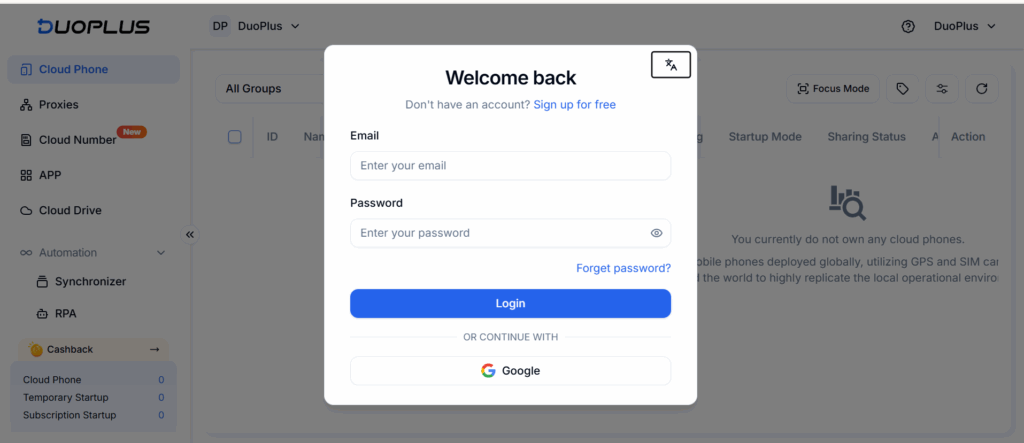
DuoPlus provides proxy management and publishes a separate proxy solutions page. Users can configure independent proxy connections for cloud phones and manage those settings within the platform.
Its public pricing page does not present an included monthly proxy-traffic allowance alongside the cloud-phone packages. Users should therefore check whether their preferred proxy option requires a separate purchase.
Multilogin proxy support
Multilogin includes a proxy-traffic allowance in every plan. The platform provides residential, ISP, and mobile proxy options across more than 150 locations. It also supports third-party proxies.
Proxy traffic beyond the plan allowance is available as an add-on, and unused purchased traffic rolls over. The exact price depends on the selected volume, so teams should calculate their expected traffic before comparing total costs.
The practical difference: Multilogin provides an included starting allowance and optional top-ups within the same platform. DuoPlus provides proxy management and separate proxy solutions, but buyers should verify what is included with their selected cloud-phone package.
Automation compared
DuoPlus automation
DuoPlus provides several native tools for scaling cloud-phone tasks:
- Operation Sync mirrors actions across selected cloud phones.
- RPA supports repeatable workflows without requiring every task to be coded manually.
- API access allows external systems to control supported operations.
- Android ADB supports direct Android automation and technical testing.
- Unattended live streaming supports specific broadcasting workflows.
These features make DuoPlus relevant to teams that prioritize repeated mobile actions, synchronized control, or live-stream operations.
Multilogin automation
Multilogin supports API and ADB access for managing browser profiles and Android cloud phones. Its automation ecosystem also includes Selenium, Puppeteer, Playwright, and Postman.
This is particularly useful when a technical team already uses browser-automation frameworks and wants mobile and web environments inside the same operational system.
Multilogin is also compatible with Appium-based Android automation through ADB.
The practical difference: DuoPlus emphasizes built-in RPA and synchronized cloud-phone actions. Multilogin is stronger when a workflow combines Android automation with established browser-automation frameworks.
Team management compared
Both platforms support team-based cloud phone management, but their public descriptions emphasize different controls.
DuoPlus offers team collaboration, device sharing, authorization settings, and shared cloud-phone management. This can work well for teams that need several people to operate the same pool of mobile environments.
Multilogin provides profile sharing, folders, tags, notes, role-based permissions, and a dashboard showing running profiles. Pro plans include team seats, while Business plans include unlimited seats and advanced team management.
For an agency, the important questions are not simply whether collaboration exists. Check whether the selected plan lets you:
- Restrict access by client or project.
- See which profiles are currently running.
- Transfer profiles to another workspace.
- Separate mobile and website sessions.
- Add enough users without creating unnecessary shared credentials.
Multilogin vs DuoPlus pricing
The two platforms use different pricing structures, so comparing only one advertised number can be misleading.
DuoPlus pricing
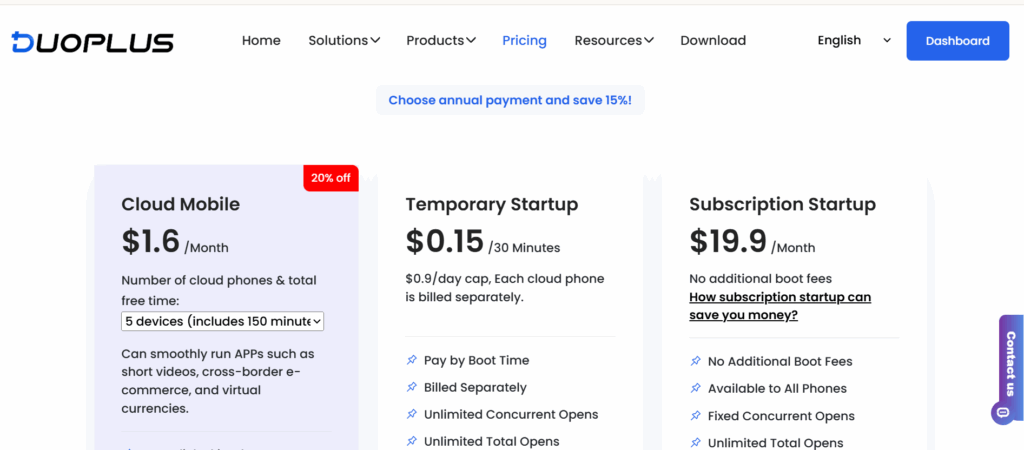
The DuoPlus pricing page separates the cost of cloud-phone allocation from startup time.
At the time of checking, DuoPlus offered:
- A free trial with one cloud phone for 30 days and 30 minutes of startup time
- Quantity-based cloud-phone pricing
- Startup time billed by duration
- A monthly startup package
- Annual billing with a published discount
The lowest displayed per-device price applies to a selected quantity and should not be treated as the normal price for every customer. Buyers should select their required number of phones and expected running time to calculate the actual cost.
Proxy requirements may also affect the final monthly total.
Multilogin pricing
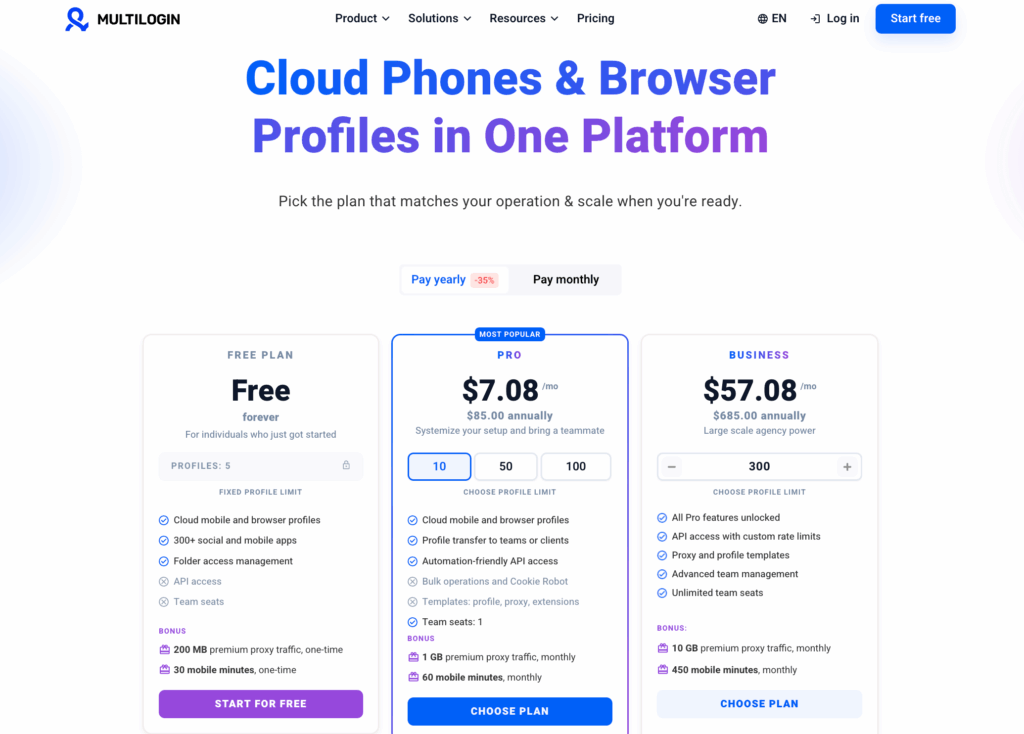
Multilogin offers a Free plan with five profiles, a one-time proxy bonus, and a one-time mobile-minute bonus. Paid Pro plans cover 10, 20, or 50 profiles, while Business plans begin at 100 profiles.
Paid plans combine:
- Android cloud phones
- Browser profiles
- Monthly proxy traffic
- Monthly mobile minutes
- API access
- Team features
- Profile organization tools
Additional mobile minutes and proxy traffic can be purchased when needed, and unused add-on resources roll over.
Temporary promotions can change the annual price. For a stable comparison, use the regular monthly price and the current checkout total rather than placing a short-term promotional price in evergreen copy.
Which platform is cheaper?
DuoPlus may have a lower entry cost for users who need a small number of cloud phones for limited periods. Multilogin may provide better total value when the same team also needs browser profiles, proxy traffic, automation, and account organization.
The cheaper option depends on five inputs:
| Cost input | What to calculate |
|---|---|
| Number of environments | Cloud phones plus any required browser profiles |
| Running time | Total monthly cloud-phone minutes |
| Proxy use | Included traffic plus extra traffic |
| Team size | Required seats and permission controls |
| Automation | Built-in tools or external development requirements |
Avoid comparing DuoPlus’s lowest device price with Multilogin’s full subscription price without including startup time, proxies, browser tools, and team access. Those packages cover different combinations of resources.
When should you choose DuoPlus?
DuoPlus may be the better fit when:
- Your work is primarily mobile-first.
- You want to control cloud phones through a web browser.
- You need synchronized operations across several devices.
- Built-in RPA is important to your workflow.
- You run live-streaming operations.
- You prefer separate device and startup-time pricing.
- You do not need isolated desktop browser profiles.
Its free trial also gives teams a way to test the interface and basic cloud-phone workflow before selecting a larger package.
When should you choose Multilogin?
Multilogin may be the better fit when:
- Your work covers both Android applications and websites.
- You want cloud phones and browser profiles in one dashboard.
- You manage Social Profiles for several brands or clients.
- You need built-in proxy traffic with the option to add your own proxies.
- Your automation uses Selenium, Puppeteer, Playwright, Postman, API, or ADB.
- You need folders, permissions, profile sharing, and clear team organization.
- You want one subscription that includes profiles, proxy traffic, and mobile minutes.
For social media agencies, the 2-in-1 structure is the most important distinction. A team can use Android cloud phones for app-based work and browser profiles for website-based tasks without maintaining separate profile-management platforms.
For creator teams managing multiple brand or client profiles, Multilogin can help keep daily account work organized without turning the workflow into a login mess.
Multilogin is not a way around platform rules. The safest approach combines clean account separation with original content, real engagement, and platform-compliant activity.
Need a better Duoplus Alternative? Try Multilogin Cloud Phones.
Multilogin vs DuoPlus: final verdict
Multilogin is the stronger all-in-one choice for teams that manage social profiles across Android applications and desktop websites. It combines cloud phones, browser profiles, proxies, automation, and team controls in one workspace.
DuoPlus is a credible mobile-first option for users who want web-based cloud-phone access, synchronized operations, RPA, ADB, and live-streaming features.
The right platform depends on the environment your work requires:
- Choose DuoPlus for a focused cloud-phone workflow.
- Choose Multilogin for a combined mobile and web workflow managed from one dashboard.
Before deciding, list the apps, websites, number of profiles, monthly running time, proxy traffic, automation tools, and team seats you need. That produces a more accurate comparison than choosing from the lowest advertised price.
Frequently asked questions About Multilogin cloud phone vs Duoplus
DuoPlus offers simulated fingerprints and independent environments per instance. For casual multi-accounting, that’s reasonable. For high-value accounts where bans mean lost revenue, you want platforms with documented real hardware IDs for stronger protection.
DuoPlus cloud phone pricing starts at $1.4/month per device for Cloud Mobile plans, $0.15 per 30-minute session for temporary use (capped at $0.9/day), or $16.9/month for the flat-rate Subscription Startup. Annual Cloud Mobile payments save 15%. Budget for proxy costs separately.
The DuoPlus cloud phone official website is duoplus.net. It supports multiple languages and has full pricing information, feature descriptions, and download options published publicly.
The biggest difference is device authenticity. Multilogin uses real Android hardware with genuine IMEI, Android ID, and MAC addresses. DuoPlus uses simulated fingerprints. Multilogin also bundles antidetect browser access and residential proxies into every subscription, while DuoPlus focuses on mobile-only cloud phone access with proxies likely separate.
DuoPlus includes proxy management tools, but residential proxy access itself appears to need separate configuration. Check current proxy bundling and pricing before subscribing so your total costs don’t catch you off guard.
DuoPlus provides isolated Android environments with simulated fingerprints for TikTok account management. No cloud phone platform can guarantee zero bans, but the quality of device identifiers and proxy matching plays a huge role. Platforms using real hardware IDs reduce detection risk more consistently.
Yes. Every Multilogin subscription includes built-in residential proxies with 30M+ IPs across 195+ countries. Proxies automatically match your device’s geolocation. No separate proxy vendor or manual configuration needed.