


Let’s be direct about what you’re here to find out.
You want to know about Facebook comment bots: what they are, whether they work, what the risks are, and whether there’s a smarter way to get engagement at scale without getting your accounts torched.
This guide gives you the full picture, no fluff.
What Is a Facebook Comment Bot?
A Facebook comment bot (also called an auto comment bot, FB bot auto comment, or Facebook commenter) is software that automatically posts comments, likes, or reactions on Facebook posts, pages, ads, or groups without manual input.
These tools are used for:
- Engagement farming: Artificially inflating comment counts to trigger Facebook’s algorithm
- Lead generation: Commenting on competitor posts to redirect attention
- Community building: Auto-responding to comments on your own posts
- Ad management: Moderating or engaging with comments on Facebook ads
- Spam: High-volume comment drops for traffic manipulation (the bad kind)
The keyword “auto comment bot Facebook” typically shows up in searches from:
- Marketers looking to manage comment engagement at scale
- Business owners wanting to respond to their own ad comments faster
- Agency managers looking to automate repetitive comment tasks
- People testing growth hacking tactics
The use cases range from legitimate to gray area to outright policy violations, so understanding the landscape matters before you touch any of these tools.
How Facebook Comment Bots Work
A Facebook comment bot works by automating browser or API-level interactions with Facebook’s interface.
There are two main technical approaches:
Browser Automation Bots
These control a browser (usually Chrome or Firefox) using tools like Selenium, Puppeteer, or custom automation scripts. The bot navigates Facebook, finds target posts, and executes comment actions by simulating mouse clicks and keyboard input.
How Facebook detects these: Facebook’s bot detection analyzes behavioral patterns. Bots that comment at inhuman speed, never scroll, always comment in the same sequence, or come from the same IP address get flagged quickly. Facebook’s systems track dozens of behavioral and technical signals simultaneously.
API-Based Tools
Some tools use unofficial Facebook API calls to submit comments without controlling a browser. These are faster but even easier for Facebook to detect, since they bypass normal browser behavior entirely.
Why Most Public Facebook Comment Bots Fail
Search for “Facebook comment bot free” and you’ll find dozens of tools. Most share a common fate: they work briefly, then Facebook catches them.
The problem isn’t the commenting itself. The problem is they do it obviously:
- Same IP address, thousands of actions
- Identical behavioral fingerprints
- No delay patterns that mimic human behavior
- Same device parameters across all sessions
Facebook’s systems learn patterns. When a pattern repeats, it gets flagged. When it gets flagged at scale, accounts get disabled.
Bot Like Comment Facebook: The Engagement Use Cases
Before getting into what actually works, let’s separate the legitimate use cases from the rest.
Legitimate: Comment Moderation and Response Automation
If you’re running Facebook ads with significant volume, managing comments manually becomes impossible. Automated tools that:
- Flag negative comments for human review
- Auto-respond to common questions with preset answers
- Hide spam comments
- Tag team members when specific keywords appear
These are legitimate, widely-used, and supported by Facebook’s own business tools (Meta Business Suite has built-in comment management features).
Gray Area: Engagement Boosting on Your Own Content
Using bots to boost comment counts on your own posts or ads sits in gray territory. You’re inflating metrics artificially. It may not violate any law, but it violates Facebook’s terms of service, and Meta’s systems are increasingly good at detecting it.
More importantly, it doesn’t actually help you. More fake comments don’t translate to real customers.
Problematic: Comment Spam on Competitor or Public Posts
Mass commenting on other people’s posts, pages, or groups for promotional purposes is spam by definition. Facebook bans accounts for this. It also annoys potential customers, the opposite of what you want.
Facebook Comment Like Bot: What Actually Drives Results
Here’s the practical reality for marketers: the highest-ROI engagement activities on Facebook aren’t automated spam. They’re managed authentic interactions at scale.
The difference:
- What bots do (and why it fails): Post identical comments from the same accounts at volume. Facebook detects it. Accounts get restricted. Real users aren’t engaged.
- What works: Managing multiple real accounts, each with genuine identities, real behavioral patterns, and authentic engagement. At scale.
This is where proper account infrastructure matters more than bot software.
Managing Multiple Facebook Accounts for Engagement
For agencies managing Facebook engagement across multiple client accounts, the challenge isn’t “can we automate comments.” It’s “can we operate multiple accounts safely without triggering Facebook’s account linking detection.”
Facebook’s systems don’t just look for bot behavior. They look for:
- Multiple accounts accessing Facebook from the same device
- Multiple accounts sharing the same IP address
- Accounts with identical behavioral fingerprints
- Rapid login switching between accounts
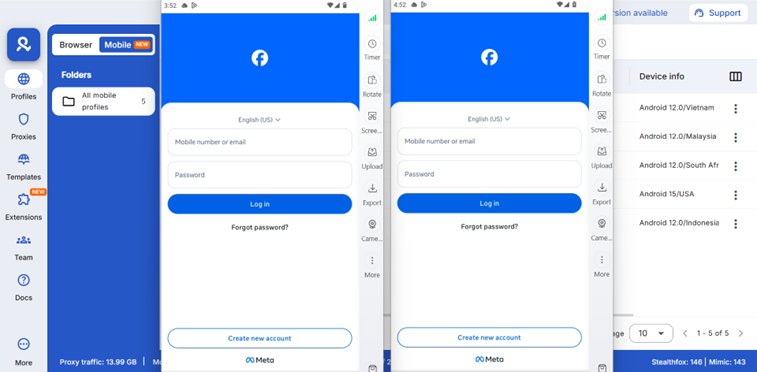
This is why agencies that manage Facebook at scale use cloud phones and antidetect browsers rather than simple bot tools.
Each client account or managed profile runs in its own isolated environment with:
- Unique device fingerprints
- Separate IP addresses matched to appropriate locations
- Independent session data
- Natural behavioral patterns
The result: accounts that Facebook sees as genuinely separate users rather than a bot farm.
For an in-depth look at why Facebook bans accounts and how to prevent it, our guide on how to avoid getting banned from Facebook covers the detection mechanisms in detail.
Auto Like Auto Comment Facebook: Real Tools Worth Knowing
For the legitimate use cases, here are tools that handle Facebook comment automation without the high-risk approach of raw bots.
Meta Business Suite
Facebook’s own tool. Allows scheduled posts, comment management, inbox management, and basic automation. No violation risk since it’s Facebook’s official platform.
Best for: Basic comment moderation, response management, basic scheduling.
ManyChat
The leading chatbot platform for Facebook Messenger. Automates comment responses by triggering Messenger conversations when users comment specific keywords on your posts.
Example: Post “Comment PROMO to get our discount code.” When someone comments “PROMO,” ManyChat automatically sends them a Messenger message with the code.
This is genuinely effective, compliant with Facebook’s policies (within limits), and creates real engagement.
Best for: Lead generation, discount delivery, content distribution through comments.
Hootsuite, Sprout Social, Buffer
Social media management platforms that include Facebook comment management. These don’t automate commenting on other people’s posts but help teams manage inbound comments efficiently.
Best for: Agencies managing multiple client Facebook pages and ad accounts.
ChatFuel
Similar to ManyChat, ChatFuel automates Facebook Messenger interactions triggered by comments or messages.
Best for: Customer service automation, lead qualification, FAQ responses.
Facebook Comment Bot Spam vs Legitimate Automation: The Clear Line
Let’s draw the line clearly.
Legitimate automation:
- Responding to comments on your own posts with relevant, helpful replies
- Moderating comments to remove spam or flag issues
- Triggering Messenger conversations from comment keywords
- Scheduling posts and managing multiple client pages
Policy violations that will get accounts banned:
- Mass commenting on posts you don’t own for promotional purposes
- Using bots to artificially inflate comment counts
- Automated liking and commenting from accounts designed to appear human but aren’t
- Using the same bot across multiple accounts from the same infrastructure
The practical test: does the automation create genuine value for the people receiving it? If yes, it’s probably fine. If it’s just inflating numbers, Facebook will catch it.
Bots Commenting on Facebook: The Account Safety Problem
Every marketer who’s used aggressive Facebook automation has a story about accounts getting disabled.
The sequence usually goes:
- Bot runs well for days or weeks
- Facebook’s system identifies the pattern
- Accounts receive “unusual activity” warnings
- Two-factor authentication challenges appear on every login
- Accounts get temporarily restricted
- For repeated violations: permanent ban
The real cost isn’t just the banned accounts. It’s the ad spend data, the audience data, the campaign history, and the client relationships that disappear with them.
For agencies, a single Facebook ad account getting banned mid-campaign can mean:
- Immediate campaign interruption
- Client budget wasted while campaigns are paused
- Weeks of appeals to get accounts reinstated (if ever)
- Client churn
This is why serious agencies invest in proper account infrastructure rather than cheap bot tools. The cost of a ban vastly exceeds the cost of doing things properly.
Our guide on how to prevent Facebook account bans and why Facebook ad accounts get banned covers the specific mechanisms Facebook uses to detect problematic accounts.
Managing Comments on Facebook Ads: The Professional Approach
For agencies running Facebook ad campaigns, comment management is a real operational challenge.
When you’re spending $10,000+ per month on Facebook ads, each ad gets significant comment volume. Managing those comments across multiple client accounts manually is impossible.
What Professional Comment Management Looks Like
- Dedicated cloud phones or browser profiles per client: Each client’s Facebook account runs in its own isolated environment. No account mixing, no cross-contamination.
- Comment monitoring alerts: Tools that notify team members when specific keywords appear in comments (negative sentiment, competitor mentions, support questions).
- Response templates: Pre-written responses for common questions that team members can deploy quickly without composing from scratch.
- Escalation protocols: Clear rules for which comments get human responses, which get automated replies, and which get hidden or deleted.
- Bulk management tools: For high-volume ad accounts, tools that allow processing dozens of comments efficiently from a single interface.
For agencies running multiple clients with this setup, Multilogin provides the isolation layer: each client account in its own cloud phone or antidetect browser profile, all managed from one dashboard. You can learn more about how this works for managing Facebook ads across multiple clients.
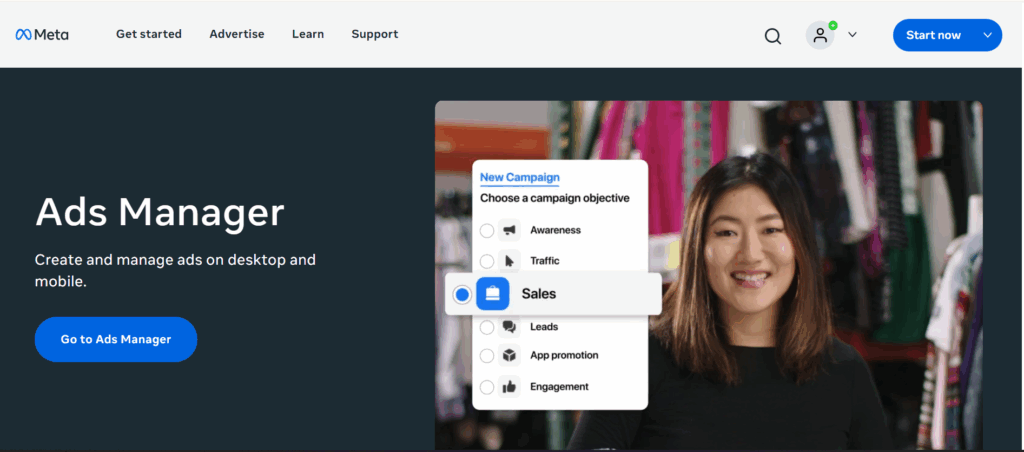
Adding Someone to Facebook Ads Manager
For agency-client relationships, the right approach to comment and ad management is proper Business Manager access, not account sharing.
Add clients through Business Manager with appropriate permission levels. This allows your team to manage comments, ads, and pages without sharing passwords or using shared login credentials that trigger security flags.
Commenting Bot: What Happens When Facebook Detects Them
Facebook’s detection systems are sophisticated and continuously updated. When a comment bot gets detected:
Account-level consequences:
- Post reach reduction (shadow restriction)
- Temporary commenting ability removal
- Forced password reset
- Account checkpoint (identity verification required)
- Temporary account suspension
- Permanent account disable
Ad account consequences:
- Ad account restriction
- Campaign pauses
- Billing holds
- Business Manager restriction
- Permanent ad account ban
Page consequences:
- Page reach reduction
- Page posting restrictions
- Page unpublication
Recovery from serious violations is time-consuming and not guaranteed. Meta’s appeals process is notoriously slow and often results in “we’ve reviewed and our decision stands” responses.
Prevention through proper infrastructure is dramatically cheaper than recovery.
Need a better way to manage Facebook? Try Multilogin Cloud Phones.
The Smart Approach to Facebook Comment Management
There’s a version of comment automation that works and a version that gets you banned. The difference is infrastructure and intent.
The tools that work long-term are:
- Legitimate platforms like ManyChat and Meta Business Suite
- Proper account isolation for multi-client management
- Automation that creates genuine value for recipients
The tools that get accounts banned:
- Mass commenting bots on third-party content
- Single-IP multi-account operations
- Behavioral patterns that no human would exhibit
If you’re managing Facebook comments and engagement across multiple client accounts, Multilogin provides the infrastructure that keeps accounts safe:
✅ Each client account runs in its own isolated environment
✅ Unique device parameters prevent account linking
✅ Built-in proxies match each account’s expected location
✅ Persistent sessions reduce security challenges
✅ Full team access with granular permissions
👉 Try Multilogin and manage Facebook accounts the way professional agencies do.
No bans. No security flags. Just clean, professional account management at scale.
Frequently Asked Questions About Facebook Comment Bots
A Facebook comment bot is software that automatically posts comments, likes, or reactions on Facebook posts without manual input. They’re used for engagement automation, comment moderation, and unfortunately, spam. Legitimate uses focus on managing inbound comments on your own content. Using bots to spam other posts violates Facebook’s terms.
Yes. Facebook’s detection systems analyze device fingerprints, behavioral patterns, IP addresses, and dozens of other signals to identify automated activity. Most unsophisticated bots get detected within days or weeks. Accounts that use them face restrictions or permanent bans.
Meta Business Suite (free), ManyChat (for comment-triggered Messenger automation), and social media management platforms like Hootsuite or Sprout Social are the most effective legitimate options. For agencies managing multiple clients, proper account isolation through cloud phones or antidetect browsers prevents account linking and security issues.
Yes, with the right tools. ManyChat allows comment-triggered responses that send automated Messenger messages. Meta Business Suite has basic auto-reply features. These are policy-compliant and can be effective for lead generation and customer service.
Likely yes, eventually. Facebook’s systems are specifically designed to detect automated behavior. Bots that post identical comments at volume, come from the same IP address, or exhibit non-human behavioral patterns get flagged. Account restrictions and bans follow.
Use dedicated environments for each client account (cloud phones or antidetect browser profiles), implement proper team access through Business Manager rather than password sharing, use legitimate comment management tools, and train team members on manual response best practices. This approach scales without triggering Facebook’s multi-account detection.