
Most YouTube channels don’t fail because of bad video quality. They fail because there’s no actual strategy behind what gets published. Someone posts a few videos, growth is slower than expected, and the channel either goes dormant or becomes inconsistent — which makes growth even harder.
A YouTube content strategy is the framework that decides what you make, who you make it for, and how you make it consistently enough for the algorithm to work in your favor. It’s not a posting schedule, though that’s part of it. It’s a set of decisions that shape every video before you press record.
This guide covers how to build a YouTube content strategy from the ground up — including what most guides miss about the algorithm, the content types that serve different strategic goals, and how operators running multiple channels approach strategy differently. For anyone considering creating multiple YouTube channels for different audiences or niches, the multi-channel section covers that separately.
Step 1: Define what your channel is actually for
Before anything else, your channel needs a clear answer to: what does success look like?
The answer shapes every strategic decision. A channel built to drive leads to a B2B service needs a completely different content strategy than a channel built to grow ad revenue, or a channel built to build a personal brand, or a channel built to sell a course.
Common channel goals and what they imply:
- Ad revenue / monetisation. High watch time, broad audience reach, consistent posting volume. You need a lot of views, which means targeting high-search-volume topics and producing videos people watch all the way through.
- Lead generation. Targeted audience over large audience. You want the right 500 viewers more than the wrong 50,000. Topic selection should be highly relevant to your offer, even if search volumes are lower.
- Brand authority. Deep, credible content on a specific topic. Fewer videos, longer runtime, research-backed positions. Growth is slower but compound — each video adds to a body of work that builds trust over time.
- Product promotion. Content that solves problems your product also solves. The video does the education; the product does the conversion. This requires tight alignment between video topics and product benefits.
How to make money on YouTube covers the monetisation paths in detail. The short version: your channel goal determines which monetisation path makes sense, and that path determines what content to produce.
Step 2: Define your audience before your niche
Most guides say “pick a niche.” That’s the right instinct but the wrong starting point. The better starting point is picking an audience.
A niche is a topic category. An audience is a group of people with specific characteristics — problems they have, questions they ask, language they use, other channels they already watch. When you know the audience, the niche becomes obvious. And when you know the audience deeply, you can make content that feels like it was made specifically for them — because it was.
Audience research for YouTube:
- Watch the top 10 channels in your topic area. Look at the comments, not the videos. What questions do viewers ask? What complaints come up repeatedly? What do they say they can’t find?
- Search your target topics on YouTube and look at the “People also search for” suggestions and the recommended videos alongside results. These show you what your audience is already watching.
- Check Reddit threads and forums where your audience hangs out. The exact language people use to describe their problems is the language your titles and thumbnails should speak.
One common mistake: trying to appeal to everyone who might be interested in a topic. A channel about “fitness” competes with thousands of others. A channel about “fitness for people who travel for work” is specific enough to own.
Step 3: Build your content pillars
Content pillars are the 3–5 topic categories your channel consistently covers. Every video fits into one of them.
Pillars serve two purposes. First, they give the algorithm consistent signals about what your channel is about — YouTube learns from your posting history and surfaces your videos to audiences who watch similar content. Second, they give your audience a reason to subscribe: they know what they’ll get more of.
A good set of pillars for a B2B SaaS content strategy might look like:
- How-to tutorials — step-by-step guides using the product
- Industry explainers — educational content about the broader problem space
- Comparison videos — the product vs alternatives
- Behind-the-scenes / case studies — real use in practice
A good set for a personal finance channel might be:
- Beginner foundations — what new viewers need to know first
- Advanced tactics — for established viewers who want more depth
- News and commentary — timely content that captures search spikes
- Q&A / community — responding to audience questions
The mix of pillars should serve both new viewers (who find you through search) and existing subscribers (who already trust you and want depth).
Step 4: Understand how the YouTube algorithm actually works
Two metrics dominate YouTube’s content distribution: click-through rate and watch time.
- Click-through rate (CTR) is how often people click your video when it appears in their feed or search results. It’s primarily driven by your thumbnail and title. A video with great content but a weak title and thumbnail will be undersurfaced, because YouTube won’t promote content that people don’t click on.
- Watch time (specifically, average view duration as a percentage) tells YouTube whether people who clicked actually found the video useful. A video with high CTR but 20% average view duration is a video that promised something it didn’t deliver. YouTube learns this and reduces distribution.
The practical implication: every video needs two things to succeed. A thumbnail and title that earns the click, and content that delivers on what was promised well enough to hold attention. Neither works without the other.
What many channels get wrong: optimising for one and ignoring the other. Clickbait thumbnails that promise more than the video delivers. Or great content with generic titles like “My experience with X” that give potential viewers no reason to click.
Video SEO also matters for discoverability via search. YouTube is the second-largest search engine. Keyword research for YouTube is different from web SEO — tools like vidIQ and TubeBuddy show you search volumes and competition within YouTube specifically. Your video title, description, and tags should reflect how your audience actually searches, not how you’d describe the content internally.
Step 5: Choose your content types (Hero-Hub-Help)
The Hero-Hub-Help framework, developed by Google’s thinking for YouTube, gives you a structure for mixing content types that serve different stages of audience relationship.
- Help content answers specific questions your audience is already searching for. These are the workhorses of your strategy — high volume, evergreen, discoverable. “How to do X,” “What is Y,” “Why does Z happen.” This content brings new viewers in through search.
- Hub content is regular, consistent content for your existing subscribers. It reinforces your channel’s identity and gives subscribers a reason to come back. Think of it as the backbone of your posting schedule — reliable, on-brand, regularly delivered.
- Hero content is big, ambitious content designed for broad reach. Longer, more produced, more shareable. These are the videos you put real resources into because they have the potential to break through to new audiences. One or two per quarter, not weekly.
A sustainable content strategy for most channels skews heavily toward Help content (60–70%), with regular Hub content (20–30%), and occasional Hero pieces (5–10%). Help content builds the searchable library that grows passive traffic over time. Hero content gets the spikes. Hub content keeps subscribers engaged between them.
For Shorts specifically, the strategy works differently. How to get more views on short-form platforms covers the engagement patterns common to short-form content — the mechanics are similar across TikTok and YouTube Shorts, even though the audiences differ.
Step 6: Build a realistic publishing schedule
Consistency matters more than frequency. A channel that publishes one video every week for a year outperforms a channel that publishes three videos a week for a month and then goes dark.
YouTube’s algorithm rewards channels with predictable posting patterns. Regular upload cadence helps YouTube understand when to surface your content and builds subscriber anticipation.
For most creators and small teams: one video per week is sustainable. Add Shorts separately if your content lends itself to short-form repurposing — many longer videos can be clipped into three to five Shorts, which extends reach without requiring new production.
Batch production is worth the planning overhead. Recording multiple videos in one session, then spreading publishing over several weeks, smooths out the week-to-week pressure. A two-day recording session once a month can produce enough content to publish twice a week consistently.
Multi-channel strategy: running more than one YouTube channel
Some operators and businesses run multiple YouTube channels targeting different audiences, different languages, or different content categories.
The strategic logic is straightforward: one channel can’t serve audiences with fundamentally different interests without diluting the signal it sends to both the algorithm and subscribers.
A channel for professional developers and a channel for beginners learning to code serve different people — running them as one channel creates confusion. Two channels, each with a tight identity, perform better separately.
The operational challenge is account management. Multiple YouTube channels technically require multiple Google accounts. Managing multiple YouTube accounts with Multilogin covers how to keep those accounts properly isolated — each with its own browser profile, proxy, and session state — so that managing them from one desktop doesn’t link them together at the platform level.
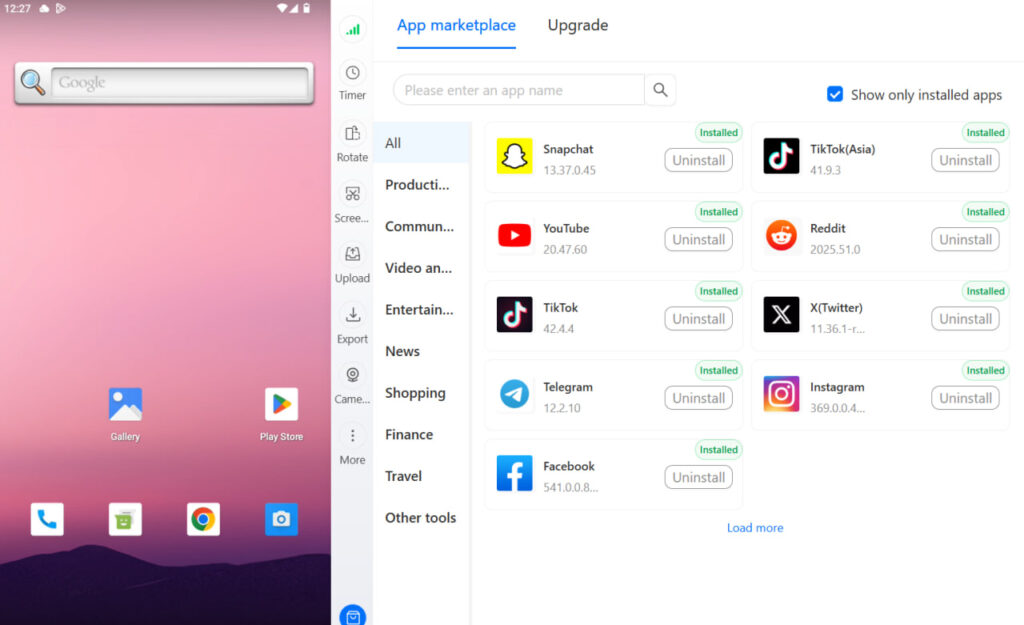
For the account setup process, creating separate YouTube accounts safely and managing multiple YouTube accounts walk through the practical steps. A cloud phone for YouTube is relevant if any channels are managed primarily through the YouTube mobile app.
The content strategy for each channel follows the same framework — pillars, content types, publishing schedule — but the audience definition and keyword research are done independently per channel.
For agencies and content teams managing YouTube alongside other platforms, managing multiple social media accounts and social media automation tools cover the workflow coordination layer.
No more juggling physical devices or risking account links. Try Multilogin's cloud phones now.
Frequently Asked Questions About How to Build a YouTube Content Strategy
Consistency matters more than frequency. One video per week, published reliably, outperforms inconsistent higher-frequency posting. YouTube’s algorithm favors channels with predictable upload patterns. If you can sustain two videos per week with consistent quality, that’s better than one — but only if you can maintain it without the quality dropping.
It’s a framework developed by Google for thinking about content types. Help content answers specific search queries and brings in new viewers. Hub content is regular programming that keeps existing subscribers engaged. Hero content is big, ambitious pieces designed for broad reach and sharing. Most channels should lean heavily on Help content (60–70% of their library) with regular Hub content and occasional Hero videos.
Search your target topics directly in YouTube and note the autocomplete suggestions — these show what people are actively searching for. Tools like vidIQ and TubeBuddy show search volumes and competition scores within YouTube specifically. Also look at the “related searches” shown after watching competitor videos and the questions asked in comments on top-performing videos in your niche.
For most channels, both. Long-form videos build watch time, authority, and ad revenue potential. Shorts extend reach and work well for top-of-funnel discovery. The practical approach: produce long-form content as your primary strategy, then repurpose clips into Shorts. This avoids having to produce two separate content streams from scratch.
Most channels see meaningful algorithmic traction after 50–100 published videos, assuming consistent quality and proper SEO. The first 6–12 months are typically slow, and the channels that grow are almost always the ones that stayed consistent through that period. Growth is not linear — it tends to be slow, then sudden when the algorithm starts surfacing your library to new audiences.