
Most scraping setups don’t fail because of bad code. They fail because the traffic gets exposed. One request looks fine. A hundred more don’t. Suddenly the IP is flagged, the session breaks, and the data stops coming in.
That’s where web scraping proxies make or break the job. They decide how long your sessions last, how much data you collect, and whether your scraper looks like a real user or an obvious bot. When proxies rotate too fast, share fingerprints, or come from noisy networks, blocks follow quickly.
If your scraping keeps running into CAPTCHAs, empty responses, or silent throttling, the fix isn’t another delay or retry loop. It’s choosing web scraping proxies that behave like real traffic and stay consistent long enough to finish the job.
This guide focuses on web scraping proxies that hold up once websites push back. No theory. No marketing claims. Just what helps scraping sessions survive under real pressure.
Core features of reliable web scraping proxies
When scraping starts getting blocked, the issue is rarely volume. It’s trust. Websites notice when traffic changes too fast, comes from weak IPs, or breaks its own session pattern. Reliable web scraping proxies are built to remove those weak signals. They keep connections steady, reduce exposure, and give your scraper enough time to finish the job before detection steps in.
Clean residential IPs
If your scraper gets banned early, start with IP quality. Residential IPs tied to real networks reduce instant flags and help requests blend into normal traffic instead of standing out as infrastructure.
Sticky sessions that hold
Many scraping jobs fail mid-crawl because the IP changes too often. Sticky sessions keep the same address attached long enough to handle pagination, logged-in pages, or deep navigation without resetting trust every few requests.
Flexible rotation control
Some tasks need a new IP every request. Others don’t. Reliable proxies let you control IP rotation timing instead of forcing it. If blocks appear, you can slow rotation or lock sessions without rebuilding your setup.
Geo-targeting that stays consistent
Location matters when scraping localized pages or search results. Good web scraping proxies keep traffic tied to the same country or city, so content doesn’t shift mid-session and trigger inconsistencies.
Automation and tool compatibility
Scraping rarely runs manually. Reliable web scraping proxies work smoothly with Selenium, Puppeteer, Playwright, Postman, CLI tools, and APIs. That means fewer connection errors and less time spent debugging proxy-related failures instead of collecting data.
1. Multilogin: the best all-in-one solution for web scraping proxies
This guide focuses the best residential proxy for web scraping that avoid blocks, based on how they perform once pressure starts. Not landing-page promises. Not feature lists. Just what actually helps you stay collecting data when websites try to push you out.
Most scraping setups fail before the scraper itself does. You rotate IPs, slow down requests, add delays, and still get blocked. The problem is usually not the scraper. It’s the mismatch between the proxy and the browser environment sending the requests.
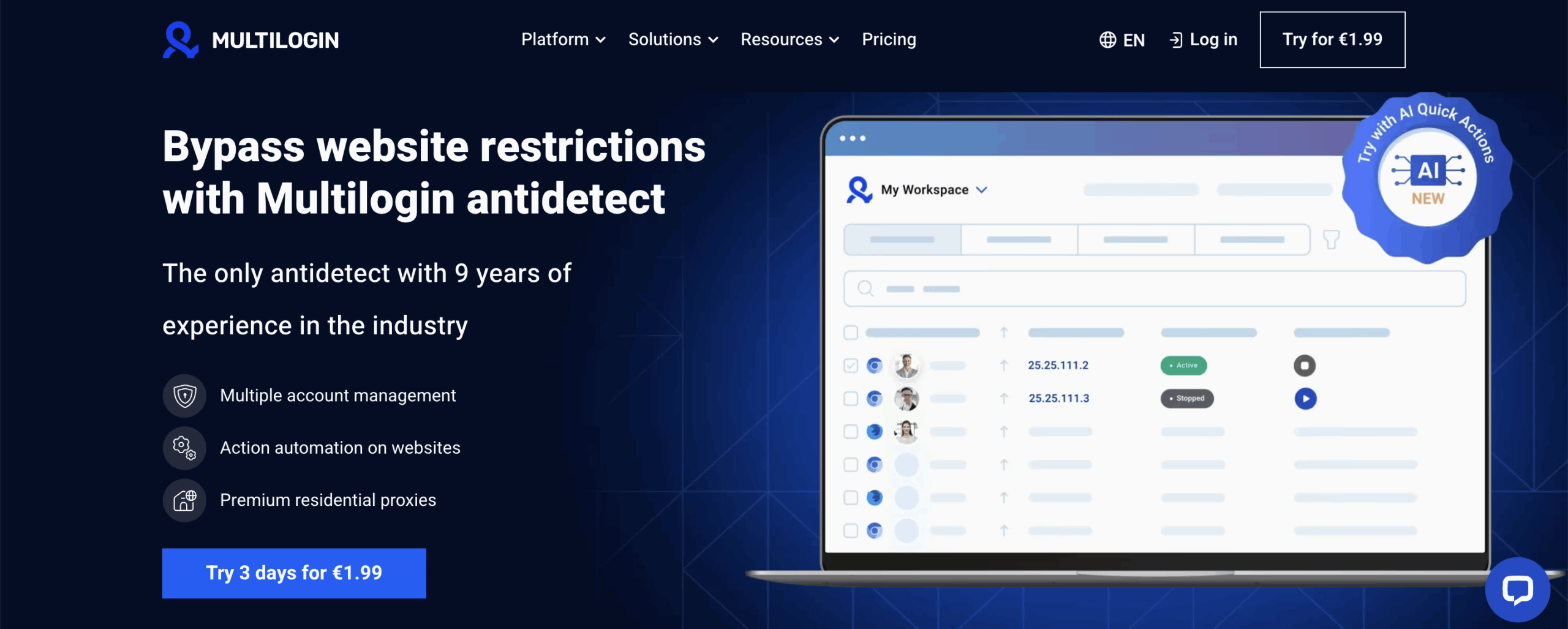
Multilogin fixes that gap by treating web scraping as a full environment problem, not just an IP problem. Instead of running proxies and browsers as separate layers, it ties residential proxies directly to isolated browser profiles. Each scraping session runs with its own browser fingerprint, cookies, storage, and a dedicated residential IP that stays consistent over time.
This matters because modern websites don’t judge traffic on IPs alone. They compare fingerprints, session behavior, and environment stability. When those signals don’t line up, blocks follow. Multilogin prevents that by making sure every request comes from a complete, coherent browser identity instead of a patched-together setup.
Every Multilogin plan includes built-in premium residential proxy traffic. There’s no need to plug in third-party providers, manage rotating pools, or guess which IP belongs to which session. The proxy layer is already aligned with the browser profile, which helps scraping jobs run longer before detection kicks in.
Why Multilogin’s residential proxies work for scraping
- 95% clean IP rate: Most scraping blocks start with IP reputation. Multilogin uses pre-filtered residential IPs with clean histories, lowering the chance of instant flags.
- 99.99% uptime: Scraping breaks when connections drop mid-session. High uptime keeps crawls stable and prevents partial data loss.
- 24-hour sticky sessions: Long scraping runs need consistency. Sticky sessions keep the same IP attached to the same browser profile instead of forcing frequent resets that trigger suspicion.
- 30+ million residential IPs: A large, diverse pool makes geo-targeted scraping possible without reusing the same networks too often.
Multilogin can be tested without commitment. The €1.99, 3-day trial gives full access to browser isolation and built-in residential proxies, which is usually enough to see whether your scraping sessions survive longer than before.
Key Multilogin features for web scraping workflows
- Built-in residential proxies: Proxies are part of the platform, not an add-on. Each browser profile launches with its own residential IP, already paired and ready for scraping.
- Advanced antidetect fingerprint protection: Canvas, WebGL, fonts, timezone, hardware signals, and dozens of other parameters stay consistent within each profile. This prevents the fingerprint drift that often exposes scrapers even when IPs rotate.
- Full profile isolation: Cookies, storage, extensions, and IPs never leak across profiles. If one scraping target flags a session, it doesn’t contaminate the rest of your setup.
- Pre-farmed cookies & Cookie Robot: Fresh profiles don’t start empty. Aged cookies and gradual activity help scraping sessions look established instead of brand new and automated.
- Android mobile profile emulation: Some sites respond better to mobile traffic. Android profiles let you scrape from a mobile context without real devices or emulators.
- Automation-ready by design: Multilogin works with Selenium, Puppeteer, Playwright, Postman, CLI, and API access. If you scale scraping, Quick Actions reduce repetitive setup work across dozens or hundreds of profiles.
- Multilogin X app (desktop): For heavy scraping days, the desktop app launches profiles faster and keeps sessions more stable under load.
- Centralized proxy management: Traffic usage, IP assignment, rollover, and top-ups all live in one dashboard. No spreadsheets. No guessing which proxy is running where.
- Team access without risk: Role-based permissions let teams run scraping tasks without accidentally reusing profiles, IPs, or environments.
- Flexible storage and 24/7 expert support: Profiles can stay local or sync securely in the cloud. When scraping breaks, support is available immediately, not after data is already lost.
2. NodeMaven
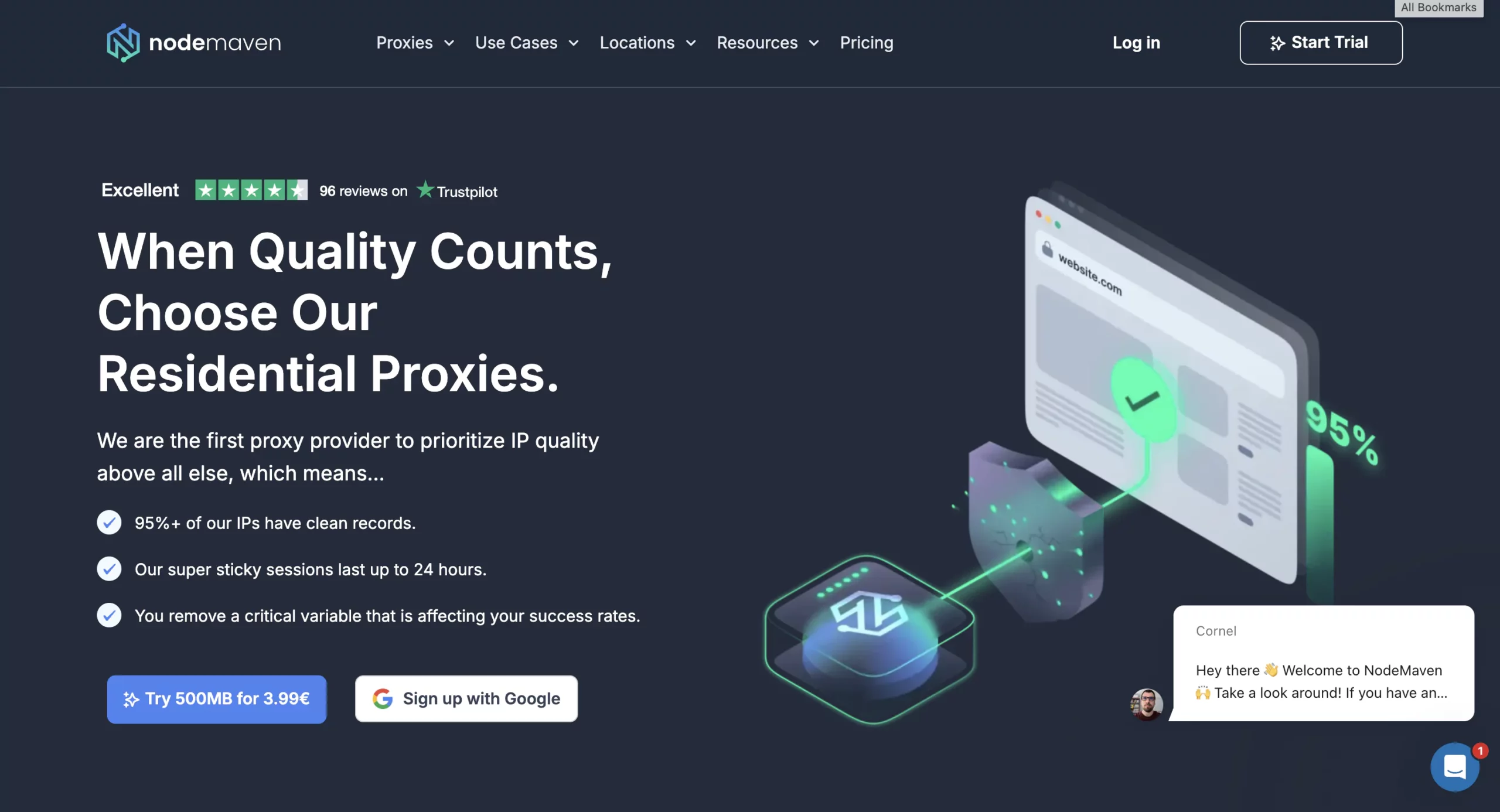
NodeMaven is designed for scraping environments where IP quality decides whether data keeps flowing or dies early. Most scraping blocks don’t happen because of request volume alone. They happen when bad IPs enter the pool and poison the session from the start.
NodeMaven prevents that by filtering residential IPs in real time. Risky, overused, or low-trust addresses are removed before they ever touch your scraper. When scraping jobs start getting throttled or blocked, switching to cleaner IPs is often enough to restore stability without rewriting logic or lowering crawl depth.
For scraping workflows, consistency matters as much as cleanliness. Many websites expect repeated requests to come from the same connection for a while. Rapid IP changes stand out fast, especially during pagination, session-based crawling, or login-protected pages. NodeMaven’s sticky sessions keep the same IP active longer, helping scrapers move deeper before detection kicks in.
Traffic usage is also handled in a way that fits real scraping patterns. Scraping doesn’t always run nonstop. Jobs come in bursts. NodeMaven rolls unused traffic forward, so bandwidth isn’t lost when crawlers pause or schedules change. Combined with geo-targeting, scrapers can stay tied to the same country or city without rebuilding sessions from scratch each time.
NodeMaven features for web scraping proxies
- Real-time IP quality filter: Low-grade and risky residential IPs are blocked automatically before they enter your scraping pool.
- Sticky sessions for session-based scraping: Keeps the same IP active longer, which helps with pagination, logged-in scraping, and long crawls.
- Traffic rollover: Unused bandwidth carries over, making it easier to run scraping jobs in bursts without waste.
- Geo-targeting support: Target specific locations for localized scraping, SERP research, or region-based data collection.
- Simple dashboard and 24/7 support: Setup stays clean and visible. If scraping breaks, help is available immediately.
3. Decodo
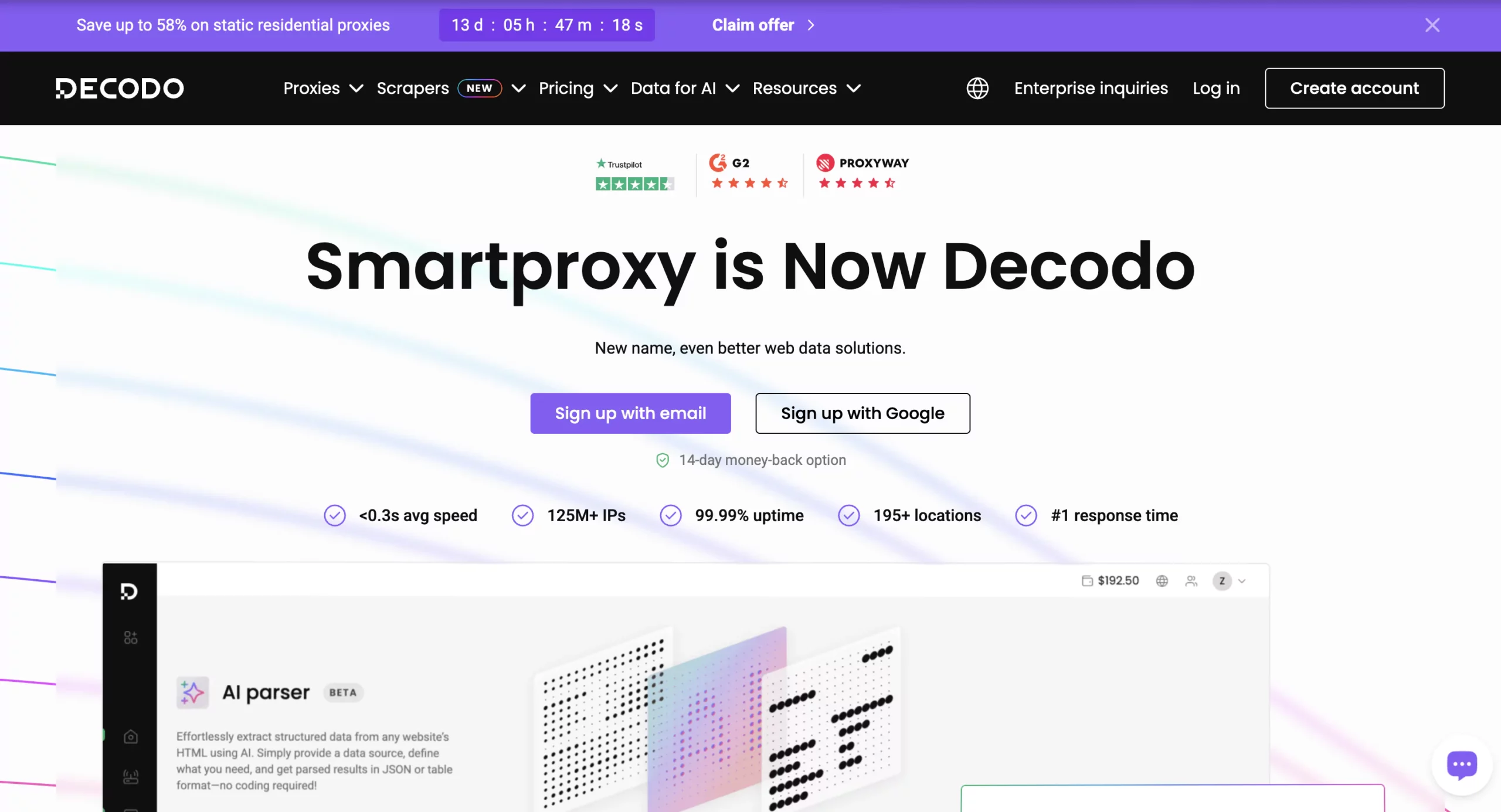
When scraping jobs start failing during routine runs, the issue is often mechanical rather than strategic. Requests slow down. Sessions drop mid-crawl. IPs rotate before a page flow finishes. Decodo focuses on reducing those basic interruptions by prioritizing speed and connection stability.
Its residential IPs come from large, established network providers, which helps avoid obvious red flags during everyday scraping tasks like monitoring pages, price checks, or repeated lookups. Switching to faster, more stable IPs can reduce scraping interruptions, even though Decodo doesn’t address browser or fingerprint-level detection.
Decodo is usually chosen for repeat scraping tasks where setup speed matters more than granular control. Static residential proxies can hold an IP across longer scraping sessions, while rotating proxies support higher request volumes when persistence isn’t required.
Features
- Residential IPs sourced from large network providers
- Static and rotating proxy options with unlimited threads
- Long-lasting static sessions without forced resets
- Country, state, city, and ZIP-level targeting
- Rotation per request or at set intervals
4. Oxylab
Oxylabs provides a large residential and mobile proxy network suited for scraping at scale, with targeting that can go down to city, ZIP code, or ASN level. This level of control is useful for automation, SERP tracking, ad verification, and location-sensitive scraping tasks.
IPs are filtered to remove low-quality addresses, which helps reduce failed requests and early blocks. An API-driven dashboard makes it easier to monitor usage, control costs, and integrate scraping workflows with external tools.
Features
- Location targeting down to ASN, ZIP code, and city
- IP filtering to remove low-quality addresses
- API dashboard for usage and cost tracking
- High uptime and fast response rates
- Coverage across 140+ countries
5. Bright Data
Bright Data offers one of the largest proxy infrastructures available for scraping, with residential, mobile, and ISP IPs spread across cities worldwide. It allows control over how often IPs rotate, from every request to extended sessions, which makes it adaptable to different scraping patterns.
Mobile IPs can be selected by carrier, which helps when scraping sites that react differently to mobile traffic. The Proxy Manager gives detailed control over connections, though advanced targeting options like ASN selection may add cost and setup complexity.
Features
- Mobile, residential, and ISP IPs
- Mobile IP selection by carrier
- Configurable rotation frequency
- Advanced tools for managing connections
- API support for integration with other systems
6. IPRoyal

Bright Data offers one of the largest proxy infrastructures available for scraping, with residential, mobile, and ISP IPs spread across cities worldwide. It allows control over how often IPs rotate, from every request to extended sessions, which makes it adaptable to different scraping patterns.
Mobile IPs can be selected by carrier, which helps when scraping sites that react differently to mobile traffic. The Proxy Manager gives detailed control over connections, though advanced targeting options like ASN selection may add cost and setup complexity.
Features
- Mobile, residential, and ISP IPs
- Mobile IP selection by carrier
- Configurable rotation frequency
- Advanced tools for managing connections
- API support for integration with other systems