


You can make money on YouTube without filming or editing videos yourself. You can outsource a faceless channel’s production, manage channels for clients, or earn affiliate commissions from videos your team publishes. If you mean earning money without publishing any videos, managing someone else’s channel is the clearest option.
None of these is automatic income. Someone still needs to make useful videos, understand the audience, check the work, and keep the channel running. Here is what each method involves and how to choose one that fits the work you actually want to do.
Can you really make money on YouTube without making videos?
Yes, but “without making videos” can mean two different things. You can own a channel and pay others to produce its videos, or you can work on someone else’s channel without producing the content yourself.
A faceless channel also lets you stay off camera. That does not necessarily mean you stop creating: you might still research topics, write scripts, record your screen, or direct an editor. And although outsourcing can free up your time, you remain responsible for what the channel publishes.
Faceless does not mean reused. YouTube reviews channels for original value and may reject repetitive, mass-produced, or insufficiently transformed content for monetization. Having permission to use footage is important, but permission alone does not establish eligibility for the YouTube Partner Program (YPP).
What are the YouTube monetization requirements in 2026?
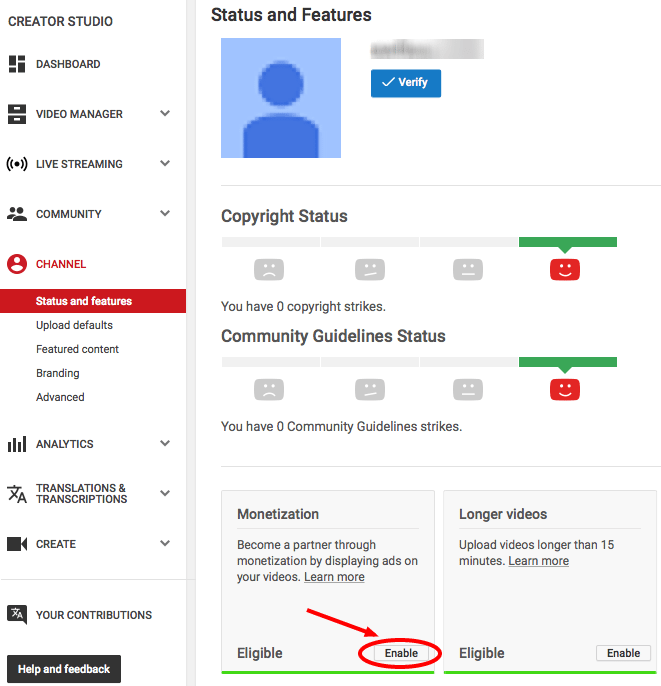
YouTube has an earlier threshold for certain fan funding and Shopping features and a higher threshold for ad revenue. Reaching either threshold lets you apply for the relevant YPP features. YouTube still reviews your channel, and feature availability depends on eligibility and location.
| YPP access | Subscriber requirement | Additional requirement | What it can unlock |
|---|---|---|---|
| Earlier access | 500 | Three valid public uploads in 90 days, plus either 3,000 valid public watch hours in 12 months or 3 million valid public Shorts views in 90 days | Eligible fan funding and Shopping features |
| Ad revenue | 1,000 | Either 4,000 valid public watch hours in 12 months or 10 million valid public Shorts views in 90 days | Eligible watch-page and Shorts ad revenue |
The 500-subscriber threshold does not unlock ad revenue. Before forecasting income, check YouTube’s current earning requirements and the eligibility information in your YouTube Studio account.
How do you make money with a faceless YouTube channel?
A faceless channel earns through videos that do not show a presenter on screen. You might publish narrated tutorials, animated explainers, researched stories, or product demonstrations using screen recordings.
The appeal is obvious: viewers come for the subject rather than your face. The difficult part is giving them something they cannot get from a quickly assembled collection of stock clips.
Faceless YouTube channel ideas worth exploring include software tutorials, illustrated history stories, practical business explainers, and comparisons you can demonstrate. The right niche is one you can research accurately and cover repeatedly. A subject with attractive ad rates is a poor choice if you cannot tell whether the script is any good.
A simple production stack looks like this:
- Research and script: Start with a specific viewer question. Use AI to help organize a draft if useful, then verify claims and add your own explanation.
- Narration: Record your voice, hire a voice actor, or use a synthetic voice for which you have the necessary rights.
- Visuals: Use original screen recordings, graphics, animation, or footage licensed for your intended use.
- Editing and thumbnail: Make the video easy to follow and represent it accurately in the title and thumbnail.
- Topic research: Review YouTube search suggestions, competing videos, and audience questions. Tools such as TubeBuddy or vidIQ can help you organize ideas, but they cannot judge the quality of your answer.
AI-assisted videos can be eligible for monetization. YouTube’s concern is the finished content, including whether it is original or appears repetitive and mass-produced. Certain realistic altered or synthetic content also requires disclosure.
How do you start a YouTube automation channel with outsourced videos?
Start a YouTube automation channel by building one repeatable production process, then outsourcing the parts you can review well. “Automation” usually means coordinating writers, narrators, editors, and thumbnail designers. It does not remove the need for editorial decisions.
Test the process with one video before ordering a batch:
- Choose a viewer question you understand.
- Give the writer a brief with the angle, sources, and claims that need checking.
- Confirm the rights to footage, music, images, and narration.
- Review the finished video for accuracy, pacing, and original value.
- Publish it and use the response to improve the next brief.
This is the work behind what people call a YouTube cash cow channel. The name makes the income sound predictable. Your production costs arrive first; audience growth and revenue might not. Set a test budget you can afford and track the cost of each finished video.
If your plan relies on compilations, treat copyright and YPP eligibility as separate checks. Obtain the required rights and make sure the finished video contributes substantial original commentary, analysis, or narrative. YouTube’s reused-content assessment applies to the channel, not just one upload.
Can you earn money by managing other people’s YouTube channels?
Yes. Channel management is the most direct way to earn from YouTube without producing or publishing videos of your own. A creator or business provides the source content while you handle agreed parts of the operation.
The work might include upload scheduling, titles and descriptions, thumbnail coordination, comment moderation, analytics, or managing freelancers. It is a client service, so you are paid according to your agreement rather than your own channel’s ad performance.
Define the scope carefully. Who supplies the footage? Who approves the title and thumbnail? Who answers comments? Who owns the channel and its assets when the contract ends? Those answers matter more than a vague promise to “grow” the account.
Agencies handling several clients should keep access and publishing responsibilities clear. Multilogin’s guide to managing multiple YouTube accounts covers the account side of that workflow.
How do you earn affiliate income from YouTube videos?
You earn affiliate income when an eligible viewer takes an action through your tracked link, such as buying a product you recommended. You can use this method on a channel you own or manage, provided the arrangement fits the channel owner’s agreement and the affiliate program’s terms.
The recommendation should belong in the video. A detailed editing tutorial can show the tool used to complete the task. A product comparison can explain who each option suits. An unrelated offer in the description may earn clicks, but it does little to build trust.
Affiliate programs set their own commission rates and conditions. Make the relationship clear to viewers, follow the program’s terms, and avoid projecting revenue from a fixed number of views.
How can you monetize a YouTube channel before earning ad revenue?
You can pursue affiliate income, client fees, sponsorships, or your own relevant products before a channel qualifies for YouTube ad revenue. Each has different requirements, and none is guaranteed to pay simply because a video receives views.
For ad revenue, the channel must meet the higher YPP threshold and pass YouTube’s review. Other income may begin sooner: a client can pay you for channel work, while an affiliate program can pay for qualifying sales.
This is also why there is no dependable answer to “How much does YouTube pay for one million views?” Some views generate no ad revenue. Earnings depend on eligibility, audience, format, advertiser demand, and any additional income streams. Once your channel earns revenue, its own YouTube Studio data is more useful than a universal rate quoted online.
How do you manage multiple YouTube channels for clients?
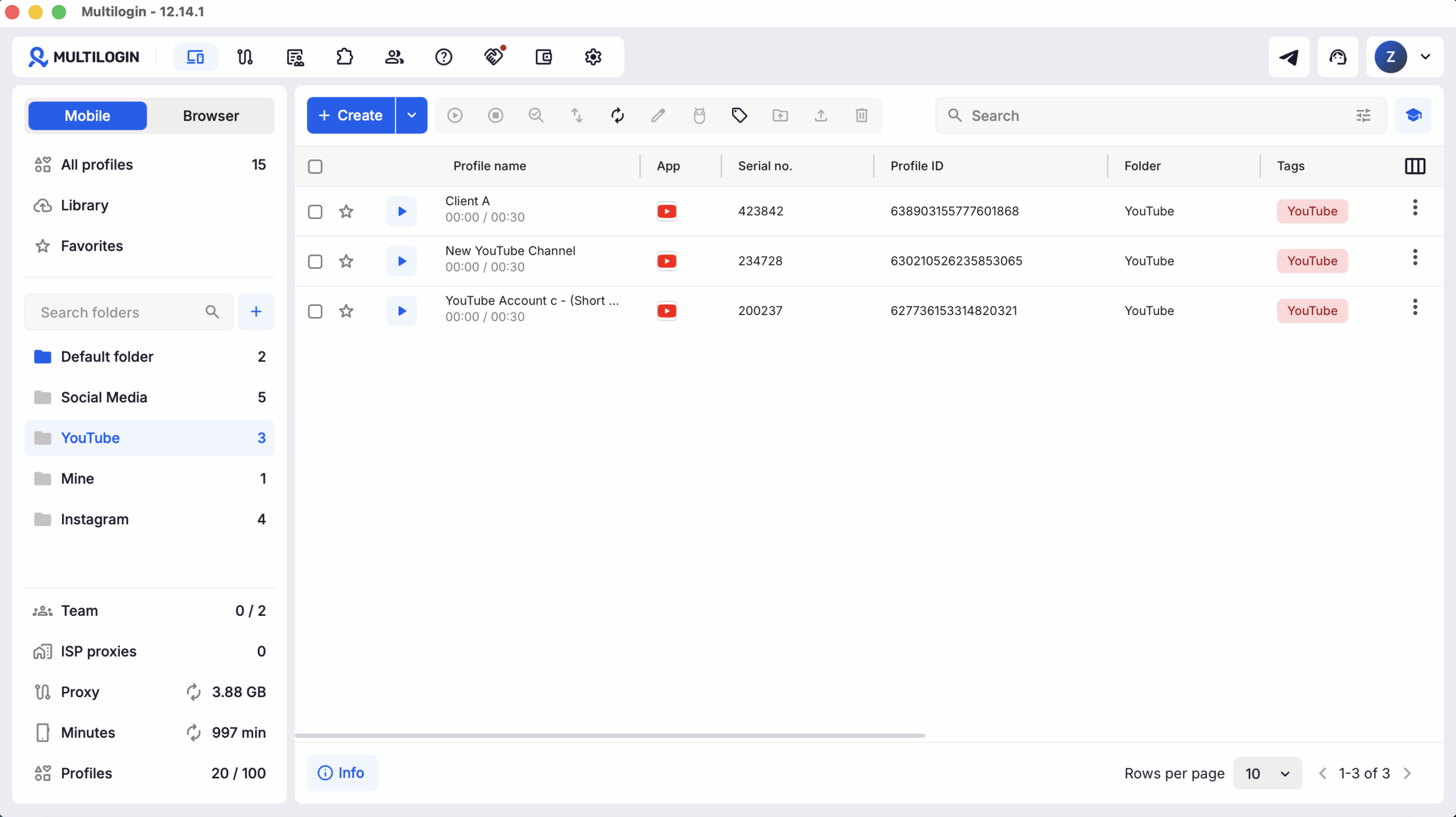
Manage multiple client channels by giving each one a clear owner, access plan, approval process, and ongoing workspace. The aim is to prevent routine mistakes such as uploading to the wrong channel or mixing client assets and sessions.
Multilogin is a cloud phone platform for social media marketers. Teams can run social profiles in Android cloud phones for mobile app work and browser profiles for web work, with both managed from one dashboard. A browser profile can suit ongoing YouTube Studio tasks on the web. An Android cloud phone can suit a workflow that calls for the YouTube mobile app.
For a client operation, assign a dedicated environment to each ongoing workflow and document who can use it. Multilogin offers a free plan, and paid plans start from $7.08 per month. Check the current pricing page for plan limits and included usage before choosing one.
Multilogin helps organize account work. It does not change YouTube’s rules or make a channel eligible for monetization.
What are the best ways to earn beyond YouTube ads?
The strongest additional income stream is one that fits why people watch your channel. A tutorial audience might value a relevant tool or template. A loyal community might support a membership. A channel with a clearly defined audience may attract suitable sponsors.
Options include:
- Affiliate recommendations for products demonstrated or discussed in the videos
- Sponsorships agreed directly with relevant brands
- Digital products or services that help viewers complete the task
- Fan funding features, where the channel and feature are eligible
- Merchandise, when the audience has a reason to want it
Do not add every option at once. Make one useful offer, explain it plainly, and see whether it serves the audience before building another.
How long does it take to make money on YouTube?
There is no reliable number of months that applies to every channel. The answer changes with the method: client work pays according to a contract, affiliate income requires qualifying conversions, and ad income requires YPP acceptance and eligible revenue.
For a new faceless channel, plan around three separate milestones: publishing the first strong video, seeing a repeatable audience response, and earning more than production costs. Reaching one does not mean you have reached the next.
If you are outsourcing production, calculate how many videos you can fund while testing. That gives you a more useful timeline than a promise that consistent uploads will produce income by a particular date.
How do you choose a profitable faceless YouTube niche?
Choose a niche where audience questions, your ability to make original videos, and a plausible income path overlap. Start with what you can explain or assess well.
Look for specific questions within the subject. “How to use this feature to complete this task” gives you a clearer brief than “everything you need to know about software.” Review the videos already answering that question, then identify what they leave unclear.
Finally, consider whether you can make a series without repeating the same script in a new wrapper. A publishing schedule is valuable only when the next video gives viewers something new. That matters particularly for outsourced and AI-assisted channels under YouTube’s inauthentic-content policy.
When should you add affiliate links to a YouTube channel?
Add affiliate links when a video has a genuine product recommendation and you have joined a program that permits the placement. You do not need to wait for YPP ad eligibility, but you do need to follow the affiliate program’s conditions and disclose the relationship.
A recommendation works best when viewers can see the product’s role in the task. Link to the tool used in a demonstrated workflow and say why you chose it. Check how the description appears on mobile so viewers can find both the disclosure and the link.
How can you organize YouTube work across multiple social profiles?
Use a dedicated environment and a documented workflow for each ongoing channel or client. Multilogin’s Android cloud phones support mobile app work, while its browser profiles support separate web sessions.
For creator teams managing multiple brand or client profiles, Multilogin can help keep daily account work organized without turning your analytics workflow into a login mess. You can start with the free plan to assess whether that setup fits your team.
When should you outsource production for a faceless YouTube channel?
Outsource when you understand the channel’s subject well enough to brief and review someone else’s work, and you can afford to test the process. Hiring a team before you know what a good video looks like can make production faster without making the channel better.
Begin with the task that limits you most. That might be editing, narration, or thumbnail design. Keep responsibility for topic selection, factual review, rights, and the final approval clear even if a contractor handles the entire production.
If you later run several channels, build the editorial process first. Dedicated browser profiles and Android cloud phones can then help organize the account work around it.