






Amazon sellers, e-commerce agencies, and market researchers use proxies for different reasons. Some need consistent access to Seller Central when working remotely. Others compare product availability, search results, and pricing across regions.
Choosing an Amazon proxy depends on the task. A stable connection may be more useful for ongoing account management, while a provider with broader geographic coverage and rotation options may be better suited to market research.
This guide compares five Amazon proxy solutions in 2026, explains which proxy types suit different workflows, and shows how Multilogin combines built-in proxies with cloud Android phones and isolated browser profiles.
TL;DR: Amazon Proxy Quick Picks
Provider | Product category | Best-fit workflow | Key evaluation point |
|---|---|---|---|
Multilogin | Cloud Android phone platform + built-in proxies | Seller account environments and teams | Integrated browser profiles and network setup |
NodeMaven | Proxy provider | Sessions requiring geographic control | Session options and available locations |
Decodo | Proxy and web-data platform | Product research and proxy integrations | API features and proxy plans |
Proxy-Seller | Proxy provider | Configurable proxy requirements | Supported types and traffic terms |
Oxylabs | Proxy and web-data platform | Enterprise research and data operations | Scale, compliance, and API offerings |
What is an Amazon Proxy?
An Amazon proxy is a server that routes your connection through a different IP address, masking your real location and online identity. For Amazon sellers, proxies are used to manage multiple accounts, conduct competitive research, and access localized product pages and prices.
With the right proxy configuration, each seller account appears to Amazon as a unique user, operating from a different location and environment. This reduces the risk of detection, suspensions, or permanent bans.
Amazon proxies are also useful for:
- Tracking regional keyword rankings
- Testing Prime features across countries
- Researching restricted niches
- Monitoring competitors anonymously
Amazon Proxies List: The Top Tools for 2026
Based on performance, stealth, and ease of use, here are the best Amazon proxies available in 2026:
1. Multilogin — Best for Amazon account management with built-in proxies
Multilogin is a cloud Android phone platform for multi-account management that also provides isolated browser profiles for web-based workflows. It combines dedicated working environments and built-in proxies in one dashboard.
For Amazon sellers, the browser profile functionality is especially useful because Seller Central is a web-based platform. Each browser profile maintains separate cookies, sessions, and network settings, making it easier to organize independent seller workflows.
Multilogin also provides real Android devices in the cloud for businesses that need native mobile-app workflows alongside browser-based operations.
Key features
- Built-in residential proxies: Configure proxy connections directly in Multilogin without requiring a separate proxy subscription.
- Isolated browser profiles: Maintain dedicated browser environments for different Seller Central workflows.
- Cloud Android phones: Run supported Android apps on real cloud-hosted devices, with persistent app data and sessions.
- Third-party proxy support: Connect an existing provider using supported proxy protocols.
- Team and automation tools: Organize access and support repeatable browser or mobile operations.
Multilogin offers a free plan with no time limit and no credit card needed. Paid plans start from $7.08 per month.
2. Nodemaven
Nodemaven delivers one of the most robust residential proxy networks on the market. It supports large-scale Amazon activity with geo-targeted IPs, sticky sessions, and unlimited rotation.
What sets Nodemaven apart is its low block rate and clean IP reputation, making it highly compatible with Amazon’s strict security systems.
Use cases include:
- Seller Central logins
- Prime page previews
- Keyword monitoring by region
- Amazon marketing research
It integrates easily with tools like Multilogin, ensuring both stealth and stability.
3.Decodo (previously Smartproxy)
Decodo is a great entry point for Amazon sellers who want clean residential IPs without complexity. It offers proxy pools across multiple locations, sticky sessions, and fast switching via browser extension.
Sellers can use it for:
- Quick account verification
- Product search simulations across countries
- Prime content access
Its compatibility with Multilogin also makes it a smart addition for sellers building scalable workflows.
4. Proxy-Seller
If you’re looking for affordability and flexibility, Proxy-Seller offers mixed proxy types including IPv4, IPv6, and residential proxies. Although it may not provide the same high level of stealth as premium options, it’s good for secondary tasks or backup seller accounts.
Best suited for:
- Low-risk research
- Limited-use seller profiles
- Cost-sensitive proxy marketing
However, we recommend using Proxy-Seller in combination with an antidetect browser to reduce fingerprint matching risks.
5. Oxylabs
Oxylabs is a high-end proxy provider geared toward businesses with serious scraping and data needs. It includes a wide range of tools, including SERP APIs and mobile proxies, making it a viable choice for Amazon marketing firms, SaaS tools, and research-heavy operations.
Benefits include:
- Dedicated AWS proxy IP ranges
- API access for automation
- Scalable proxy pool for scraping and market research
Oxylabs is not beginner-friendly but is powerful when integrated with Multilogin or internal infrastructure.
Can using a proxy affect access to Amazon?
A proxy changes the IP address used to connect to Amazon, but it does not control every factor that affects account access. An unreliable proxy can cause connection failures, slow page loading, or frequent changes in network location. For Seller Central workflows, these disruptions may lead to extra verification steps or interrupt work.
When choosing a proxy, consider the source of the IP addresses, connection reliability, geographic coverage, and whether the provider supports stable sessions. For account management, consistency often matters more than frequent rotation. For authorized public-data research, rotation may be useful depending on the collection method and website requirements.
Attention: No proxy provider can guarantee that an Amazon account will never encounter verification, access restrictions, or enforcement actions.
Amazon Proxy Marketing: Why It Matters
For sellers engaged in Amazon proxy marketing—such as affiliate campaigns, product page testing, or ad placement—proxies allow you to simulate customer behavior from various regions and buyer personas. You can:
- Monitor ad placements across countries
- A/B test listings and storefronts from different IPs
- Review how your competitors’ sponsored listings appear in different geos
- View restricted listings available only in certain markets
All of this provides valuable data to optimize marketing campaigns without violating Amazon’s terms of service.
Why Amazon Sellers Need Proxies
Amazon is strict — and getting stricter. Multiple account management? IP mismatches? Frequent logins from different devices? All these can trigger Amazon AWS proxy alarms.
Using a high-quality proxy ensures:
- IP Stability: No suspicious location changes.
- Multi-account Safety: Manage different stores without cross-linking risks.
- Faster Scaling: Operate VA teams across regions without bans.
But beware: Amazon is smart. Not every proxy service can handle their firewalls. You need specialized proxies, not just any “cheap VPN.”
That’s why we’ve curated only the best below.
Can Amazon sellers operate multiple accounts?
Amazon generally permits additional seller accounts when there is a legitimate business need. For example, a business may operate separate brands or independently managed businesses.
However, using different proxies or browser environments does not create permission to operate additional seller accounts. Sellers remain responsible for complying with Amazon’s policies, maintaining accurate account information, and resolving account health issues.
For businesses with a legitimate need to manage multiple accounts, dedicated working environments can help organize access, separate browser sessions, and maintain consistent network settings. Check Amazon Seller Code of Conduct.
Which type of proxy is best for Amazon?
Choosing an Amazon proxy starts with identifying what you need it to do.
Residential proxies use IP addresses associated with residential internet connections. They can be useful for regional browsing, product research, and workflows where geographic coverage matters.
ISP proxies are commonly used when a stable IP address is important. They may be suitable for ongoing account-management sessions, depending on the provider’s availability and terms.
Datacenter proxies can be cost-effective for eligible technical tasks, but their suitability depends on the target service, traffic volume, and acceptable access conditions.
Mobile proxies provide connections associated with mobile networks. They may be relevant to mobile-oriented testing or Android workflows.
For Seller Central access, prioritize a stable connection and consistent session management. For authorized product research, evaluate geographic coverage, rotation options, request volume, and cost.
Are There Free Amazon Proxies?
Free Amazon proxies may sound tempting, but they come with serious downsides:
- Overused or blacklisted IPs
- Shared connections with malicious users
- No encryption or fingerprint protection
- No customer support or reliability
Free proxies may work for one or two requests, but they’re guaranteed to get you flagged or banned quickly. If your Amazon business matters to you, never use a free proxy.
How to set up an Amazon proxy with Multilogin
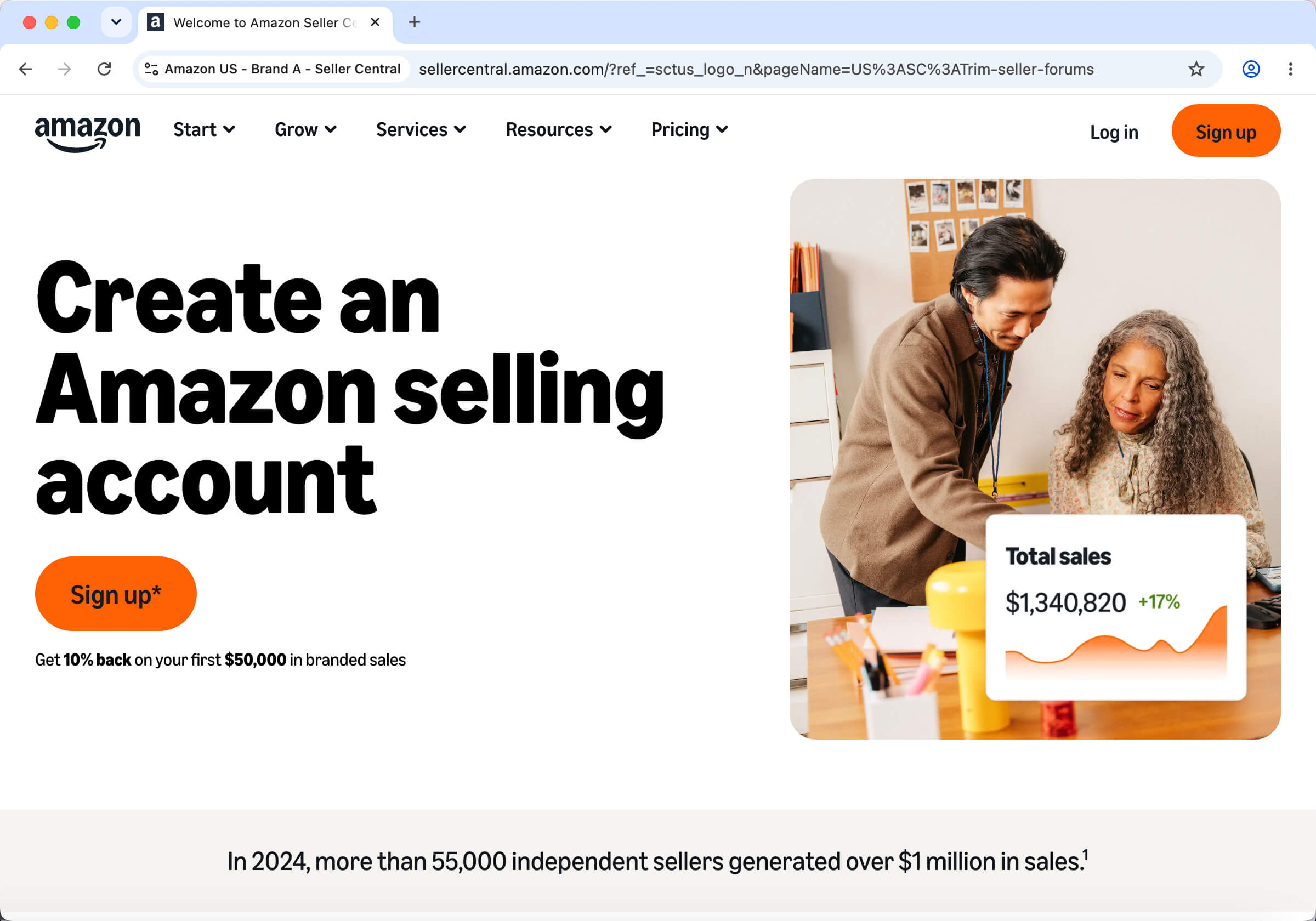
You can configure Multilogin’s built-in proxy options for a dedicated Amazon Seller Central browser environment. The following example assumes you already have an Amazon seller account that you are authorized to access.
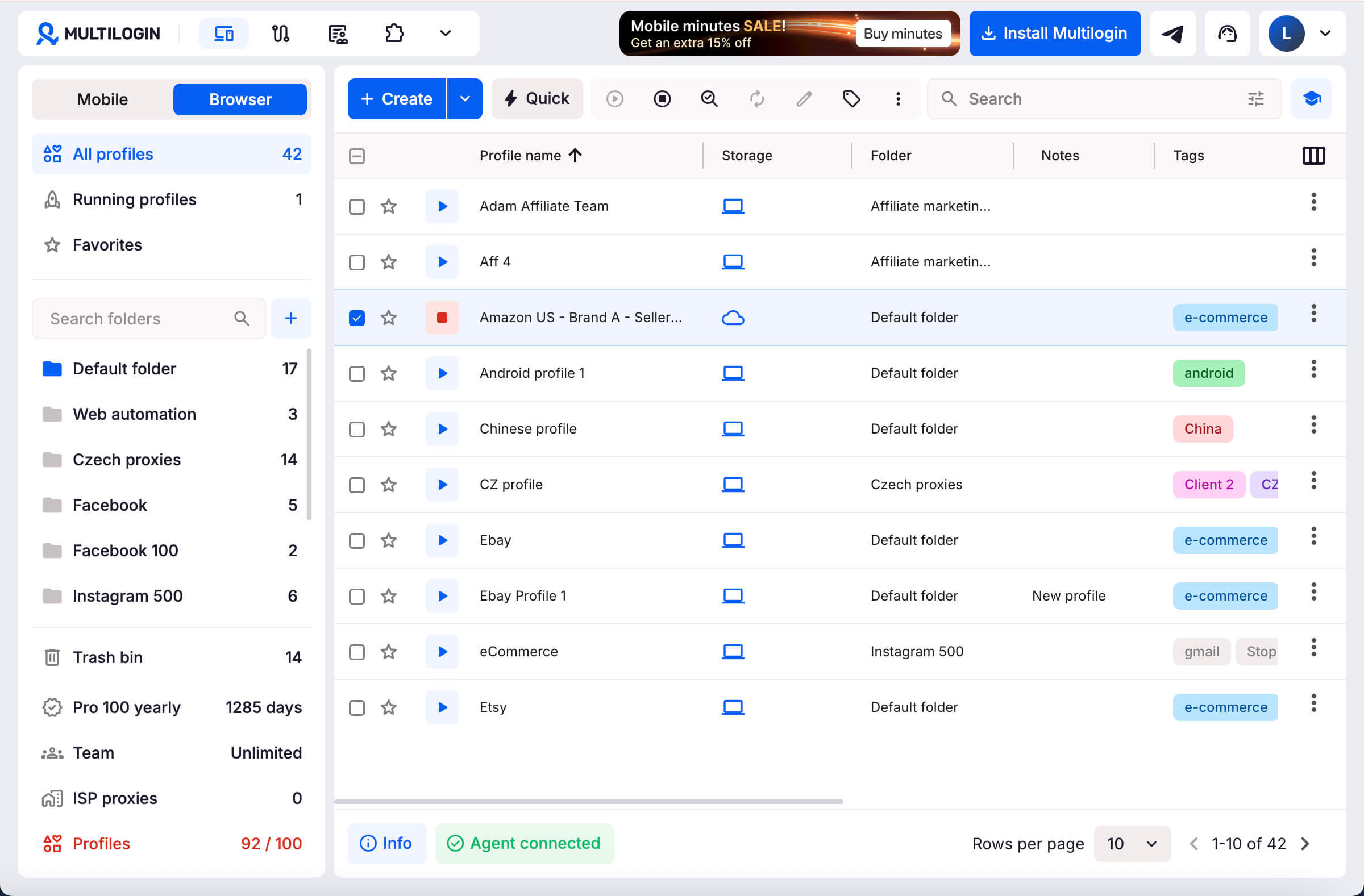
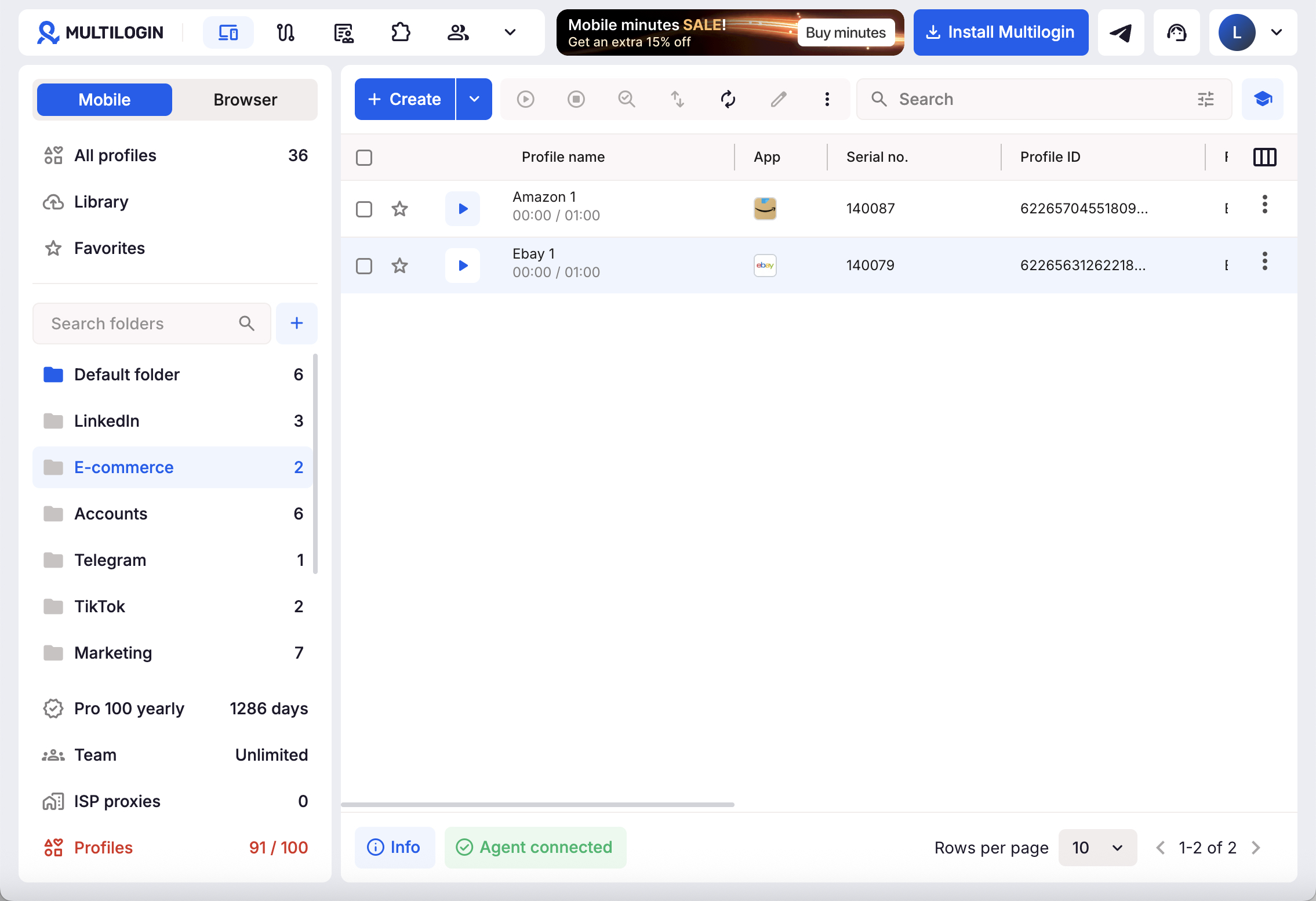
Step 1: Open Multilogin and create a browser profile
Sign in to Multilogin and open your workspace.
Go to Profiles → Browser → Create.
Browser profiles are designed for web-based tasks, including seller dashboards. Cloud Android phones are available for workflows that require native Android apps.
Step 2: Name your Amazon profile
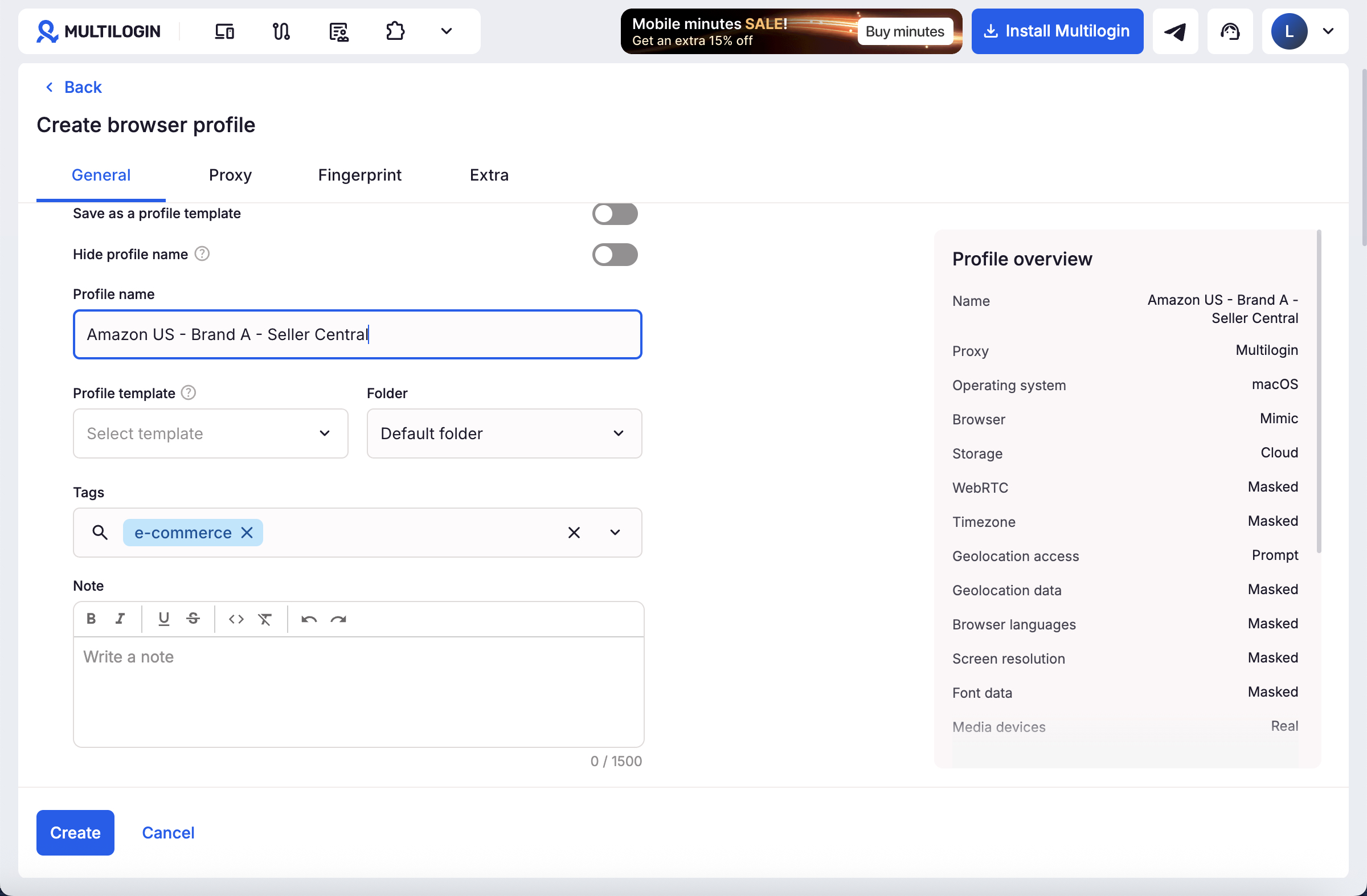
In the General settings, add a descriptive profile name.
For example, use Amazon US - Brand A - Seller Central for a US marketplace workflow.
Clear naming conventions help team members identify the intended account and reduce accidental account switching.
Step 3: Configure your proxy
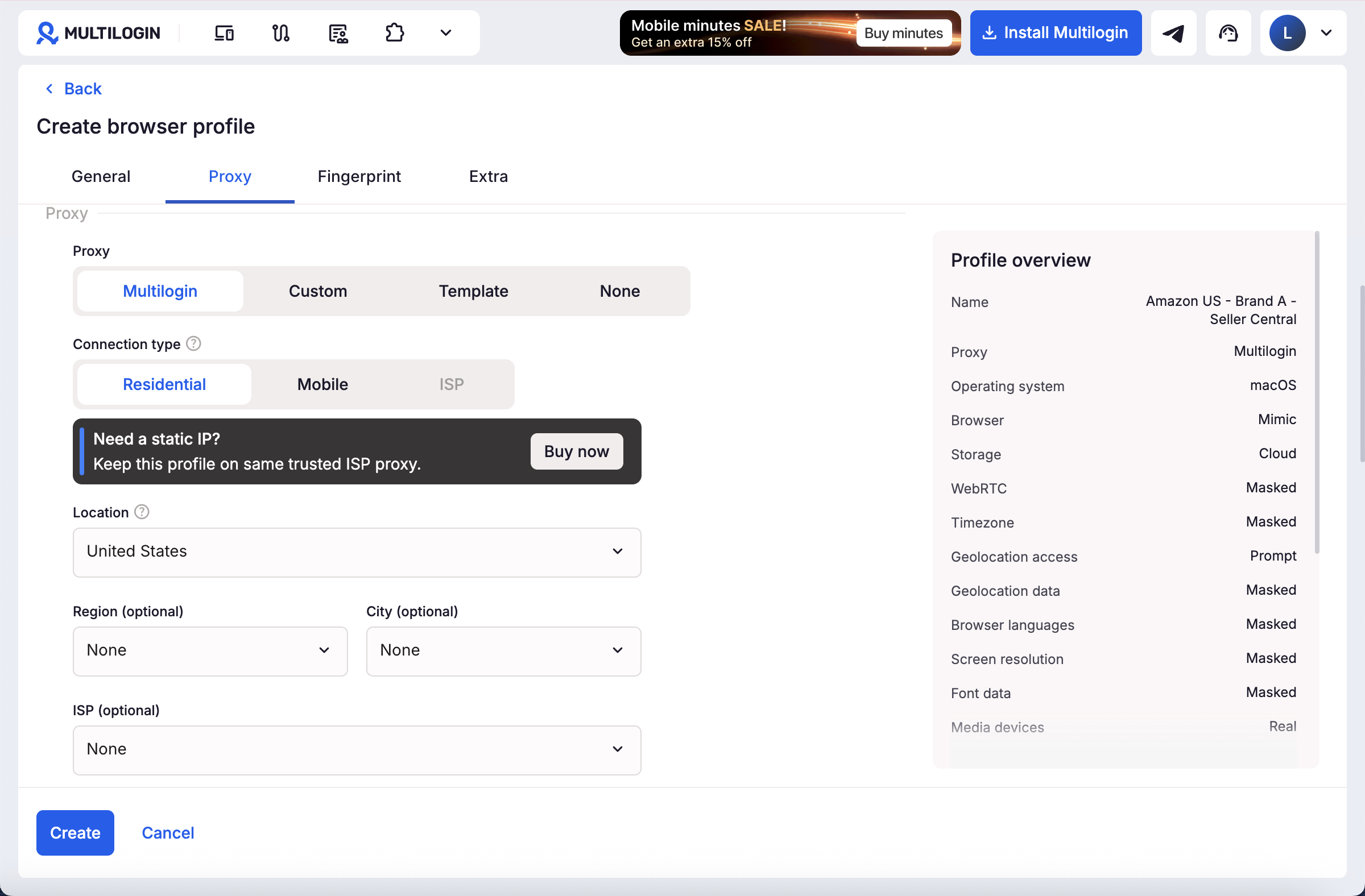
Open the Proxy section.
Choose Multilogin’s built-in proxy option or select a supported custom proxy provider.
For an ongoing Seller Central workflow, select a suitable location and session configuration. If your work requires a stable IP, review the available ISP proxy or session options.
Avoid changing your network location without a business reason.
Step 4: Save and launch the browser profile
Click Create to save the profile.
Return to the browser profile list and select Start. Multilogin opens a separate browser environment using your saved configuration.
Step 5: Access Amazon Seller Central
In the launched browser profile, open the appropriate Amazon Seller Central website.
Sign in using the credentials for the authorized seller account.
Complete any verification or security checks requested by Amazon. Multilogin does not replace Amazon’s authentication requirements.
Step 6: Reuse the environment for future sessions
When returning to the same seller workflow, launch its existing Multilogin browser profile.
The profile retains its own browser cookies and session data, subject to Amazon’s authentication and session policies.
For businesses operating multiple authorized accounts, create appropriately named environments and maintain an internal record of account ownership.
When should you use a cloud Android phone instead?
Multilogin also provides real cloud-hosted Android phones for native mobile-app workflows.
If your e-commerce operations depend on a supported Android app, a cloud phone provides its own app data, login history, and network configuration. Browser profiles remain the more direct option for Seller Central’s web interface.
Choose the environment based on the actual task rather than assuming every Amazon workflow requires a cloud phone. Start your first cloud phone free today!
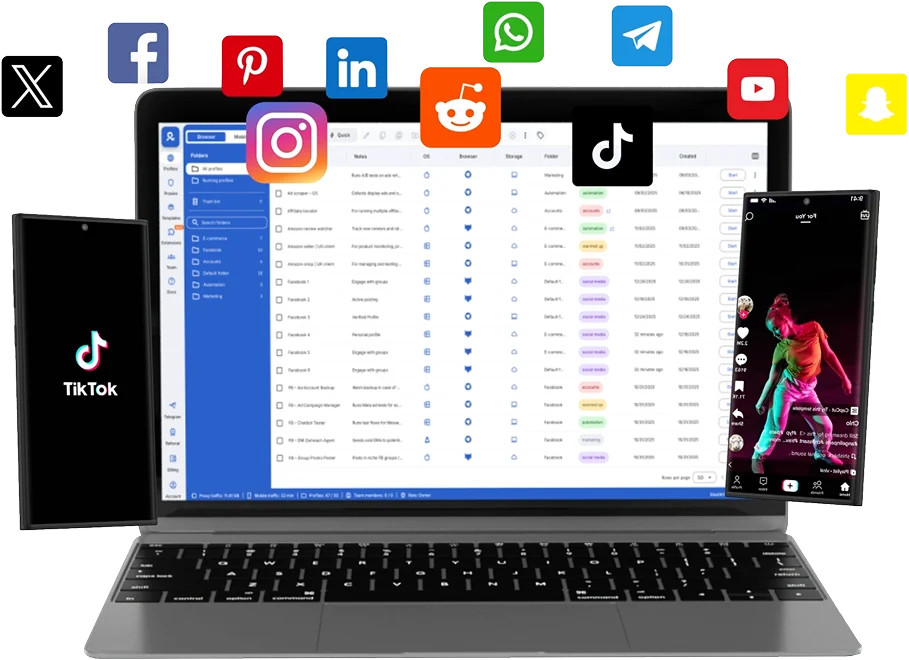
Manage multiple accounts with Android cloud phones
Build account trust, reach new locations, and grow faster from one dashboard
Frequently Asked Questions About Amazon Proxies
What is the best proxy for Amazon?
The best proxy for Amazon depends on your use case. For sellers managing multiple accounts or running marketing campaigns, residential proxies paired with an antidetect browser like Multilogin offer the highest level of security and stealth. Nodemaven and Smartproxy are also strong options due to their clean IP pools and sticky sessions.
Can I use a free Amazon proxy?
Technically, a proxy connection can be reused. However, whether accounts may be operated is governed by Amazon’s policies, not by the number of IP addresses used. Businesses managing multiple authorized accounts should define clear access and network procedures.
How do I find my proxy ID for Amazon?
If you’re using a proxy service, your proxy ID usually refers to your proxy IP address and authentication credentials (username/password). Your proxy provider (like Multilogin) will give you this info.
What is an AWS residential proxy?
An AWS residential proxy is a misnomer. AWS provides cloud infrastructure, not true residential IPs. You can create a proxy server on AWS, but the IPs are not residential—they belong to known cloud IP ranges, making them easily detectable by Amazon. For stealth, always choose actual residential proxies.
Can AWS be used as a residential proxy?
An ordinary proxy server hosted on Amazon Web Services uses cloud infrastructure IP addresses rather than residential ISP addresses. AWS infrastructure can be useful for authorized applications and technical workflows, but hosting a proxy on AWS does not automatically give it the characteristics of a residential proxy. If your workflow specifically requires residential connectivity, choose a provider that offers residential IPs and explains how its network is sourced and managed.
How to disable VPN or proxy service for Amazon Prime video?
Amazon Prime blocks many VPNs or proxies to enforce regional restrictions. If Prime Video isn’t working: Disconnect from your proxy or VPN. Use your original ISP IP. Restart the Prime app or your browser.
Can I use one proxy for multiple Amazon accounts?
No. Every Amazon account should have its own unique proxy IP and browser fingerprint. Sharing a proxy between accounts increases the risk of detection and bans. With Multilogin, you can assign a different IP and fingerprint to each browser profile, keeping your accounts fully separated.
How do I test my proxy for Amazon?
To test if your proxy works for Amazon: Assign it to a browser profile using Multilogin. Visit Amazon and attempt to browse or log in to a test account. Use tools like WhatIsMyIP and FingerprintJS to verify IP and fingerprint masking. Monitor for CAPTCHA prompts or account verification flags. If the proxy passes these tests, it’s safe for Amazon use.
Can Multilogin manage Amazon Seller Central sessions?
Yes. Multilogin browser profiles are designed for web workflows, including seller dashboards. Each profile can maintain its own browser data and network settings.
Final Thoughts
Amazon is not just watching your IP—it’s analyzing your entire digital fingerprint. The only safe way to manage multiple seller accounts or run marketing tests is by combining residential proxies with multi-account browsing technology.
Do not rely on free Amazon proxies, AWS proxy servers, or outdated datacenter IPs.
To stay competitive and ban-free in 2026:
- Use Multilogin for browser fingerprint spoofing
- Pair it with residential proxies from Nodemaven or Smartproxy
- Avoid free and datacenter proxies entirely
- Maintain unique environments for every Amazon account

 Join 4,200+ subscribers