






Amazon anonymous browsing starts with the privacy controls Amazon already provides: turn off your browsing history, remove viewed items, opt out of interest-based ads, give each adult in your home their own account through Amazon Family, and use private tabs in the Silk browser. None of these hides your activity from Amazon itself, so the right method depends on who you want privacy from.
What does Amazon anonymous browsing mean?
Amazon anonymous browsing means limiting who can see or connect your shopping activity. For most shoppers, that is a partner or child who shares the account, ads that follow a search around the web, or a device someone else uses. Full anonymity from Amazon is not possible while you are signed in, because Amazon keeps account activity and order records for returns, warranties and tax purposes.
The table below matches each privacy goal to the method that addresses it.
Who you want privacy from | What they can see | Method that helps |
People who share your Amazon account | Viewed items, recommendations, orders | Turn off browsing history, Remove from view, separate accounts with Amazon Family |
People who share your device | Browser history and open sessions | Private tab in Silk or your regular browser |
Advertisers on and off Amazon | Ads based on your Amazon activity | Opt out on the Advertising Preferences page |
Amazon itself | Account activity, IP address, cookies, device details | Signing out reduces what is tied to your account; no setting removes it completely |
Sellers and researchers comparing listings | Sessions that can be linked to one another | Separate browser profiles, each with its own cookies and IP address |
The step-by-step sections later in this guide follow that order, starting with Amazon’s own settings.
Why browse Amazon anonymously?
People look for Amazon anonymous browsing for five main reasons: keeping purchases private on a shared account, comparing prices without their account history, seeing fewer targeted ads, researching competitors as a seller, and limiting how much data builds up in one profile. Each reason calls for a different method, which is why the settings later in this guide are grouped by goal.
1. Keeping purchases private on a shared account
A shared Amazon account shows every member the same order history, browsing history and recommendations. Gifts, health products and other personal purchases show up for everyone signed in. This is the most common reason shoppers ask about Amazon anonymous browsing, and Amazon’s own settings handle most of it.
2. Comparing prices without your account history
Amazon prices change often and can differ by delivery location, available seller offers and member deals. Amazon does not publish how each price is set, so many shoppers want to check whether their account affects what they see. The fair test is to compare the same product signed in and signed out, with the same delivery location selected.
3. Seeing fewer targeted ads
Amazon uses your activity on its sites to show interest-based ads, both on Amazon and on other websites that display Amazon ads. That is why a single search can follow you across the web for days. Opting out on the Advertising Preferences page stops this personalization without changing how you shop.
4. Seller and competitor research
Sellers, agencies and researchers check their own listings, competitor pages and search placement, often from more than one location. When they do this while signed in to a seller’s account, that account’s history shapes what they see. Many repeated checks from one IP address can also bring up CAPTCHAs or “unusual activity” pages. Keeping research sessions separate from the selling account gives cleaner results and keeps the two activities apart.
5. Limiting the data tied to your profile
Your IP address, device details and browsing activity reveal your approximate location, the devices you use and what you are interested in. Privacy-conscious shoppers want less of that linked to one profile. To see what Amazon shows shoppers in another region, change the Deliver to location first; a regional IP address through a proxy matters only when you need to see the store as a local visitor would.
How does Amazon track you?
Amazon recognizes visitors through five kinds of signals: your account login, cookies and local storage, your IP address, your browser and device details, and the way you interact with the site. Signing in links everything to your account. When you are signed out, the other signals can still connect visits made from the same browser and network.
Signal | What it reveals | What limits it |
Account login | All activity, orders and recommendations on that account | Separate accounts through Amazon Family; staying signed out for research |
Cookies and local storage | Repeat visits, viewed items, cart and session data | Clearing cookies, a private tab, a separate browser profile |
IP address | Approximate location and visits from the same network | A VPN or proxy |
Browser and device details | Operating system, browser version, time zone, screen size, language and fonts | Not changed by incognito or a VPN; a separate browser profile |
Interaction patterns | How quickly and how often pages are requested | Browsing at a normal pace; avoiding automated requests |
How do you turn off Amazon browsing history?
To turn off Amazon browsing history, open Your Browsing History, select Manage history and switch Turn Browsing History on/off to off. Amazon then stops adding the products you view to that page, which also keeps them out of the recommendations other account users see.
On a computer:
- Sign in at amazon.com.
- Open Accounts & Lists and select Browsing History.
- Select Manage history in the top right corner.
- Switch Turn Browsing History on/off to off.
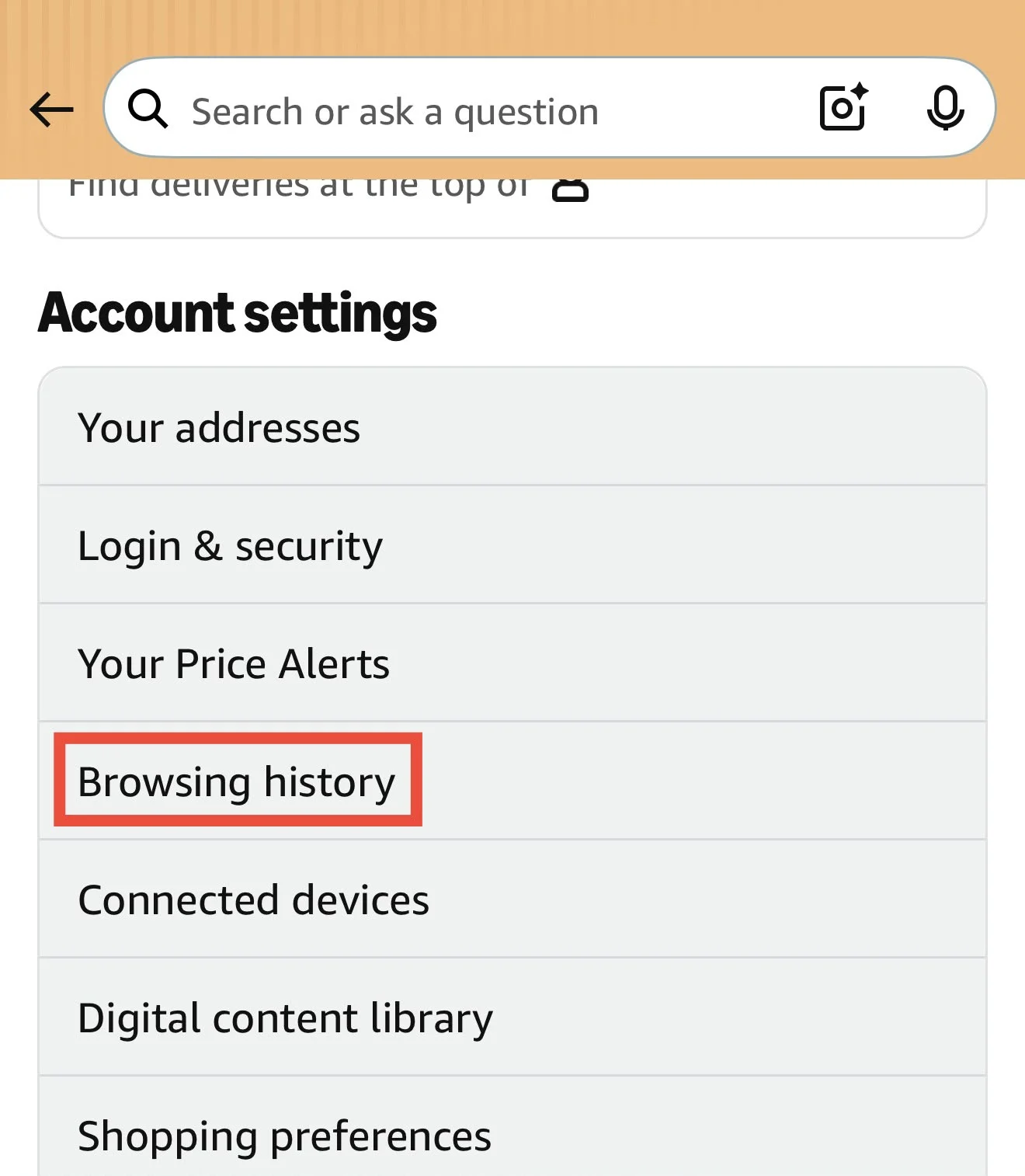
In the Amazon Shopping app, open your profile, go to Your Account, find Browsing history under personalized content, tap Manage and switch the same toggle off.
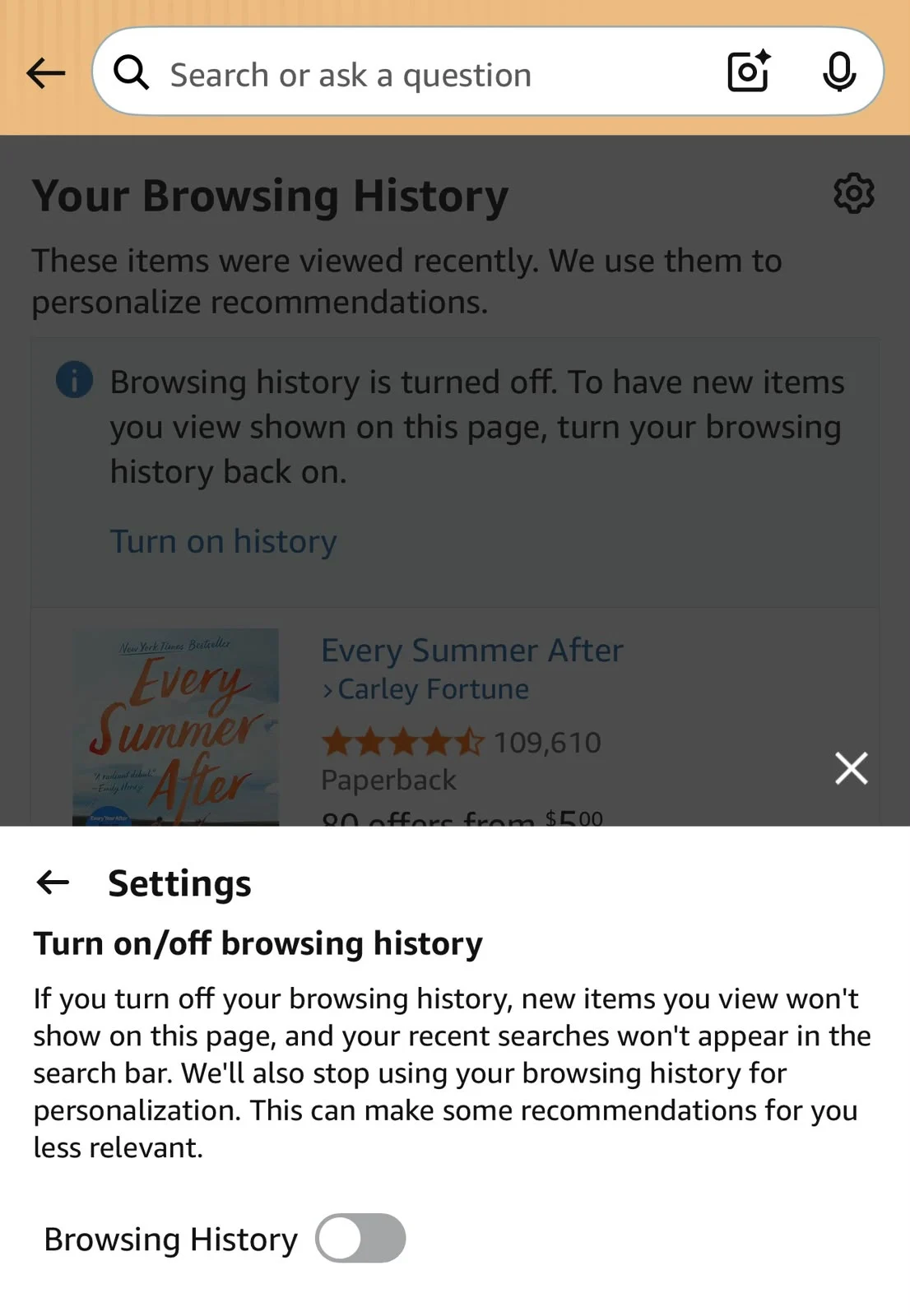
Turning the setting off controls what Amazon displays and uses for recommendations. It does not delete items already listed and does not stop Amazon from recording account activity. If you clear your browser’s cookies, return to the page and confirm the toggle is still off.
How do you remove items from your Amazon browsing history?
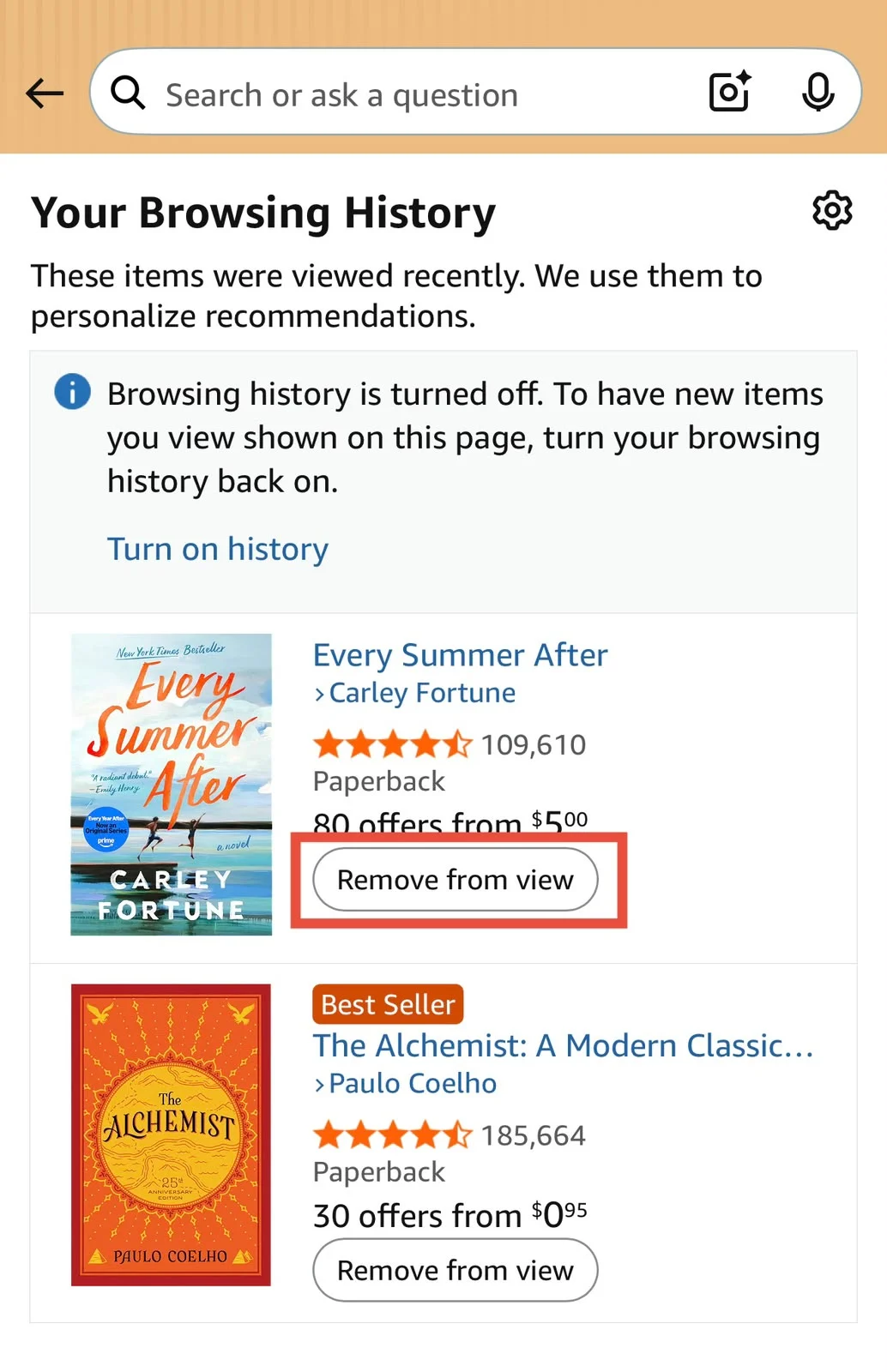
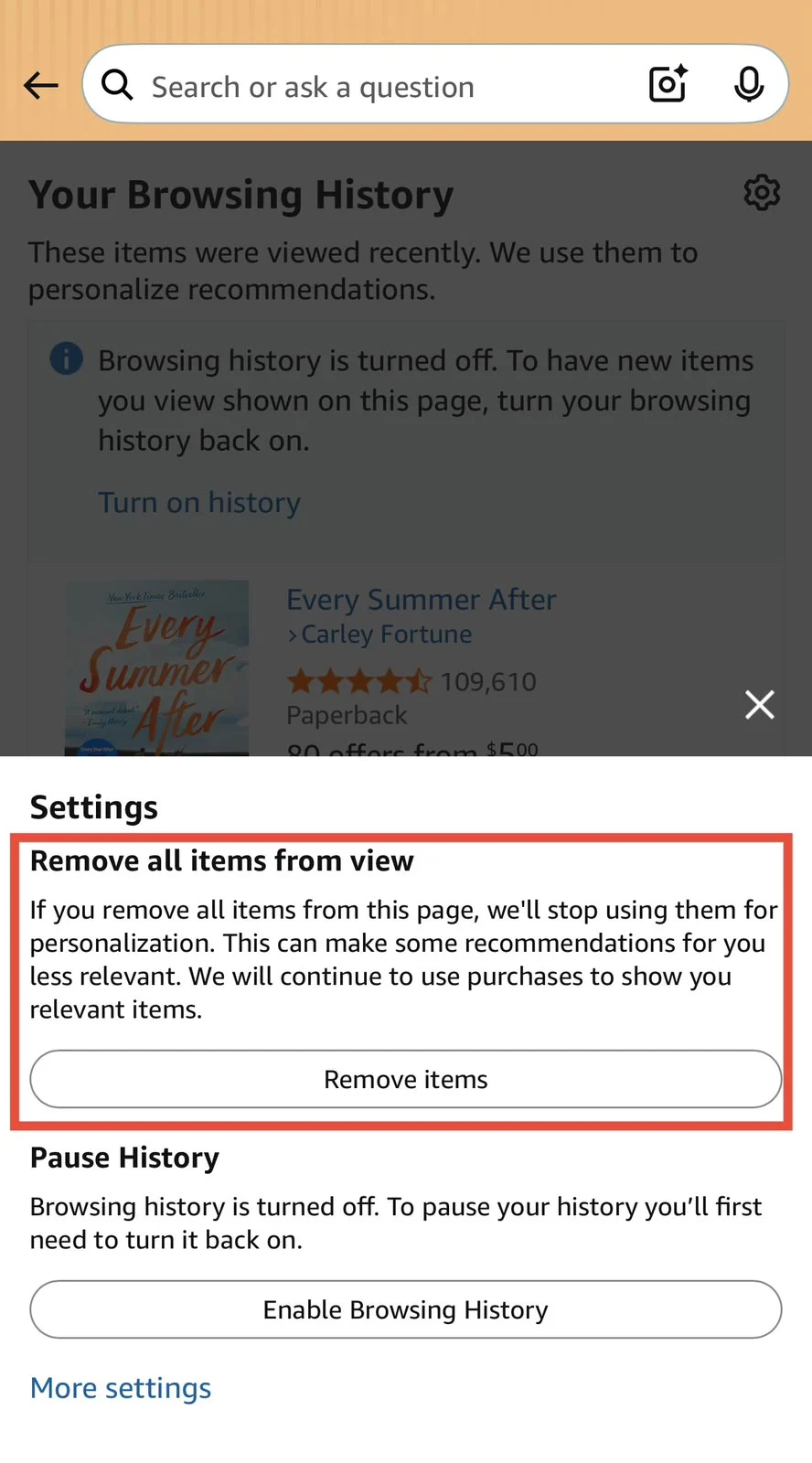
To remove a single product from your Amazon browsing history, select Remove from view under that item on the Your Browsing History page. To clear the whole list, open Manage history and select Remove all items from view.
Removing items and turning off history are separate controls. Removing clears what is already on the list, while the toggle stops new items from appearing. Gift shoppers on a shared account usually need both.
Can you still archive orders on Amazon?
No, Amazon no longer lets most customers archive orders. It stopped new archiving in spring 2025 and removed the Archived Orders view on August 19, 2025, so orders that were archived before now appear in the regular Your Orders list again. Amazon also does not let you delete orders from your account.
If you need purchases that other people in your home can’t see, the reliable option is a separate Amazon account for each adult, which Amazon Family supports without losing shared Prime benefits.
How does Amazon Family keep your shopping private?
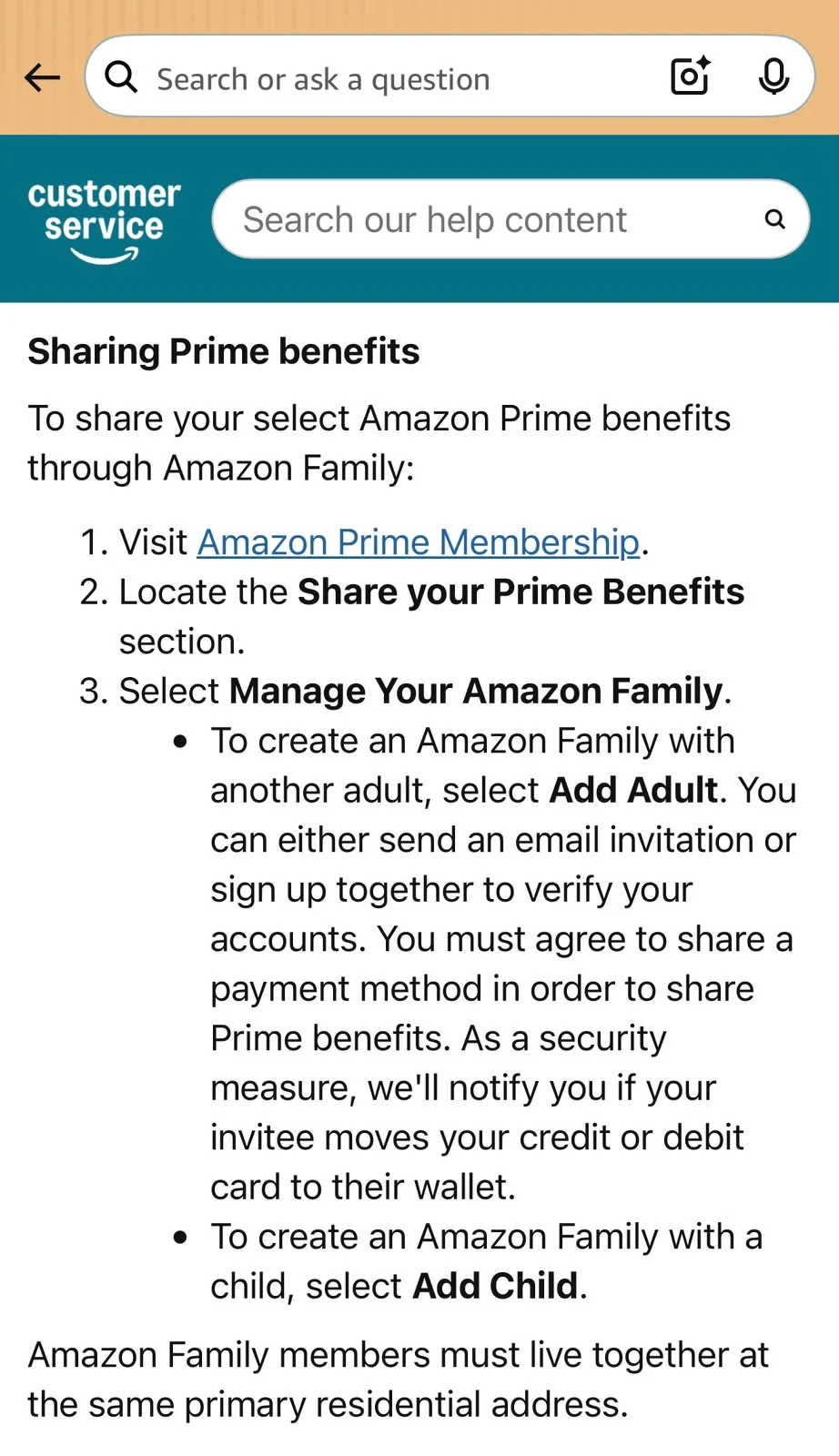
Amazon Family, formerly Amazon Household, lets adults in the same home share select Prime benefits while each keeps a separate Amazon account. Because the accounts are separate, each adult has their own order history, browsing history and recommendations.
An Amazon Family can include up to 2 adults, up to 4 teens and up to 4 children. All members must live at the same primary residential address. To share Prime benefits, the organizer shares a payment method for household verification, and that payment method can be used for purchases within the family. Amazon ended the Prime Invitee option, which allowed sharing outside the household, on October 1, 2025.
To add another adult:
- Go to Your Amazon Prime Membership.
- Find the Share your Prime benefits section.
- Select Manage Your Amazon Family.
- Select Add Adult and send the invitation.
- The invited adult accepts while signed in to their own Amazon account.
Example: how to keep a gift private on a shared Amazon account
To keep a gift private on a shared Amazon account, combine the settings above, because no single one hides a purchase. Archiving is gone, so the order itself is the part that needs a separate account.
- Before you start shopping, open Manage history and turn browsing history off.
- After shopping, open Your Browsing History and select Remove from view on anything viewed before you switched it off.
- Place the order from your own account in Amazon Family, so it never appears in the shared order history.
- Opt out of interest-based ads in that browser, so the item does not follow you into ads on a shared computer.
- Turn browsing history back on once the gift has been delivered, if you want your recommendations back.
How do you use private browsing in Amazon Silk?
To open a private tab in Silk on a Fire tablet, tap the three-dot menu (or swipe in from the left edge) and select New Private Tab. On Fire TV, select the Enter Private Browsing icon in the Silk navigation bar.
When you close a private tab, Silk removes the pages you viewed from its browsing history. Downloads and bookmarks you created stay on the device. Private browsing keeps activity off the tablet or TV, but websites, including Amazon, and your internet provider can still see it. If you sign in to Amazon inside a private tab, that activity is still recorded on your account.
How do you stop Amazon from personalizing ads?
To stop interest-based ads from Amazon, go to the Advertising Preferences page in your account (amazon.com/adprefs) and choose the option not to show interest-based ads provided by Amazon. You will still see ads, but they will not be based on your activity.
The same page lets you delete the advertising data already tied to your browser. Deleting alone is not an opt-out, so use both. Fire tablets and Fire TV have a separate Advertising ID setting on the device, which you turn off in the device’s privacy settings.
Is incognito mode or a VPN enough to browse Amazon anonymously?
Incognito mode and VPNs each cover one layer. A private tab keeps activity off your device, while a VPN changes the IP address Amazon sees. Neither one changes the browser and device details a website can read, and logging in to your account inside either one links the session to you.
Method | Keeps activity off your device | Changes your IP address | Keeps cookies separate between sessions | Changes browser and device details |
Private tab (Silk, Chrome, Safari) | Yes | No | Only until the tab closes | No |
VPN | No | Yes | No | No |
Separate browser profile with its own proxy | Yes, per profile | Yes, per profile | Yes | Yes, per profile |
For everyday shopping, the native settings plus a private tab cover most needs. The last row matters mainly for work that involves several Amazon accounts or repeated checks of listings.
When do sellers and researchers need separate browser profiles?
Sellers, agencies and market researchers often check listings, prices and search results from several locations or accounts. If those sessions share one browser, cookies and IP address, they can be linked to each other, and a seller’s own account can affect what they see. That is the core problem behind multi-account management.
A separate browser profile gives each session its own cookies, storage, browser details and IP address. Multilogin provides isolated browser profiles with built-in proxies, which lowers the chance of sessions being linked. It does not override Amazon’s rules, and no tool guarantees an account won’t be restricted. For setup details, see how to manage multiple Amazon seller accounts.
If part of your workflow runs in the Amazon Shopping or Amazon Seller app, Android cloud phones give each account its own app environment and IP address. You can test one browser profile or cloud phone on the free plan before choosing a paid plan.
How to keep Amazon research separate with Multilogin
Multilogin is a cloud Android phone platform for multi-account management. It also includes browser profiles for web-based work. If you check Amazon listings in a browser, use a browser profile for that research. Use a cloud phone when your task actually takes place in the Amazon Shopping or Amazon Seller Android app.
The example below keeps a US listing research session separate from a seller’s signed-in Seller Central work. It does not make a logged-in Amazon account anonymous or change Amazon’s account rules.
1.Decide what the profile is for. Choose one task, such as checking public product listings on Amazon.com, and note the marketplace and delivery location you want to compare. Keep Seller Central work in its existing authorized account workspace.
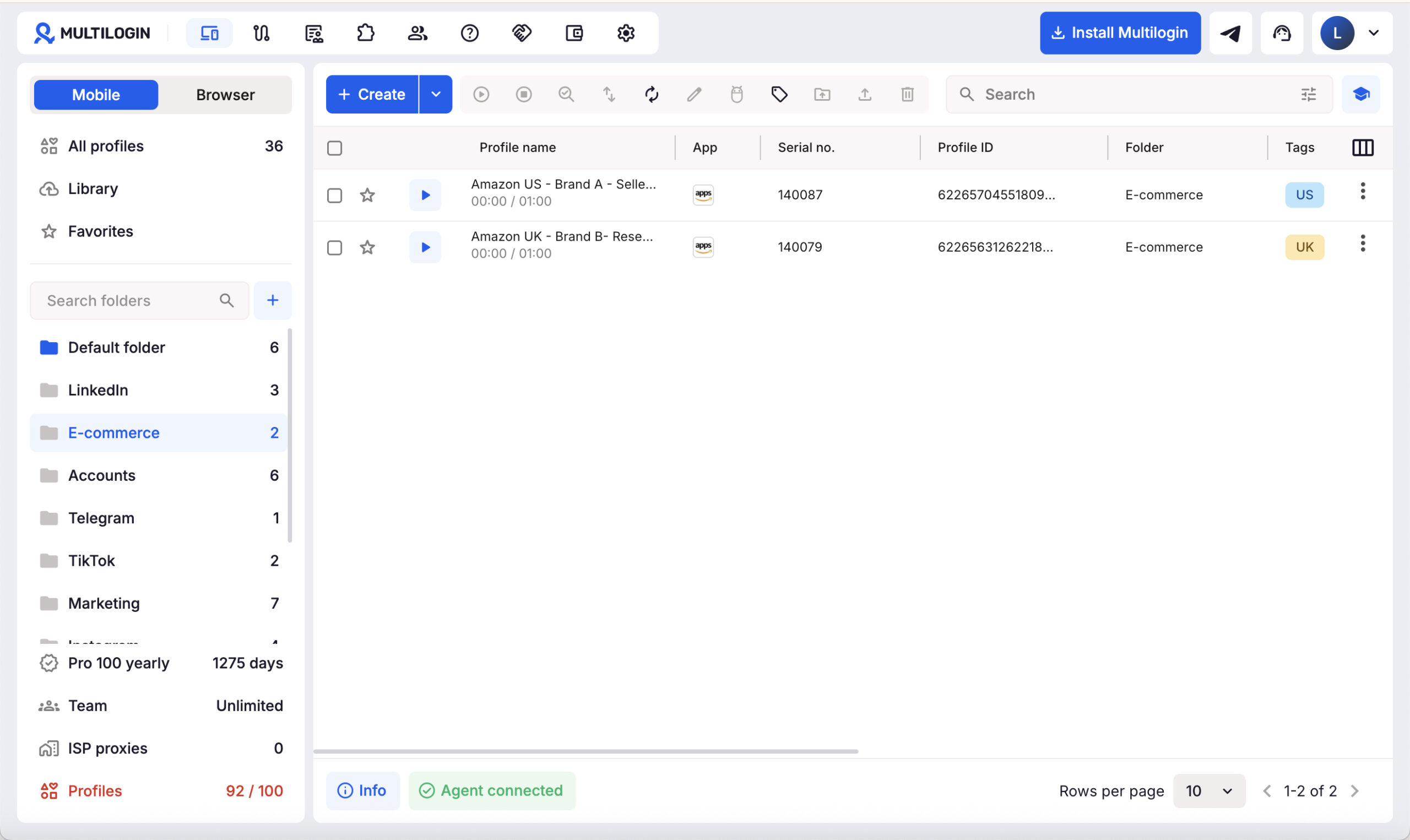
2. Create a mobile/browser profile. In Multilogin, go to Profiles → Mobile/Browser → Create. Name the profile something specific, such as Amazon-US-Listing-Research. Choose a regular profile if you will return to this research over time. Keep the default browser settings unless you have a clear reason to change them.
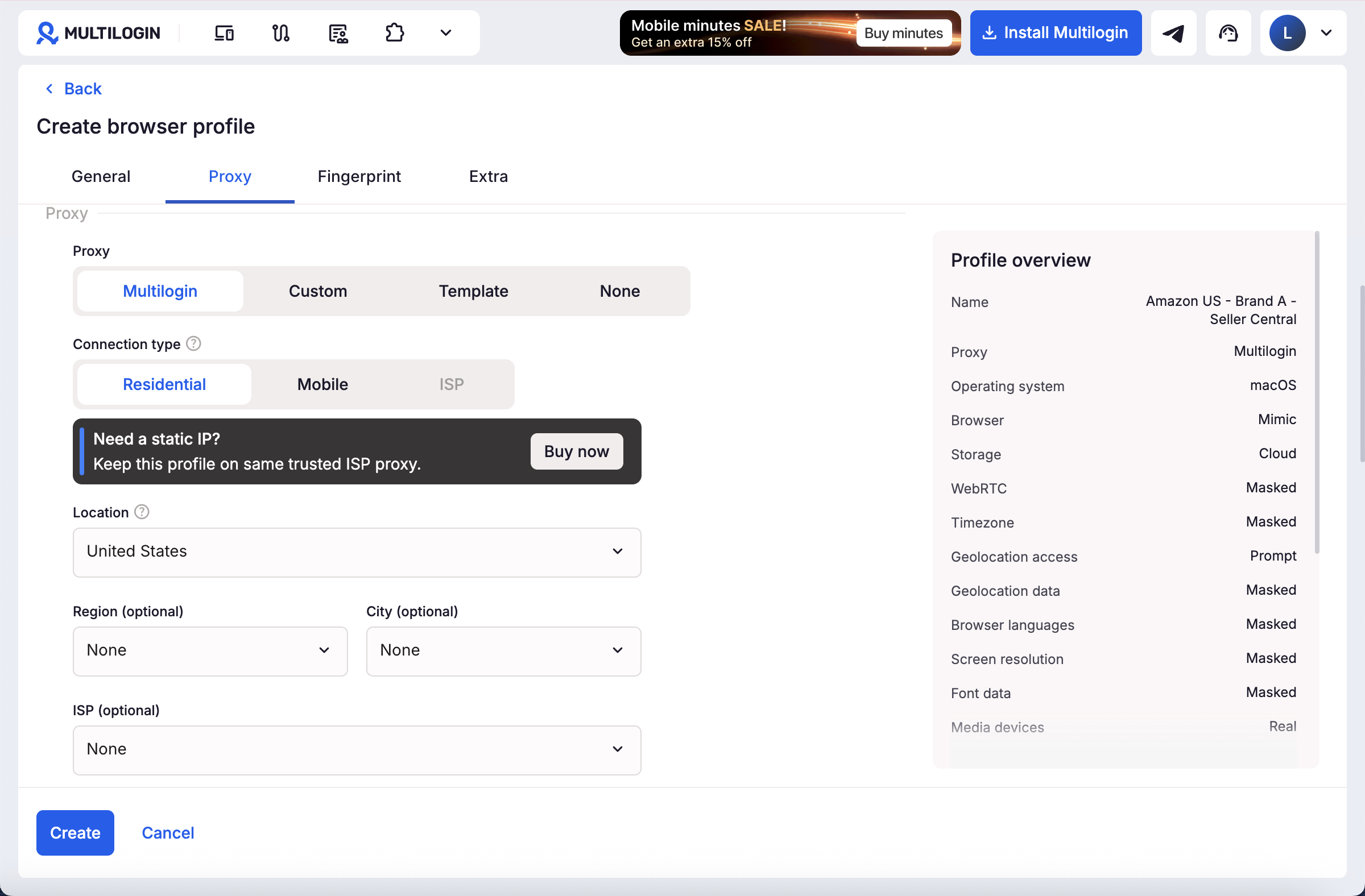
3. Set the connection for the task. Open the profile’s Proxy section. Choose a built-in Multilogin proxy or add your own if you need to view Amazon from a particular network location. If your task does not require a different IP address, understand that choosing None uses your computer’s current connection. Keep the location consistent with the marketplace you are checking.
4. Open Amazon in that profile. Select Create, then find the profile in the Browser list and select Start. Open the relevant Amazon marketplace. For a comparison, set the same delivery location, product, seller offer, and membership conditions in each session. Stay signed out when the purpose is to see a public shopper view rather than your own account view.
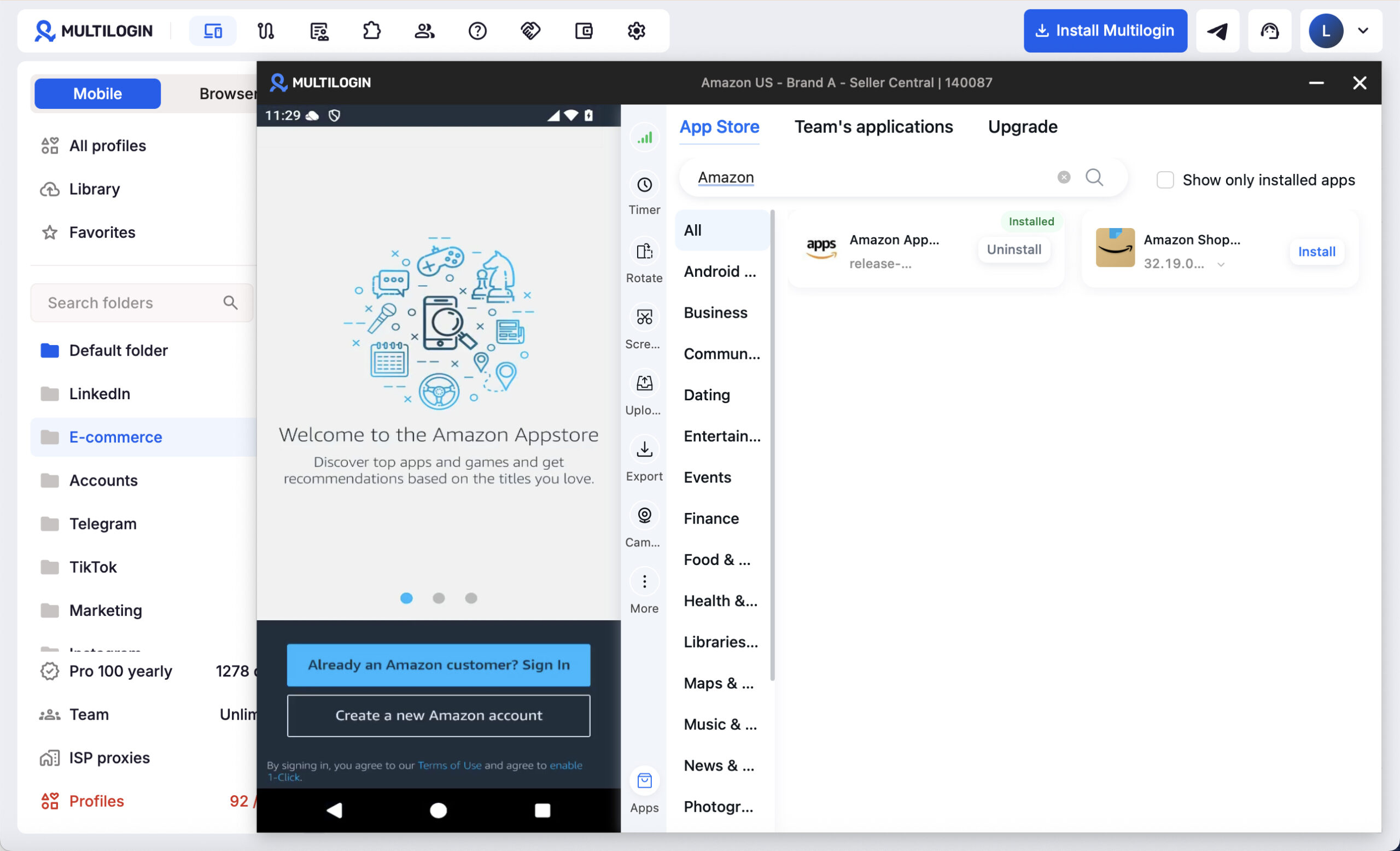
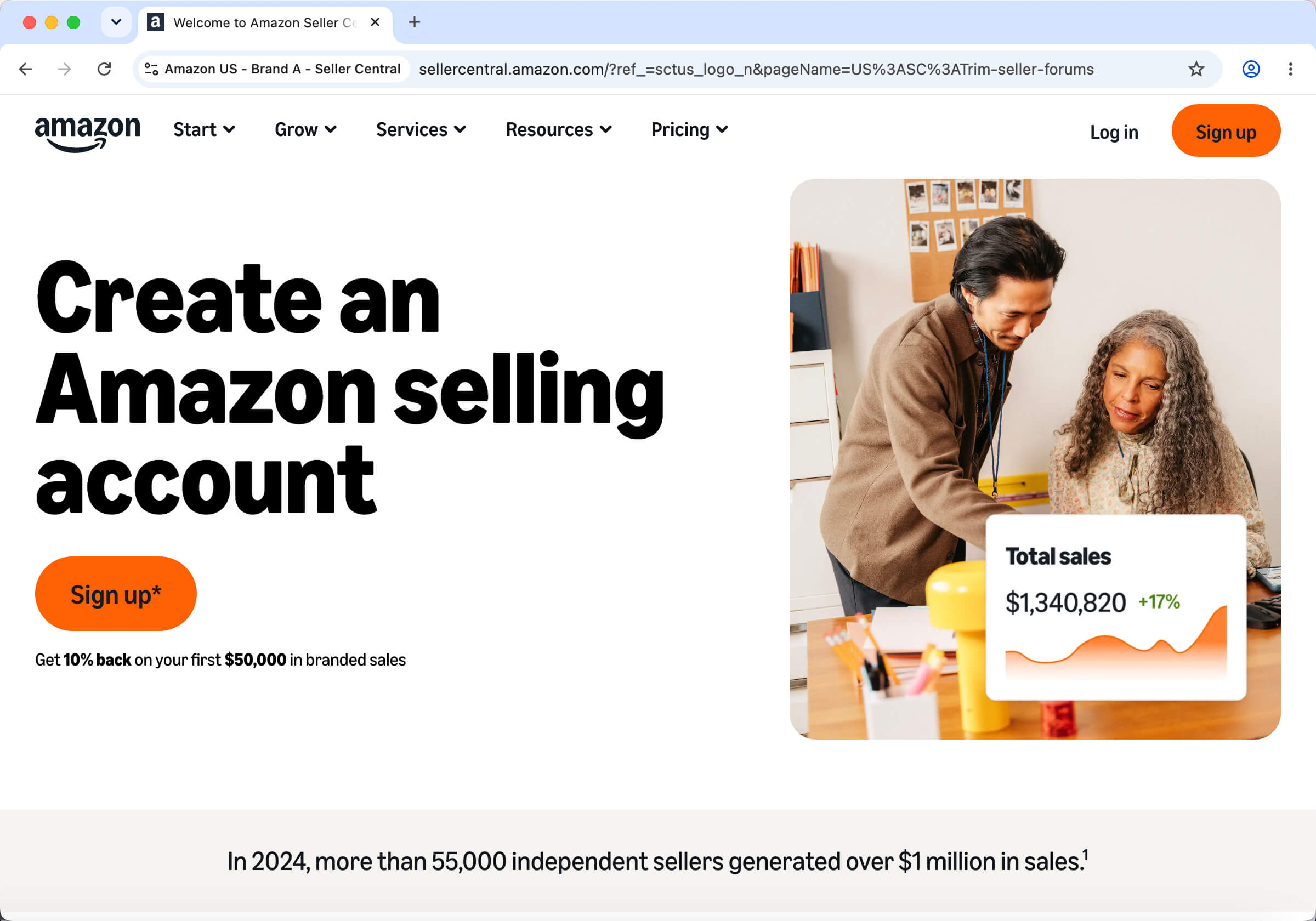
5. Record what you actually see. Note the ASIN, displayed price, seller, delivery location, date, and whether you were signed in. Reopen the same profile for follow-up checks so the research has a consistent setup. Do not treat a difference between two page views as proof that Amazon personalized the price; first check the offer and delivery details.
Ready to Browse Amazon Anonymously?
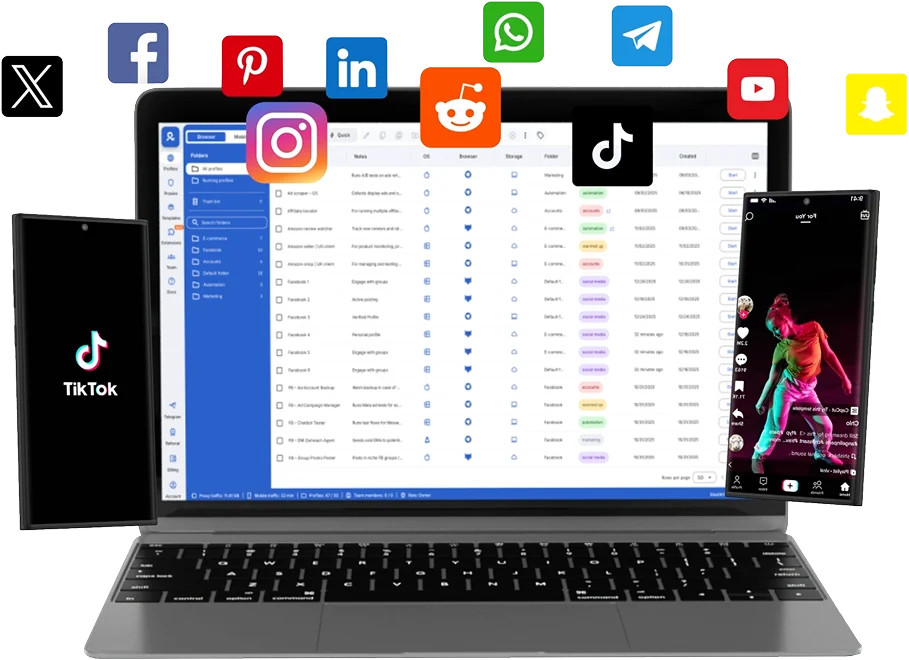
Run your social media accounts on cloud phones & web browsers
Frequently Asked Questions About Amazon Anonymous Browsing
Can I really browse Amazon anonymously?
You can browse Amazon privately from other people, but not anonymously from Amazon while signed in. Turning off browsing history, removing viewed items, using separate accounts through Amazon Family and opting out of interest-based ads cover most privacy needs at home. Amazon still records account activity and keeps order records.
Can my family see what I buy on Amazon?
Someone using the same Amazon login can see orders on that account. If adults use separate accounts through Amazon Family, check whether order-history sharing is enabled under Family Shopping. Amazon says shared orders can appear in another member’s Your Orders view. You can turn off sharing for your account or mark an eligible individual order as private.
Is using a VPN enough for Amazon anonymous browsing?
No. A VPN changes the IP address Amazon sees, but your cookies, browser details and account login still identify you. Use a VPN together with a private tab and stay signed out if you want to compare listings without your account history.
Does Amazon track me even when I’m logged out?
Yes. When you are signed out, Amazon still receives your IP address and uses cookies, which can connect visits from the same browser. Opting out of interest-based ads on the Advertising Preferences page stops that activity from personalizing ads in that browser.
Does deleting my Amazon browsing history delete my data?
No. Remove from view and Remove all items from view clear the list shown on your Browsing History page and its effect on recommendations. They do not delete your orders or the account data Amazon keeps under its Privacy Notice.
Do I see different Amazon prices when I'm signed in?
A different displayed price does not, by itself, show that Amazon recognized or targeted you. Check the same ASIN, seller offer, delivery location, time, and membership eligibility before comparing signed-in and signed-out views. Record those details if you are doing repeatable product research.
Can I manage multiple Amazon accounts safely?
For personal shopping, Amazon Family is the supported way for adults in one home to keep separate accounts. For seller accounts, check Seller Central’s current policy first, because Amazon restricts operating more than one seller account. Where multiple accounts are allowed, separate browser profiles or cloud phones like provided from Multilogin keep each account’s cookies, device details and IP address apart.
Start Browsing Amazon Anonymously
Amazon anonymous browsing isn’t just a “nice-to-have” anymore, it’s an absolute must for sellers, power shoppers, agencies, and anyone who values digital privacy.
For most people, privacy on Amazon comes down to three steps: turn off browsing history, opt out of interest-based ads, and give each adult a separate account through Amazon Family. Use a private tab when you share a device. If your work involves several accounts or repeated listing checks, try cloud phones and browser profiles to keep each session separate, all from one Multilogin dashboard. Start free today!
 Join 4,200+ subscribers