







What is ProxyLTE
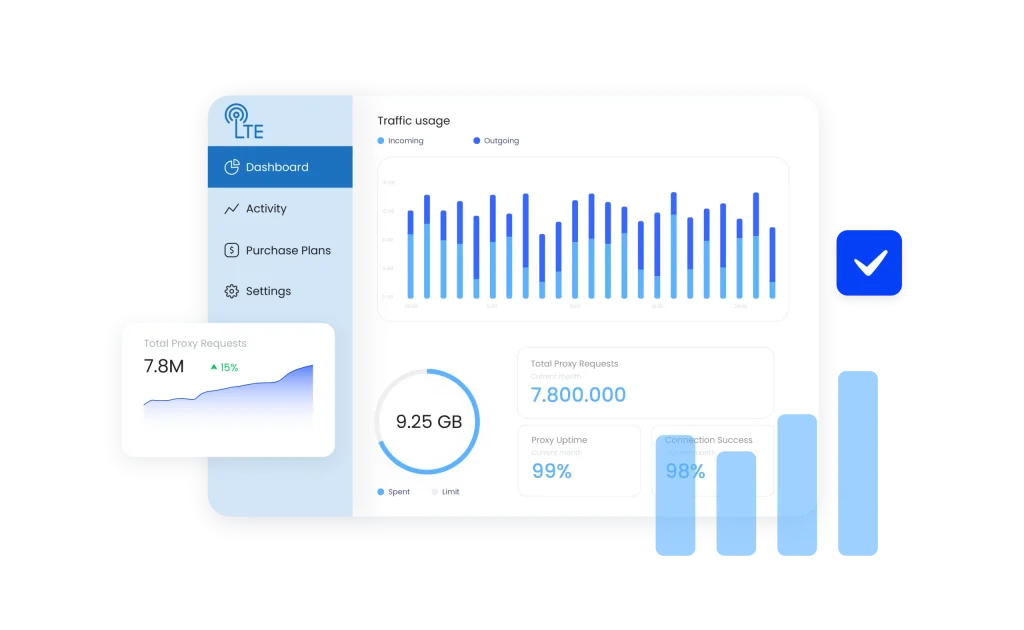
ProxyLTE is a proxy provider specializing in mobile and residential proxies, primarily focused on IP addresses within the United States. It is designed for users who need high levels of anonymity for activities like social media management, web scraping, and secure browsing.
- High anonymity with mobile IPs
- Strong focus on US locations
- Flexible and customizable plans
Why use ProxyLTE with an antidetect browser?
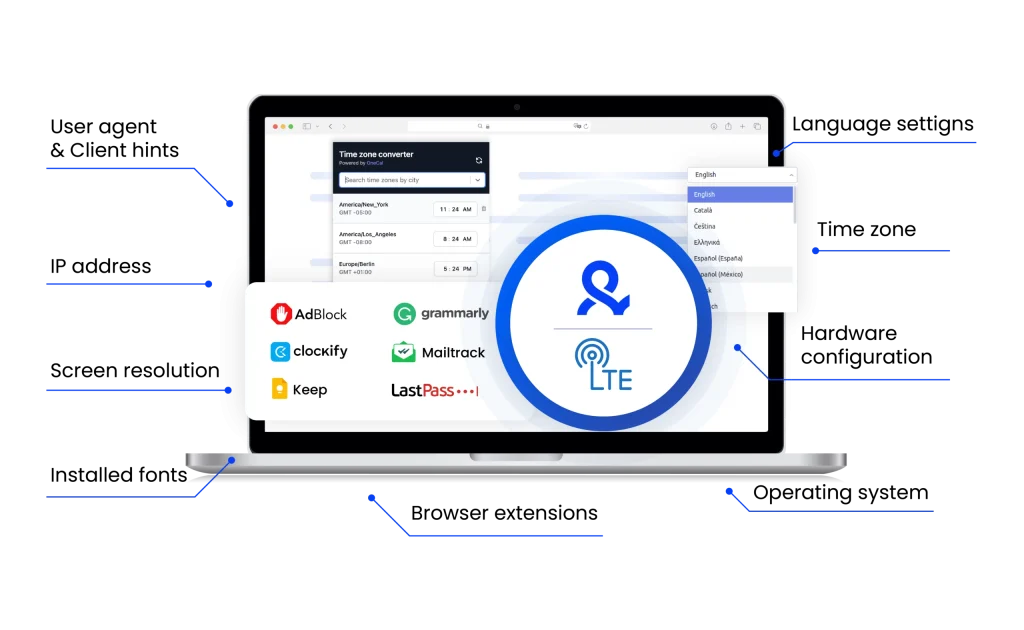
Pairing ProxyLTE proxies with antidetect browsers provides a robust framework for advanced digital operations, ensuring both high success rates and anonymity. This combination gives you the ability to build and manage a scalable, multi-account infrastructure that appears as genuine users to any platform you target.
ProxyLTE unique benefits
Compare ProxyLTE with an alternative
Compare features, functionality, and benefits to find the solution that fits your needs best.
-
Proxy provider
ProxyLTE

Oxylabs

-
Supported proxy types
ProxyLTE
- Mobile proxies
- Residential proxies
- Social proxies
Oxylabs
Residential
ISP
Datacenter
Mobile
-
Starting price
ProxyLTE
Private US: $0.05 per proxy/day
Social US: $0.66 per proxy/day
1 by 1 (New): $0.45 per proxy/day
US Carrier: $1.12 per proxy/dayOxylabs
Residential Proxies: from $8/GB
Datacenter Proxies: from $1.2/GB
ISP Proxies: from $1.60/IP
Mobile Proxies: from $9/GB -
Speed
ProxyLTE
Not publicly disclosed
Oxylabs
Average response time of under 1 second
-
Success rate
ProxyLTE
Not publicly disclosed
Oxylabs
97-99%
-
Size of IP pool
ProxyLTE
ProxyLTE’s IP pool is primarily concentrated in the United States, and there are 1,300 non-US IPs available.
Oxylabs
102M+ IPs across 195 countries
-
Session control
ProxyLTE
Includes both rotating and sticky sessions
Oxylabs
Rotating and sticky sessions available
for up to 24 hours using the sesstime parameter -
Best for
ProxyLTE
Social media management, ad verification & web scraping
Oxylabs
Businesses & individuals – large-scale scraping, SEO, automation, data extraction
Watch the Multilogin Demo
See how to run multiple accounts in just 2 minutes.
Watch the demo below and discover how Multilogin can streamline your workflow.
Why Multilogin is the perfect match for ProxyLTE
Looking for all-in-one antidetect browser with built-in proxies?
Multilogin comes with built-in residential proxies to make multi-accounting, web scraping and web automation easier than ever. No extra setup, no third-party services—just undetectable browsing at no additional cost.
- Unlimited time
- Mobile and browser profiles included
- Free built-in proxies & mobile minutes
Discover more proxy providers
-
Read the review

- Read the review Review
-
Read the review

-
Read the review

-
Read the review

-
Read the review

-
Read the review

-
Read the review

-
Read the review

-
Read the review

-
Read the review

-
Read the review

-
Read the review

-
Read the review

-
Read the review

-
Read the review

-
Read the review

-
Read the review

-
Read the review

-
Read the review

-
Read the review

-
Read the review

-
Read the review

-
Read the review

-
Read the review

-
Read the review

-
Read the review

-
Read the review

- Read the review Cherry Proxy
- Read the review CLiproxy
-
Read the review

-
Read the review

-
Read the review

-
Read the review
-
Read the review

-
Read the review
-
Read the review

-
Read the review

-
Read the review

-
Read the review

-
Read the review

-
Read the review

-
Read the review

-
Read the review

-
Read the review

-
Read the review

-
Read the review

-
Read the review

-
Read the review

-
Read the review

-
Read the review

-
Read the review

-
Read the review

-
Read the review

-
Read the review

-
Read the review

-
Read the review

-
Read the review

-
Read the review
Is ProxyLTE worth It in 2025? Full review, pros, and best use cases
ProxyLTE is a proxy service provider specializing in high-quality mobile and residential proxies (despite its LTE-focused name) with full coverage across the United States. Founded in 2017, ProxyLTE has spent years refining its network and now stands out in 2025 as a go-to solution for users who need reliable, anonymous IP addresses for various online tasks. In this article, we’ll provide a full review of ProxyLTE’s services and features, discuss its main benefits and standout features, explore the top use cases (from web scraping and ad verification to social media automation and sneaker botting), and explain why ProxyLTE pairs well with Multilogin.
Overview of ProxyLTE’s services and features
ProxyLTE is a premium proxy provider focused on US-based IP addresses, especially 4G/LTE mobile proxies, while also offering traditional residential (Wi-Fi) IP. This means all ProxyLTE IPs originate from real devices or households (mobile phones, routers, etc.) within the United States, giving them authentic residential and mobile “footprints” that websites recognize as genuine user traffic. If you need non-US proxies, ProxyLTE may not be suitable, as it primarily serves the U.S. market with IPs from all 50 states. However, within the U.S., coverage is comprehensive – you can target any state, and even specific mobile carriers like Verizon, AT&T, or T-Mobile for certain plans.
Key features of ProxyLTE
ProxyLTE’s platform provides a user-friendly dashboard where you can customize your proxy order. When setting up proxies, you select the proxy type (mobile or residential), the connection type (cellular, Wi-Fi, or a mix), the duration (from one day up to a month), the number of IPs (ports) you need, and even the state or carrier if applicable. This flexibility lets you tailor proxies to your exact needs. All proxies come with high anonymity (they’re “elite” proxies that don’t reveal they are proxies) and encrypted traffic for security. ProxyLTE supports HTTP, HTTPS, and SOCKS5 protocols (as well as SOCKS4) – you choose your preferred protocol at purchase time. Keep in mind, the protocol is fixed per proxy once chosen, so decide based on your use case (HTTP/S is common for browsers; SOCKS5 might be used for certain applications)
Top use cases for ProxyLTE proxies
ProxyLTE’s proxies can be used in almost any scenario where you need to mask your IP or appear from a U.S. location. However, given their characteristics (US-only, mobile/residential IPs, high anonymity, moderate rotation frequency), there are a few use cases where ProxyLTE truly shines:
- Web scraping and data mining: If you are collecting data from websites (prices, product info, articles, etc.), proxies are essential to avoid blocks. ProxyLTE’s rotating mobile/residential IPs help you bypass anti-scraping measures by making requests appear like they’re coming from real U.S. users all over the country. You can distribute your requests across multiple IPs to prevent any single IP from making too many requests.
- Ad verification & SEO monitoring: Advertisers and marketing professionals often need to verify that ads and search results are displayed correctly to real users in various locations. ProxyLTE is ideal here because you can choose specific states or carriers to emulate a particular audience segment. For ad verification, using a residential or mobile IP closely mimics an actual consumer’s device, ensuring you see the ad content exactly as a real person would. This helps catch issues like ad fraud, improper geo-targeting, or competitor ads that appear in certain locales. Similarly, for SEO, you might want to check Google search rankings from different cities. With ProxyLTE, you can select a proxy in, say, California and another in New York, and check the search results from each to compare. The high anonymity means the search engine can’t easily detect the use of a proxy, giving you unbiased local results. And because ProxyLTE’s IPs are all US-based and stable (persistent if needed), your manual or automated checks won’t be interrupted by sudden IP bans or suspicious activity flags. In summary, ProxyLTE proxies provide the consistency and geolocation accuracy needed for reliable ad/SEO verification tasks.
- Social media automation and multi-account management: This is one of ProxyLTE’s flagship use cases. Social networks (Instagram, Facebook, TikTok, Twitter, etc.) have become very vigilant with accounts using proxies, especially datacenter proxies or free public proxies. They often flag or ban accounts if they detect unnatural IP usage. Mobile proxies, however, are gold-standard for social media because they are the same type of IP addresses real users have on their phones. ProxyLTE’s mobile IPs appear to platforms as legitimate smartphone users on 4G networks, making them far less likely to be blocked. If you are running social media automation tools (like Jarvee or others) to manage and grow multiple accounts, ProxyLTE’s “Social” proxies are tailored for that scenario. Each account (or small group of accounts) gets an exclusive residential/mobile IP that can remain static (to build trust for that account) and is clean (not previously abused on that platform). This greatly reduces the risk of account bans due to IP. Even if you’re doing manual multi-account management (say, running 5+ Facebook accounts for clients), using ProxyLTE with an anti-detect browser means each account logs in from a unique residential/mobile IP and environment, preventing linkage. Additionally, because ProxyLTE integrates with antidetect browsers like Multilogin (as we’ll detail soon), it’s straightforward to assign a different ProxyLTE IP to each profile and create a robust cloaking of your identities. Bottom line: ProxyLTE proxies help keep your social media accounts safe and separated, enabling automation and growth at scale with much lower risk of getting blocked or compromised.
- Sneaker botting & e-commerce bots: Sneaker botting (using bots to buy limited-edition sneakers or other high-demand products) is an arms race, and proxies play a crucial role. Retailers often ban known proxy IP ranges or detect multiple requests from the same IP during product launches. ProxyLTE’s residential and mobile proxies can give you an edge by masking bot traffic as real user traffic. Many sneaker sites heavily filter datacenter IPs but treat mobile/residential IPs leniently, since blocking all of those would also block legitimate customers. By using ProxyLTE, a sneaker botter can run multiple tasks (threads) in parallel – each via a different ProxyLTE IP – to try for a checkout without getting rate-limited or banned.
- Other use cases – gaming, classifieds, brand protection, etc.: ProxyLTE’s versatility means it can serve countless niche needs. People have used ProxyLTE to manage multiple accounts on classified ads platforms (like Craigslist or OfferUp) since those sites are hyper-sensitive to IP and location – a mix of mobile and residential IPs works wonders for posting without getting ghosted. Brand protection teams use ProxyLTE to anonymously browse and monitor websites for counterfeit products or trademark abuse, knowing their visits can’t be traced back to the company (since ProxyLTE hides the IP and even disguises the connection as a typical consumer). E-commerce arbitrage and cross-border business users employ ProxyLTE to appear as local shoppers in the U.S., accessing region-specific deals or content that might be restricted to foreign IPs. Even online gaming or streaming can be a use case – for example, if a game or service is only available to U.S. residents, a ProxyLTE IP can grant access with low risk of detection. Just note that extremely latency-sensitive tasks (like real-time competitive gaming) might not be ideal on mobile proxies due to ping times, but for most browsing and automation tasks, ProxyLTE is more than fast enough.
Why use ProxyLTE with Multilogin?
If you’ve never heard of it, Multilogin is a popular anti-detect browser platform that allows you to create multiple isolated browser profiles, each with its own fingerprints (cookies, user agents, canvas, etc.), as if they are different devices/browsers. It’s widely used to run multiple accounts simultaneously without websites linking them together. However, a key part of each profile’s “identity” is its IP address – that’s where proxies come in. Using ProxyLTE with Multilogin is highly recommended for anyone who manages multiple accounts or does multi-profile browsing, and here’s why:
- Complete identity management: Multilogin handles the browser fingerprint side of hiding your identity, while ProxyLTE covers the network identity side (your IP address). By combining them, you achieve a very high level of anonymity. Each Multilogin browser profile can be assigned a different ProxyLTE IP, meaning each profile appears to websites as a completely distinct user – different device (thanks to Multilogin) and different location/IP (thanks to ProxyLTE). For example, you could have one profile logging into Instagram with a New York mobile IP, and another profile logging into Instagram with a California residential IP. Instagram will see two unrelated users, which is exactly what you want for managing multiple accounts safely.
- Trusted IPs for safer accounts: Multilogin by itself can’t prevent an account ban if the IP you use is flagged or suspicious. With ProxyLTE, you’re giving each profile a high-quality residential/mobile IP that is much less likely to be on blacklists or trigger red flags. As we discussed, these IPs look like normal home or phone connections. This means when you log into an account using a ProxyLTE IP via Multilogin, the site is less likely to challenge you with extra verification or bans because nothing looks odd about your network. In essence, ProxyLTE proxies help maintain the credibility of each Multilogin profile.
- Stable long-term sessions: Multilogin is often used to keep persistent sessions (you want each account to maintain its cookies and remain logged in over time). ProxyLTE supports this with its ability to keep IPs static when needed. For social media or e-commerce accounts, you typically don’t want your IP changing too frequently. With ProxyLTE, you can either get a long-duration proxy (e.g., a monthly social proxy) that remains the same IP, or set rotation to “off” so it doesn’t change for that profile. This way, each Multilogin profile can have a reliable, continuous IP address associated with it, just as a real user would, avoiding the suspicion of an IP that hops around the country. Meanwhile, if an IP does become problematic (maybe it gets blocked after months of use), you can intentionally rotate or replace it while keeping the same profile – the account stays safe, just with a new IP “home”. ProxyLTE’s policy of quick replacement on downtime also means your Multilogin sessions won’t be interrupted by a dead proxy.
- Ease of integration: ProxyLTE proxies are easy to plug into Multilogin’s interface. Multilogin allows you to enter custom proxy details for each profile. ProxyLTE provides the proxies either as IP:Port with IP authentication or a downloadable list. Since ProxyLTE uses IP whitelisting, you typically won’t need to enter a username/password in Multilogin (just make sure your machine’s IP is whitelisted in ProxyLTE dashboard, so the Multilogin app can connect). We’ll go through the exact steps in the next section, but suffice to say, ProxyLTE + Multilogin integration is straightforward, and many users already use them together. The combination is popular among professional account farmers, affiliate marketers, and others who manage dozens or hundreds of online identities.
- Lower chance of blocks: When you pair a trusted ProxyLTE IP with Multilogin’s ability to mimic real browsers, you’re essentially recreating a legitimate user environment. Websites have a hard time detecting anything fishy. As noted in anti-detect guides, using good proxies with Multilogin drastically lowers your chances of getting blocked. ProxyLTE’s fast, consistent connections (99% uptime) also ensure that your profiles in Multilogin don’t experience weird network issues that could cause sites to log you out or present security challenges. Stability is crucial for maintaining multiple logins, and ProxyLTE delivers that stability on the network side.
In summary, using ProxyLTE with Multilogin amplifies the strengths of both: you get Multilogin’s multi-profile, anti-fingerprint capabilities combined with ProxyLTE’s IP anonymity and trust factor. The result is a very robust solution for running multiple accounts or scraping and browsing safely. Now, let’s get into the practical steps of setting it up.
How to integrate ProxyLTE with Multilogin (Step-by-Step)
Setting up ProxyLTE proxies in Multilogin is a simple process. Even if you’re new to Multilogin, you’ll find that adding a proxy to a profile only takes a minute. Just follow these steps:
Step 1: Get your ProxyLTE proxy details
First, ensure you have an active proxy from ProxyLTE. Sign up or log in to your ProxyLTE account and purchase the proxy plan you need (refer to earlier sections on choosing the right plan). Once you have a proxy (or a list of proxies) ready, make sure you have the proxy’s host, port, and protocol information. For example, ProxyLTE might provide an IP address and port number, like 123.45.67.89:PORT. If you chose an HTTP(S) proxy, you’ll use it as an HTTP proxy; if you chose SOCKS5, you’ll set it as a SOCKS5 in Multilogin.
Step 2: Create a new browser profile in Multilogin
Open the Multilogin application. Log in to your Multilogin account. On the main dashboard, you’ll typically see an option to “Create new browser profile” (sometimes a plus + icon or a button). Click on “Create new” (browser profile). Multilogin will prompt you to enter some basic settings for the new profile. Give the profile a name that makes sense (for example, “Instagram Account 1” or “ProxyLTE Test Profile”). You can select a browser engine (like Mimic or Stealthfox) and other fingerprinting settings as needed – those depend on your use case.
Step 3: Enter proxy settings in the profile
Within the new profile setup window, look for Proxy settings. In Multilogin, there’s usually an “Edit proxy settings” or a section where you choose the proxy type and input details. Here’s what to do:
- Connection type (Protocol): Select the protocol of your ProxyLTE proxy. For an HTTP/HTTPS proxy, choose HTTP (Multilogin typically has a single option for HTTP/HTTPS). For a SOCKS5 proxy, choose SOCKS5 from the dropdown. (Multilogin also supports SOCKS4 if for some reason you had that, but ProxyLTE mostly uses SOCKS5 for sock proxies.)
- Proxy address: Enter the IP address (host) provided by ProxyLTE. For instance, it might be something like
123.45.67.89. Do not includehttp://or any scheme, just the raw IP (or hostname if they gave one). - Port: Enter the port number provided (e.g.,
21000or whichever port your proxy uses). - Username/Password: Since ProxyLTE is IP-auth, you will likely leave these fields blank. If Multilogin forces you to enter something, you can put anything, but it won’t be used. Normally, if your IP is whitelisted, Multilogin will be able to connect without credentials. (If ProxyLTE ever provided user/pass for a specific scenario, you would enter them here, but that’s uncommon.)
After filling these in, there is often a button to Test or Check Proxy. Click “Check proxy” to verify that the proxy is working. Multilogin will attempt to connect through the ProxyLTE IP and fetch a simple page to see if it gets a response. If your settings are correct and your IP is whitelisted on ProxyLTE, you should see a success message, often showing the external IP detected (which should match your ProxyLTE IP) and a latency measurement. If the check fails, double-check the IP whitelist and that you copied the IP/port correctly (also ensure the profile’s internet access isn’t blocked by something local like a firewall).
Step 4: Save the profile and start browsing
Once the proxy test is successful, save your new Multilogin profile (click “Create” or “Save”). Now, in your list of browser profiles, you’ll see the one you created. Whenever you launch this profile (hit “Launch”), Multilogin will open a browser window that is routed through your ProxyLTE proxy. You can confirm it’s working by visiting an IP-check service (like whatismyip.com) inside that Multilogin browser; it should show the proxy’s IP and U.S. location, not your real one.
That’s it! You have integrated ProxyLTE with Multilogin. Now you can run multiple isolated browser environments, each backed by a genuine residential or mobile IP address. With this setup, you’re well-equipped to manage multiple social media accounts, e-commerce storefronts, online ads, or any multi-account venture with minimal risk of detection.
Final verdict: Is ProxyLTE a good investment in 2025?
If your work or project demands reliable, high-anonymity U.S. proxies—be it for scraping, ad testing, social management, or bots—ProxyLTE stands out as a solid choice in 2025. Its genuine residential/mobile IPs, flexible rotation, straightforward dashboard, and tight integration with Multilogin make it a go-to for both beginners and professionals. Give it a spin, and you’ll see why premium U.S. IPs can make all the differenc
FAQ
What is ProxyLTE?
A premium U.S.-focused proxy service offering mobile (4G/LTE) and residential proxies, exclusive, high-anonymity IPs sourced from real devices and households.
Is ProxyLTE safe and reliable?
Yes—elite-level anonymity, encrypted traffic, no-logs policy, 99% uptime, and direct ownership of IP infrastructure ensure privacy and stability.
Does ProxyLTE support residential or mobile proxies?
ProxyLTE supports both residential and mobile options. Choose Cellular for mobile carrier IPs (Verizon, AT&T, T-Mobile) or Wi-Fi for home broadband IPs, or get a mixed pool.
How does ProxyLTE perform compared to other providers?
While its U.S.-only pool is smaller, ProxyLTE excels in IP quality, anonymity, uptime, and tailored plans—offering better success rates for U.S.-centric tasks.
How do I integrate ProxyLTE with Multilogin?
Whitelist your IP in ProxyLTE, create a Multilogin profile, enter ProxyLTE’s IP/port (HTTP or SOCKS5) in the profile’s proxy settings, test, then launch. Each profile gets its own PIN.