Mobile QA automation on real Android cloud phones
Test mobile apps and mobile web on real Android devices in the cloud. Multilogin cloud phones run Android 10 to 16 on real smartphone hardware, with around 30 device models, built-in proxies in 150+ countries, and automation through ADB and API. Each test environment keeps its own device parameters, apps and session state, so results stay consistent from run to run.
Automate your QA testing
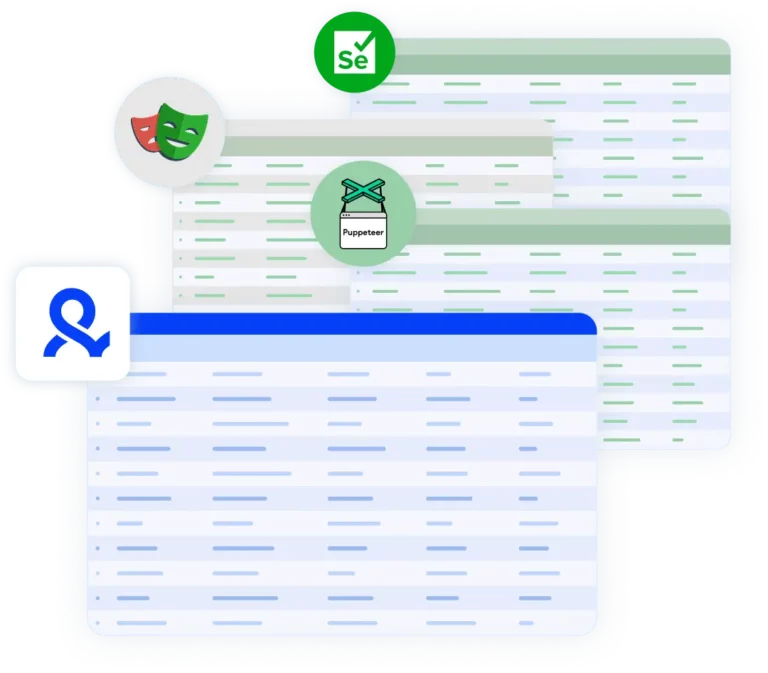
Run test scenarios on Android cloud phones through ADB, and automate web tests in browser profiles with Playwright, Puppeteer, Selenium or the Multilogin CLI. Every environment is isolated, so tests don’t share cookies, sessions or device data, and you can reuse the same setup for each regression run.
Test on real Android devices from your desktop
Multilogin cloud phones are real Android smartphones hosted in the cloud, not emulators. Screen resolution, touch input, WebView behavior and hardware signals come from actual device hardware, so you see what your users see. Choose the Android version and device model for each test, and manage every cloud phone and browser profile from one dashboard in the Multilogin app.
QA automation with build-in residential proxies
Test location-specific content, pricing, ads and app behavior without setting up external proxy tools. Multilogin’s built-in proxies give each environment its own IP:
- Residential and mobile IPs in 150+ countries and 1,400+ cities
- City-level targeting for localized testing
- Proxy traffic included in every plan, with extra traffic from $2.275 per GB
- HTTP, HTTPS and SOCKS5 support if you prefer your own proxies
Grow your social media accounts with Multilogin cloud phones
-
Unlimited time
-
Mobile and browser profiles included
-
Free built-in proxies & mobile minutes
-
Unlimited time
-
Mobile and browser profiles included
-
Free built-in proxies & mobile minutes
What is a cloud phone?
A cloud phone is a real Android device hosted in the cloud. Each cloud phone runs as an independent device, with its own operating system, hardware parameters, storage, and network signals. It also allows you to install and run mobile apps just like on any physical Android device.
Why choose Multilogin for QA automation?
Multilogin allows automated tests to run in environments that platforms treat as independent users. This allows automated QA runs to have authentication flows, rate-limited actions, or production systems protected by anti-bot technology.
Multilogin features for Cloud Phone management
Multilogin 2-in-1
Browser profiles and Android cloud phones in one platform. One dashboard, full control over all your accounts. Built for multi-accounting at any scale.
Built-in proxy integration
Residential IPs included in every plan — no extra cost. Access 30M+ IPs across 150+ countries and 1,400+ cities, tested daily for quality and reliability.
Up-to-date Android versions
Stable Android versions 10–15, fully compatible with modern mobile apps.
Real brands and devices
Support for 12 real Android device brands with unique IMEI and system-level digital fingerprints.
App repository
Install TikTok, Instagram, Reddit, and other popular apps without Google Play. APK uploads are also supported.
Folders, tags and access control
Organize profiles using folders, tags, and role-based access. Manage team workflows with ease.
Enterprise-grade security
Profile encryption, 2FA, access control, and compliance-ready security for safe operations.
Multilogin competitive advantages
Fast and intuitive interface
Everything at your fingertips: drag-and-drop, hotkeys, and smooth multitasking without losing speed.
Browser built for multi-accounting
Advanced engine effectively avoids multi-account detection by creating unique browser fingerprints.
Created for team collaboration
Proxies included in every plan
24/7 support in 5 languages
Manage multiple accounts across 50+ platforms
How to start using Multilogin cloud phone
Launch and manage real mobile environments in the cloud.

Sign up
Register using a verified email address.

Choose your plan
Select from various subscription plans tailored to your business needs.

Download Multilogin
Install the Multilogin desktop app to manage mobile sessions securely.

Access the Multilogin dashboard
Launch cloud phone, assign proxies, configure fingerprints, and manage mobile environments from one place.

Manage multiple cloud phone profiles
Set up and manage multiple cloud phone profiles using separate browser profiles with consistent identities.
Why people love Multilogin

Ha D.
Social Media Marketing Retail

Nino Latif

Stanislav K.
Marketing Manager

Elen S.
Marketing Manager

Hamza Arif
E-commerce Manager

Nick Horvath
Marketing agency
Watch the Multilogin Demo
A guide to QA automation with Multilogin
As software delivery cycles get faster and more frequent, QA automation has moved from a nice-to-have to a core requirement. Teams are expected to validate features across devices, browsers, locations and user states, often several times a day.
At the same time, automated tests are only useful when the environment they run in matches how real users experience the product. Shared browsers, leftover session data and simulated devices all introduce differences that make results less reliable.
Multilogin gives QA teams separate, consistent test environments for both mobile and web. Android cloud phones run on real smartphone hardware for native app and mobile web testing, and browser profiles cover desktop web testing. Each environment keeps its own device parameters, cookies, storage and network settings, so teams can run large volumes of automated tests and still get realistic, repeatable results.
Why use isolated environments for QA automation?
Traditional QA automation setups often rely on shared browsers, basic profiles or emulated devices. That works in early testing, but it breaks down as the test suite grows.
In shared environments, cookies, storage and device signals carry over from one run to the next. Tests become flaky, results become inconsistent, and failures get harder to reproduce. Emulators add another gap, because simulated hardware does not always render, respond or handle sessions the way a real phone does.
With isolated environments, each test runs as if it were a separate user on a separate device. Depending on the goal of the test, a session can start fresh or deliberately continue from a saved state. Results become more predictable and much closer to real-world use.
Key benefits of QA automation with Multilogin
Accuracy is the main advantage. On mobile, tests run on Android cloud phones built on real smartphone hardware, not emulators. You can choose from Android 10 to 16 and around 30 device models. On the web, tests run in browser profiles that each keep their own fingerprint and session data. In both cases, what the test sees is much closer to what your users see.
Isolation prevents cross-test contamination. Each cloud phone and browser profile has its own device parameters, cookies, local storage and network settings, so leftover data from earlier runs cannot cause false positives or false negatives.
Scaling no longer depends on hardware. QA teams are not limited by how many physical devices or machines they own. Multiple test suites can run in parallel, each in its own environment, without interfering with one another.
Cross-environment testing gets easier. Multilogin’s built-in proxies cover 150+ countries and 1,400+ cities, so teams can check how an app behaves across locales, time zones and network locations without rebuilding test infrastructure.
It fits the frameworks you already use. Web tests run in browser profiles with Playwright, Puppeteer, Selenium or the Multilogin CLI. Android cloud phones can be controlled through ADB for mobile automation. Teams keep their existing frameworks and improve the environments those frameworks run in.
How teams use QA automation in practice
In real QA workflows, the value of Multilogin shows up in execution. Teams use it to make automated testing predictable, repeatable and easier to run as test volume grows.
Regression and smoke tests are a common starting point. Each run starts in a clean environment or continues from a controlled session when needed. This reduces noise in the results and makes it clearer whether a failure comes from a real defect or from an inconsistent setup.
When bugs appear, isolated environments make debugging simpler. QA engineers can rerun a test on the same cloud phone or browser profile to reproduce the issue under identical conditions, instead of recreating state by hand or guessing what changed between runs.
For data-driven tests, Multilogin keeps scenarios separate. Different datasets can run in parallel, each in its own environment, so shared state cannot influence the outcome. That makes edge cases easier to catch.
At scale, automation engineers run multiple suites at the same time across pipelines, each with its own set of environments, without session conflicts between tests. Teams increase coverage and speed without giving up reliability.
Across all these use cases, Multilogin fits into existing QA setups without changing how tests are written. Teams keep their current tools and gain environments that behave like real devices.
QA automation across desktop and Android environments
Modern QA automation needs to go beyond desktop browsers. Android brings its own differences in rendering, WebView behavior, session handling, touch interaction and app lifecycle, and many of these only show up on real hardware.
Multilogin lets teams run Android QA directly from the desktop on cloud phones. These are real Android devices hosted in the cloud, with nothing physical to buy, charge or maintain. QA teams can test native Android apps and mobile web on the Android version and device model they need, with a location-matched IP from Multilogin’s built-in proxies. Cloud phones and browser profiles sit in the same dashboard, so mobile and desktop testing can share one automation strategy.
This makes it easier to validate mobile user journeys, reproduce device-specific bugs, and keep the experience consistent between desktop and mobile.
Conclusion
QA automation only works when test environments behave like the devices and browsers real users have. If tests share state, run on simulated hardware, or only partly reflect mobile behavior, even well-written tests produce results that are hard to trust.
Multilogin gives QA teams a more reliable foundation:
- Android cloud phones on real smartphone hardware for mobile app and mobile web testing.
- Isolated browser profiles for desktop web testing.
- Built-in proxies for location-specific checks.
- Every environment kept separate and consistent from run to run.
The result is practical: tests are more accurate, failures are easier to trust, and teams can be confident that what works in automation will also work for real users across devices, locations and sessions. You can try a cloud phone on the Multilogin Free plan before scaling your test setup.
Frequently Asked Questions
What problem does Multilogin solve for QA automation?
Multilogin fixes one of the biggest weaknesses in QA automation: unrealistic test environments. Many QA setups rely on shared browsers, reused sessions or emulated devices, which leads to flaky tests and false positives. Multilogin gives every test its own isolated environment, either an Android cloud phone on real smartphone hardware or a separate browser profile, so results reflect how real users experience your product.

Why are isolated environments important for QA testing automation?
Real users never share cookies, storage or device data, so tests shouldn’t either. In shared environments, data leaks between tests and makes results unreliable. Isolated cloud phones and browser profiles let every test run as a separate user on a separate device, which improves accuracy and makes failures easier to reproduce.
Can Multilogin be used with existing QA automation tools?
Yes. Web tests run in Multilogin browser profiles with Playwright, Puppeteer, Selenium or the Multilogin CLI, and Android cloud phones can be controlled through ADB. Teams keep their existing test frameworks and run them in cleaner, more realistic environments.
How does Multilogin help with geo-specific QA testing?
Multilogin’s built-in proxies cover 150+ countries and 1,400+ cities, so each test environment can use an IP from the location you need. Teams use this to check localized content, pricing, ads and app behavior in different markets without setting up separate proxy tools.
Is Multilogin suitable for large-scale QA automation?
Yes. Teams can run multiple QA automation pipelines in parallel, each using its own cloud phones or browser profiles, without session conflicts or cross-test contamination. Scaling doesn’t depend on buying more physical devices or machines.
How does Multilogin improve regression and smoke testing?
Regression and smoke tests can start in a fresh, isolated environment every time, which removes issues caused by leftover sessions or data. When a bug appears, teams can rerun the test on the same cloud phone or browser profile to reproduce it under identical conditions.
Can Multilogin be used for data-driven QA testing automation?
Yes. Each dataset can run in its own isolated cloud phone or browser profile, in parallel. This matters in data-driven testing, where reused sessions often hide edge cases or produce misleading results.
Does Multilogin support mobile testing?
Yes. Multilogin cloud phones are real Android devices hosted in the cloud, not emulators. They run Android 10 to 16 on real smartphone hardware, with around 30 device models to choose from. QA teams can test native Android apps and mobile web directly from the desktop, with no physical devices to buy or maintain.
How is Multilogin different from traditional emulators used in QA automation?
Emulators simulate Android on a computer, so rendering, sensors, WebView behavior and touch input don’t always match a real phone. Multilogin cloud phones run on real smartphone hardware, so these behaviors come from an actual device. Each cloud phone also keeps its own device parameters and session state, which makes test results more consistent from run to run.
Who should use Multilogin for QA automation?
Multilogin fits QA teams, automation engineers, developers and product teams that need reliable test results across devices, browsers, locations and user states. It’s especially useful when tests need to cover real Android devices, run in parallel at scale, or check behavior in different countries.